
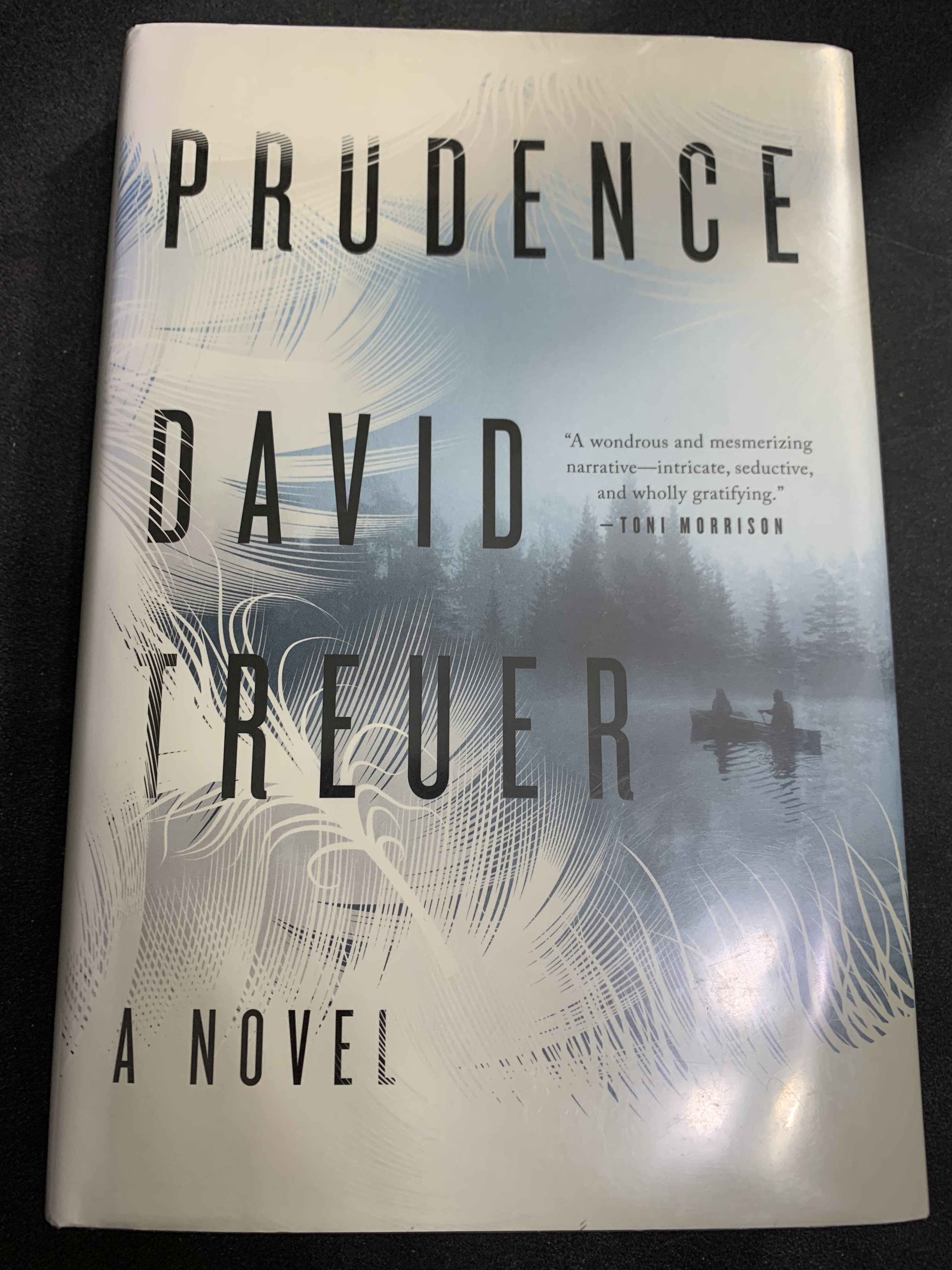
When we’re mired in our daily lives, it can feel like a war of a kind, confusing and messy, beautiful and tragic, and sometimes futile even, as we’re all expendable. David Treuer brings that to stark relief in his 2015 novel, Prudence. Set in the Minnesota landscape where the Ojibwe people, of which Treuer is part of, settled along with white people and a German prisoners-of-war camp, the book changes points-of-view with different characters as they navigate WWII domesticity and the warfront, as well as its aftermath, and importantly, Treuer includes points-of-view of the Indians, including the titular character, Prudence, at the end.
Frankie, a privileged white boy who went to Princeton and then joined up with the Air Force during WWII to be a bombardier (the one who drops the bombs), and yet still can never please his womanizing, aloof father, and Billy, an Indian, are lovers from an early age, not only at a time when that would be heavily frowned upon, but also because of the white-Indian dichotomy. One day, while “hunting” for an escaped German from the prisoner-of-war camp, Frankie shoots and kills Prudence’s little sister, Grace, mistaking her for the German. Billy takes the heat and pretends he was the one to shoot her.
We later learn that Prudence was sexually assaulted, repeatedly, starting at age 13, but still tried to make a life for her and Grace, going to school and then stumbling on the Pines, the Ojibwe land, owned by Frankie’s parents. It wasn’t until Grace was killed that she truly spiraled, drinking and having meaningless sex with men, including Billy and Felix (the older Indian caretaker of the Pines, who thought of Prudence as his daughter, weirdly), of which the former seems to have impregnated her. But in a letter at the end of the novel, we learn that Prudence doesn’t want to live anymore and she kills herself with rat poison. In one poignant reflection, she remarks about how she and Grace once thought they could be like birds, soaring with freedom and whimsy, and instead, she learned they had to be worms “burrowed into all its [the green earth’s] low places and no one wants to be something like a worm,” but “they survive and haven’t far to fall.” After Grace’s death, Prudence didn’t want to survive anymore. She was done burrowing. She was done with her “worm” existence. Plus, Frankie died, too, in the war, and he had promised he’d come back, so, there really was nothing more for her in her own estimation.
Meanwhile, another Indian, Mary, is married to a German, who in 1952 is accosted by a Jewish man — the bookends of the book are the unusualness of seeing a Jewish man on the reservation, but also the similarity to the Ojibwe people that he’s one of the last of his “tribe” — who believes that the German helped out his Jewish family in Germany, leading to his death. He shoots the German, albeit the caliber isn’t enough to kill the man. Mary fixes him (the Jewish man) tea and dinner, and the Jew and the German shake hands, with the former departing.
Life is messy and complicated and it doesn’t go the way you expect, like with Billy ending up married to a woman with two kids instead of with Frankie, or to a lesser extent, Emma losing the Pines because she lost Frankie, or Frankie himself, just another bombardier dying in the war, or Felix losing any sense of purpose once Emma left, Frankie didn’t return, and Prudence killed herself, and Mary trying to hold on to her version of her little life in the cabin, where instead of sweeping dirt floors she now sweeps wood floors. She likes it, and doesn’t want to hear anything to the contrary. Same with Prudence and whether Frankie was the real shooter or not. That’s the other thing about life: we prefer small fictions to big truths. It helps keep us sane and moving, burrowing like worms instead of careening down like bombs on a German town.
Beautifully written with a hard edge, and points-of-view you don’t typically get in American fiction, Prudence is a must-read.

 Milam's Musings
One thought