
Spoilers!
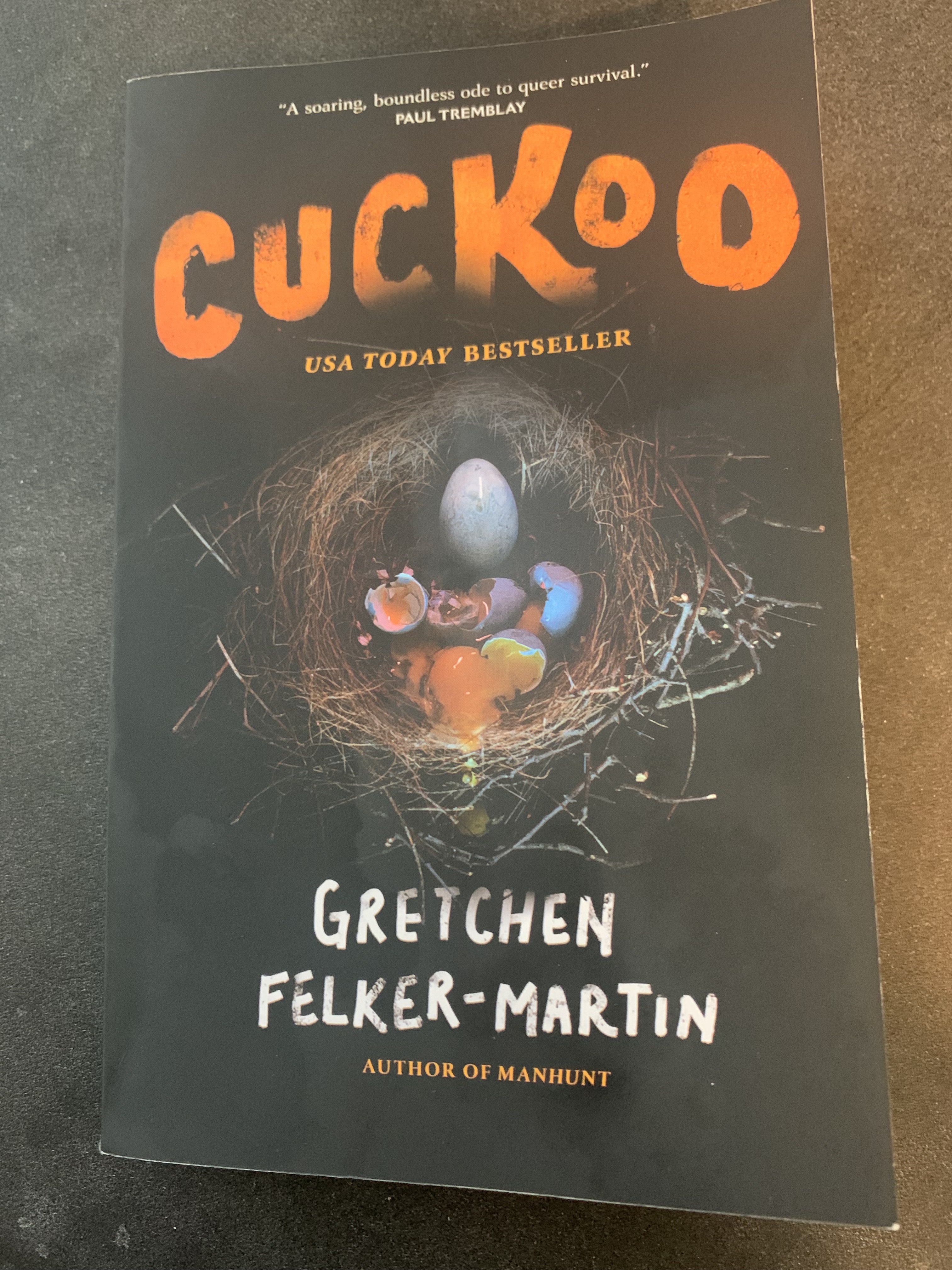
What if the real transformation going on in society, or reveal rather, is not kids becoming their true selves as transgender people, but the people who react so maliciously to it? I don’t even need to caveat my next statement with, “speaking as a non-parent.” Simply put: Love your kids unconditionally! I could not imagine trying to suppress or change my kid’s true identity, much less as was rampant for decades (and probably still occurs), sending them to one of those “pray away the gay” camps. But it happened and happens to far too many LGBTQIA+ kids, which is why they are disproportionately represented in homelessness and suicide figures. In the hands of a horror author, this concept of conditioned love, as it were, gets taken to a supernatural, gnarly level. Author Gretchen Felker-Martin not only brings into stark relief the absurdity of parents, ostensibly religious people, and society who do this, but gives us unforgettable, messy, complicated protagonists who fight back to thunderous ovation from this reader. Felker-Martin’s 2024 book, Cuckoo, is an unnerving, harrowing fictionalized microcosm of, what if marginalized people had enough of the shit and fought back? It’s joyous fun, certainly influenced by Stephen King’s 1986 classic, It, but with more than enough of Felker-Martin’s own original takes, gross descriptions, and character quirks. Also, the lyrical, haunting cuckoo genuinely made, and still makes, my skin crawl. Effective!
An alien force of some kind, one I pictured in my head as like if a Venus flytrap and Jabba the Hutt had a baby, is propagating throughout the United States in the early to mid 1990s. This alien is particularly insidious and a play on the idea of “transformation” because the alien retains the look of the human being, but behind the human is the alien lifeform. Hence, then, when the child returns to the home, the “gay” or “transgender” is gone because they are freaking aliens! The way in which the alien, which the kids of the book call Cuckoo, cajoles its way into turning humans into its foot soldiers is by promising them that which they most want. For instance, Pastor Eddie, who runs Camp Resolution, lost his daughter to cancer. His wife, then, embraces the alien both as a way to bring the daughter back and, incidentally (but not surprisingly!), to “take the gay away” from Pastor Eddie himself!
The way Camp Resolution works — I don’t know how the initial referral process happens, though — is that the parents discover, literally interrupting some sort of sexual liaison, their child is either gay, lesbian, or transgender. Usually, it’s the father who is most unhinged and angry, with the mother more meek and acquiescing to the father’s demands. Then, a van shows up with two counselors from Camp Resolution who essentially kidnap the child and take them out to the desert in Utah. There, the children have their heads shaved, are threatened with bodily harm if they stray or fight back, and are forced into strenuous exercise and chores, again, in the desert, mind you. I chuckled at Pastor Eddie reading The Turner Diaries because, of course. If you’re not familiar, do a quick Google search. The counselors are physically abusive, not shying away from blackening eyes and using older, seasoned children at the camp to hurt the newest arrivals. We know that sort of camp dynamic exists, where prior camp victims turn into perpetrators out of survival and probably their own vindictiveness. Worst of all perhaps, they all reinforce the idea to these children that they should hate themselves and who they are. Hate that they are gay, or lesbian, or transgender, or even overweight (this was the most King-like part of Felker-Martin’s book, the repeated references to “fatness”). All of what I’m describing would make for a horrific story in and of itself. Add in the fact that the counselors are all alien minions, and now our protagonists are in real trouble to survive.
Those protagonists include Nadine, Shelby, Gabe/Lara, Malcolm/Mal, Felix, John, and Jo. Brady was originally with the group, but unfortunately, he didn’t last long. So, those are the seven main characters we spend time with in their heads and through their actions. Nadine fast becomes the clear leader of the group. She’s a teenager, but let’s keep in mind, as characters throughout remind the reader, Nadine and all of them, are still just children in a world of adults with all the power. Which goes back to my ranting about parents not loving their children for who they are. They have all the power in that parent-child relationship in a world already run by adults for adults. It’s devastating. But I digress. Nadine is one of the my favorite characters in horror fiction: She’s an unyielding bad-ass throughout the book — a rebel from the start, fighting, kicking, and biting the moment she’s in the van on the way to Camp Resolution. She cannot be broken. Even when she looks tired, beat-up, or cries, she does not actually break; she still fights back. One of my favorite scenes in the entire book is when Pastor Eddie puts her over his knee and whips her 12 times with his belt. He’s whipping her bare butt. (I can go into another soapbox moment about all the issues to unpack there about corporal punishment.) Afterward, Nadine is essentially commanded to repent by Pastor Eddie, to acknowledge she’s learned her lesson. Instead, she spits blood in his freaking face. Hell yeah! Fight, fight against the dying of the light, your light and the light of the world.
Not long into their tenure at Camp Resolution, Nadine realizes that not only is this whole situation messed up on the normal grounds, but that there is something wrong with the camp counselors. Whether it’s alien-like or some other supernatural force, they don’t know, but Nadine and the others bond over their rebellion, lean into their identities (Nadine and Shelby, for instance, form a relationship right under the camp counselors’ noses), and plan a “jailbreak.” Malcolm, who is the “class clown” jokester of the group, stumbles upon an abandoned Cold War bunker with loads of MREs and dynamite. Nadine also heard a phone in the main house while doing her chores. And Jo has a grandfather she knows is sympathetic to her (we later find out he is gay, but had to forfeit that life). Thus, their gameplan is to somehow get into the house, call Jo’s father to arrange pick-up, and use the MREs to fuel their trek across the desert to the nearest town, however far away that is. It’s not the greatest of plans and so much could go wrong, but it’s something. Indeed, everything does go wrong. The counselors and their camp minions, like the awful redheaded Betty, nearly foil the plot. Brady is killed by likely alien-dogs, but Jo is able to avoid capture. The rest, though, are taken into the basement of the main home where the mother alien, Cuckoo, is creating more minions. They are next. A replica of Gabe has already been created. Jo, though, is able to find her way to the bunker, use the dynamite to create explosions and distractions, and the children escape out of the house. Just before absconding from the house, Nadine is grabbed from behind by the Cuckoo. She has matches though and due to combustible conditions, she’s able to blow up the entire house. She sacrificed herself. I was devastated we lost Nadine, but bold move from Gretchen-Felker to kill her off. Doing so also set up later storytelling. The rest of the children trek off into the desert knowing that they seemingly killed most of the camp counselors, but the Cuckoo itself and who knows how many alien minions it has remains alive. The saving grace is that the Cuckoo can’t go into the sunlight.
At this point, I was wondering what was going to happen next because there was a lot of book still left and that felt like quite the climax! After all, they escaped Camp Resolution! Jo becomes the new bad-ass, first after her dynamite performance and then through the trek int he desert. When one of the Cuckoo’s minions gets close to the group again, she uses a stolen shotgun from one of the camp counselors to blow its “head” off. She’s the one also encouraging the group to keep trekking, hoping that her grandfather will be waiting for them. And he is! From there, the book time jumps 16 years. The ragtag group who escaped Camp Resolution has a dissolution: everyone just sort of goes their own way. John and Malcolm, who had taken up a romantic relationship, don’t last. They all continue trying to survive and what a dichotomy it is where once it was literal survival against an alien being and now it’s the ho-hum survival of daily life, rent, maintaining a job, and the complexities of romance. The reason I also listed the names like this earlier — Nadine, Shelby, Gabe/Lara, Malcolm/Mal, Felix, John, and Jo — is because Gabe and Malcolm in the intervening years embraced their transgender identities and became Lara and Mal, respectively. While everyone else has gone their separate ways trying to move on, as it were, Felix has been sleuthing and hunting down every iteration of Camp Resolution and the alien he can. Is it a “regular” awful, but human Camp or an alien Camp? Eventually, he stumbles upon the story of Nadine’s parents. After Nadine never returned, her parents decided to have another child. That child, Abby, started out as a boy and when she showed signs of becoming Abby, Nadine’s mother did it again: sent her away! Felix calls the group into action and they drop everything to follow him back into desert hell to rescue Abby and finish this once and for all. Again, that’s where I felt the echoes of It: a book centered largely around children dealing with alien trauma and very real human trauma, and then the book finishes off with them as adults have to readdress the trauma and have one final confrontation with the alien. They realize the Achilles heel of the alien, aside from sunlight, is that drugs, like ketamine, can kill it. Lara, who is a high-end escort, uses her money to buy ketamine. Felix already has a vehicle loaded up with guns. They head out into the desert.
In the ensuing melee, Jo is killed (again, bold that Felker-Martin killed off her two fiercest characters!). John seemed like a goner, but he survived. Abby was rescued and saved, however. The book ends on a perfect bittersweet note. Abby in 2018 is celebrating Pride with a new romantic partner, who she can’t believe loves her. Even then, though, Abby, echoing what LGBTQIA+ and other marginalized people must sometimes still wonder in our society, can’t shake if the police or others she sees in the crowd are friend or foe, human or alien.
Cuckoo was a fantastic tour-de-force through the hell of conditional love, of not being loved, and the inner turmoil that results. Amid such conditions, one doesn’t have to bend the knee to know their worth and fight for it. Nadine, Shelby, Lara, Mal, Felix, and John fought for theirs and through it, found friendship and love of a different kind: unconditional.

 Milam's Musings