
Spoilers for those who haven’t listened!
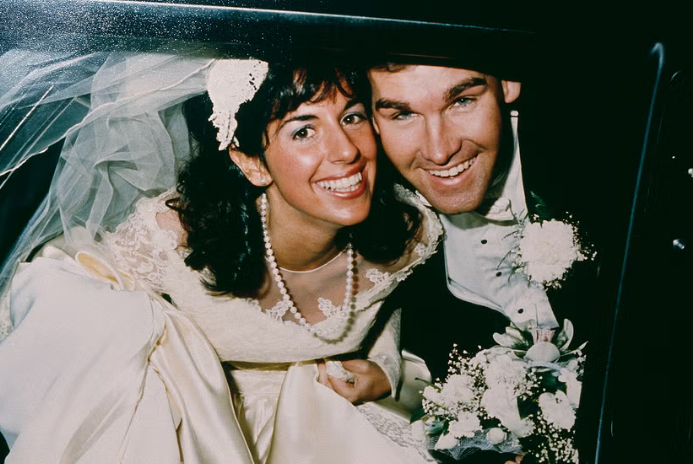
I haven’t been this frustrated by the subject of a podcast series since the second season of In the Dark following the Curtis Flowers story. I’m talking about December 2023’s Murder in Boston: The untold story of the Charles and Carol Stuart shooting podcast series, which is also an HBO series, as it was a collaboration between the premium cable streaming service and The Boston Globe. The opening seconds of the first episode are some of the most harrowing I can recall listening to in a podcast. To set the stage better, it’s the fall of 1989, the same year the Central Park jogger case occurred in New York City. So, the nation is rife with the idea of “super predators,” aka “wilding” Black teens. With the first episode, we hear the the 9-1-1 call Charles makes, as his 7-months-pregnant wife and himself lay dying in his car somewhere in Mission Hill, the crime-ridden, poverty-stricken, largely African American and Hispanic neighborhood of Boston. As he’s fading in and out, the police are trying to ascertain his whereabouts. What a way to kick off a podcast series!
The problem? It wasn’t real. I mean, yes, Charles and Carol Stuart were shot and the scene of the crime was in Mission Hill, but contrary to Charles’ claim that a Black man shot him and Carol, it was Charles who likely (more on that in a moment) shot Carol and then himself in the back. Globe columnist, Adrian Walker, who has been with the paper for more than 30 years, including when this occurred, narrates the podcast. Walker is Black, and as a young Black journalist in 1989, he recalls him and other young Black journalists, the few there were, being skeptical of Charles’ story, but unable to quite put a wrench in the machinery already underway after the 9-1-1 call.
Charles would go on to survive, and Carol, and their baby, would not. Yet, the location of the crime, the brutality of the crime, and Charles’ seeming identification of the shooter as a Black man, would set off the Boston Police Department, city of Boston, and all-around white panic. This “Camelot Couple,” as some thought of the Stuarts, were brutally attacked in Mission Hill, so, that meant it was time to bring the full force — Mayor Raymond Flynn quite literally called-to-action every available detective in Boston to work the case — of the police and city down upon Mission Hill and every Black and Brown boy and man. Yes, even though Charles’ identification was that of a man, boys as young as 12 and 13 were being stopped and stripped searched. Multiple times. In public. This, despite a judge ruling the practice of “stop and frisk” unconstitutional. The rogue — yes, if you ignore the ruling of a judge, you’re acting rogue now — police kept the practice going anyway.
What’s interesting about Boston is that in addition to being the city, perhaps along with Philadelphia, most historically associated with liberty, the city still had issues with race, like any city in America. I say that’s interesting because we tend to think of the Southern states and cities as having such strife and taking longer to adapt to equality among races, but Boston didn’t desegregate school busing until 1974! And that itself was met with much backlash. Boston is the story of most American cities: immigrants freeing abject poverty and oppression elsewhere come to America in the 1800s and early 1900s for a better opportunity, creating a multi-ethnic city, which then eventually turned over to largely African American and Hispanic populations, as whites fled to the outer suburbs, and then those cities became plagued by drugs, gangs, and police abuse and neglect simultaneously. In other words, like Ghettoside surmises, those populations become overpoliced on small items, like possession of drugs, leading to the stop and frisk practice, for instance, and under-policed on the big items, like murder and rape.
This all set the stage for Charles’ hoax that a Black man had shot him and his pregnant wife to be the fuse that blew the powder keg on Boston and Mission Hill specifically, blaming everything on Black people and to basically allow the Boston Police Department to move into Mission Hill like an invading army. It was awful to listen to the stories of Mission Hill residents, even 34 years later, who still have trauma from what happened. One man, who was around 9-years-old at the time, said he was the only one of his 11 siblings who wasn’t murdered or in jail. His dream was to just make it to 21. Astonishing and that is harrowing to consider.
I’ve listened to too many true crime podcasts at this point to not automatically have suspicion of the husband involved in a crime, so, I’m not some genius for suspecting Charles almost immediately. I was initially suspicious because he was still alive and she died. If they were robbed and then shot by a Black man, as Charles alleged, then I would have expected Charles to be the first to die and maybe even the only one to die, not Carol. My suspicion of Charles only increased as the podcast moved into the history of Boston, bus segregation, and so on, because the only reason to go that deep into such issues would be if the initial story of a Black man having shot Charles was wrong. That still left open the possibility that a white person did the shooting, but not Charles. However, I knew I was on the right track with the fifth episode, “The Camelot Couple.” The episode depicted Carol as a strong, sweet woman who was looking forward to being a mother, whereas they depicted Charles as a womanizer and a creeper. Not to mention, there was a specific instance where Charles was hitting on his co-worker, and the co-worker said Charles immediately stopped as soon as he saw the co-worker was married to a Black man (she suddenly became unattractive to him at that point). Red flags galore!
By the sixth episode, “The Mask Comes Off,” it was confirmed that Charles schemed with his brother, Michael, to kill Carol because he didn’t like that she was the one “in control” in their relationship and he didn’t want to be a father. And again, he was a womanizer, seeking other women. But that’s not the end of the story. That’s bad enough, awful to consider, shooting your wife who is 7-months pregnant with your child and then trying to blame it on a Black man. What’s worse still is to not face the consequences by committing suicide.
And worse still are these three important facts we learned, thanks to the work of the Globe:
- At least 33 people in Charles’ orbit knew he killed Carol, not an unidentified Black man (who would later be suspected as being Willie Bennett). He asked both of his brothers to help him, and then Michael, one of the younger brothers, did. And then Charles’ best friend knew, Michael’s friend helped dispose of the gun and jewelry, and from there, the “game of telephone” started with up to 33 people knowing about Charles’ culpability prior to his suicide alerting the wider public to that knowledge. That’s sickening, and despite their protestations, I find the Stuart family sickening for the role they played in covering it up.
- The police, obviously, botched the investigation. They went hard at Mission Hill and Black people, casting a wide net and then zeroing in on Willie Bennett on the flimsiest of evidence possible. But as a basic matter of evidence-gathering and forensic analysis, any decent detective would have poked holes in Charles’ story. Which the initial two detectives did and then they were taken off of the case. When Detective Peter O’Malley was brought on the case, he was considered a “closer” at the time as a detective. If you were a closer any time prior to like 2010, I don’t trust that nickname for you because it means you probably railroaded scores of innocent people and bent the rules. And naturally, those cops who believed Willie Bennett was the real killer and/or defended the police, such as a nasty piece of work, State Trooper Dan Grabowski (he’s a full-on MAGA type, who told one of Walker’s colleagues he should kill himself), went on to big promotions and faced no consequences. Because of course.
- By the way, it’s worth pointing this out, too: Even after Charles killed himself, police and prosecutors still had suspicions that Willie Bennett was somehow involved in Carol’s death. That’s how difficult it is to turn the ship of injustice.
- The Boston Globe didn’t shy away from its own culpability in propagating fear among white Bostonians via Charles’ hoax. Yet, most revealing is that the Metro Editor at the time, 34 years later, has no regrets about their coverage. He’s also Black, but that’s beside the point of astonishment: How can you not have any regrets about the coverage? At the very least, they should have regrets about featuring their racist, star columnist, Michael Barnicle, on the front page and never issuing a correction about his errors!
Now, the one hanging thread from the podcast is whether Charles actually pulled the trigger, shooting Carol in the head, apparently shooting one shot through the roof of the vehicle, and then shooting himself in the back. There’s a dispute among surgeons whether his injury was consistent with a self-inflicted gunshot wound. Some surmise that Michael, who already admitted to being present at the scene of the crime in order to retrieve the gun and jewelry as part of the scheme against Carol, shot them both. Eyewitnesses indicate a third person was in the vehicle. I don’t know where I land on that. If I had to lean a certain way, I’d say it was all Charles. For what it’s worth, Michael did go down for obstruction of justice, I believe, and insurance fraud, but not for any culpability directly in Carol’s death, which the prosecutor at the time, who was still alive by 2022, in order to be interviewed by the Globe, said it was better to let “sleeping dogs lie,” as a reason for not pursuing Michael. Hogwash. The city and police wiped their hands of the whole mess once Charles killed himself, and they didn’t care about what was left in their destructive and negligent wake. And that doesn’t explain why John McMahon, who helped get rid of the murder weapon along with Michael, was never charged.
What’s particularly great about this podcast isn’t that there’s a whodunit aspect; we know whodunit. Rather, what’s great about it is how its a reflective podcast about our own culpability in setting the stage for a hoax like that to believed, and then when it’s turned out to be proven as a hoax, no culpability occurs, no real lessons are learned, and the underserved and demonized go on being underserved and demonized. In fact, while a lot has changed since even 1989, with policing and race relations, as Walker points out with a direct throughline to the Officer Derek Chauvin murder of George Floyd in 2020, has that much actually changed? Would a hoax like that be possible today? I don’t know about the latter, but in terms of much changing, I’m not sure you could say that policing has gotten better and serves those communities better and more justly.

 Milam's Musings
One thought