
Spoilers!
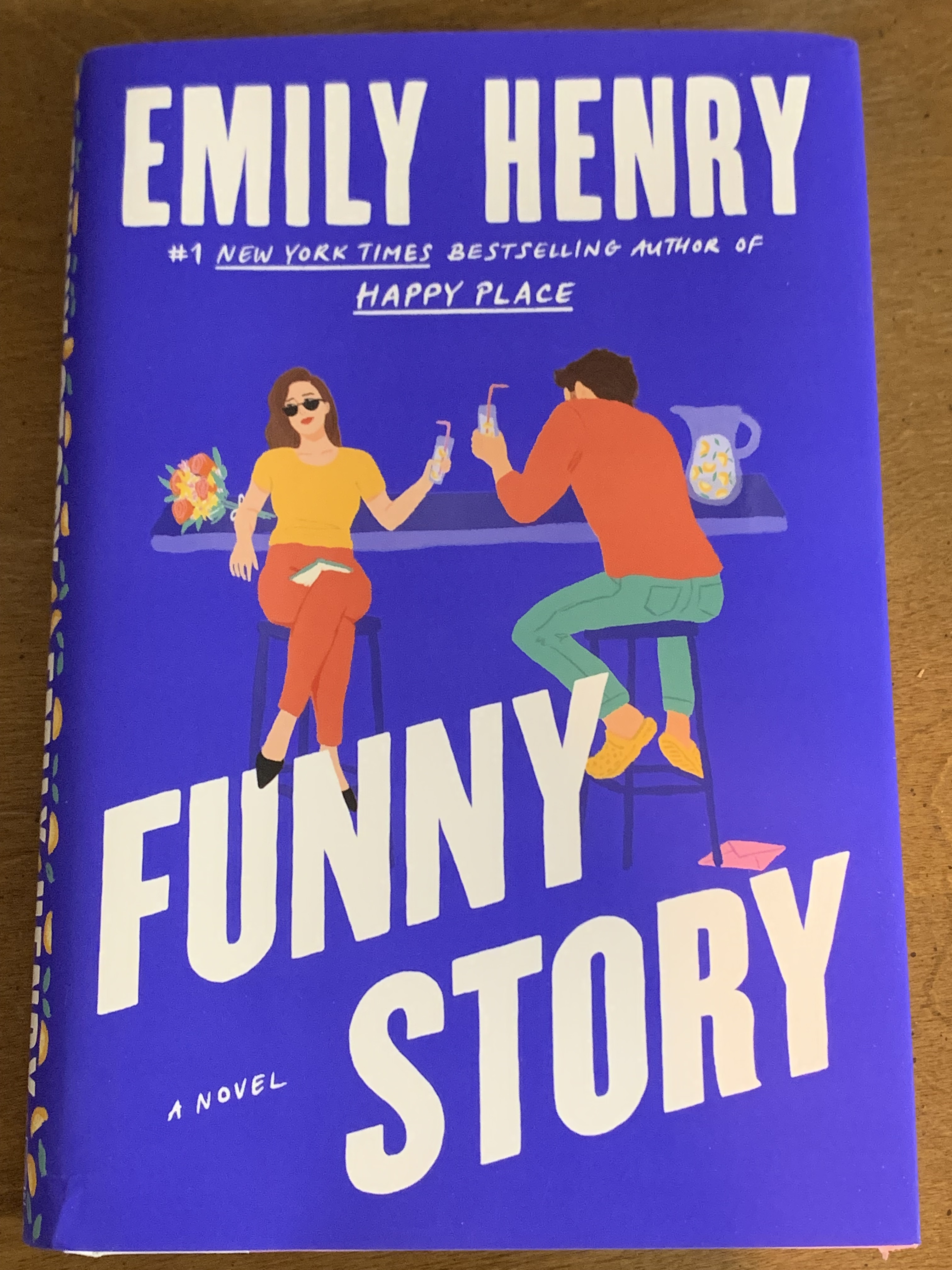
The paradox of being a human is we deeply, desperately want to be seen, and yet, we’re also terrified of being seen. This paradox creates insecurities, fear, and the need to distance ourselves from getting too close to someone for fear of being seen (while also feeling lonely at not being seen!). The most potent form of this paradox is to be in a romantic relationship with someone and still not feel seen, while also hiding so as not to be seen. After all, the fear goes, if we’re seen, then the person we’re close to will run away, not wanting anything to do with you. Emily Henry deftly, humorously, and poignantly tackles this paradox in her 2024 book, Funny Story.
Funny Story marks my first Henry book, who is from Cincinnati, my hometown, by the way, and what I think surprised me most — more than the predictable sappiness I feel reading romance stories, or that it’s a great palate cleanser after reading thriller/horror books, despite the raw, resonant punches thrown — is how captivating Henry was with a rather well-tread premise. She took a premise that seems familiar — two people unexpectedly find themselves together and over time, they fall for each other while discovering much about themselves, or even the more particular premise here that Daphne and Miles pretend to be boyfriend and girlfriend to spite their exes and fall for each other for real — and stretched it across nearly 400 pages without it feeling like 400 pages. That’s author magic right there! I could have read another 200 pages about Daphne and Miles, along with the rest of the cast she assembles.
The aforementioned Daphne and Miles become unexpected roommates after Daphne’s fiancé, Peter, and Miles’ girlfriend, Petra, who themselves are childhood best friends, break up with Daphne and Miles to go with each other. Daphne had nowhere to stay after being “evicted” from Peter’s home and the relationship, and with it, everything she’s known in Michigan, at least. That’s the pernicious aspect of relationships: how easily “you” becomes a “we” totally dependent on the other, losing sight of the “you,” so, once the “we” is gone, you’re bereft in a sea of doubt and unknowns. That’s Daphne. Miles, who was living with Petra, suddenly has a room available; ergo.
But this isn’t a permanent situation in Daphne’s view. Most of the chapters are counting down the days until she leaves Michigan and restarts her life somewhere else, probably closer to her rock-solid mother (in contrast to her whimsical, absent father). As a librarian, she just wants to get through the local library’s big Read-a-thon she’s organizing, and then she can properly move on.
Henry again pulls a magic trick with Miles, though, because our first impression of him through Daphne’s eyes is that of a sloppy stoner. We are disabused of that quickly though, as Daphne realizes he was also depressed at losing the love of his life, and is actually quite a hot and nice guy. He also knows Michigan and can be her “tour guide.” Weirdly, but because they’re showy nice (you know the type!), Peter and Petra invite Daphne and Miles to their wedding. One drunken night, they RSVP. Peter calls, and Daphne throws out the aforementioned ruse: her and Miles are an item.
So, yes, they fall for each other, and learn a lot about themselves in the process, but the throughline is they’re both fearful and insecure at the other seeing the real them. Miles feels like he abandoned his younger sister, Julia, to his psychologically abuse mother, i.e., he has a complex of letting people down and worries he will one day let Daphne down (so why bother getting close?), and Daphne feels like she’s unlovable, clearly, because her father wants nothing to do with her (only fleetingly), and Peter, in her eyes, dumped her for a much better upgrade with Petra (so again, why bother getting close? He’ll run away, too). And like any good romance novel, there comes the moment of consternation between the two (obviously, after the hot, passionate sex!). Miles forgets to pick up Daphne at the library, so, Daphne feels like she was left waiting yet again. But Miles was panicking because of his aforementioned insecurities. What they both actually feel is the fear of falling in love and continuing through such discomfort. Henry serves us up a happy ending, where they reconcile — after acknowledging their fears to each other and allowing themselves to truly be seen by the other and realizing the other isn’t running away after all — and importantly, I think, Daphne has maturated to the self-awareness of not losing her “I” again within the “we” of her relationship with Miles. She doesn’t want to go down that road again.
In fact, one of my favorite subplots of the story was Daphne’s relationship with her coworker, Ashleigh, who starts as a coworker and slowly becomes a real friend. I was as invested, if not sometimes more, in their relationship as I was Daphne’s with Miles! Daphne does momentarily slip back into the “we” at the cost of Ashleigh. Because we’re human, and often our mistakes are projections of the harm we’ve experienced, Daphne ends up doing what her dad did to her by standing Ashleigh up on her birthday, no less. They also, thankfully, reconcile their friendship, realizing humans — friends — can make mistakes and still be friends. Plus, Ashleigh had her own psychological hang-up stemming from her ex-husband, where she was always waiting for the other person to fail, so it would be a “gotcha” moment. Although, Daphne tries to make it up to Ashleigh by secretly painting her bedroom (that was the original plan), which isn’t what Ashleigh wanted; she wanted to paint with Daphne! But I can’t throw stones, either. When I screw up, my inclination is also to do something grandiose to make up for it. Eek. As it turns out, when humans talk about being seen, and the importance of it, we’re really talking about being seen and loved in the little ways with the little things. Grandiose isn’t factored into the equation.
The best romcom books, aside from making me feel all my wistful, sappy feels, also makes me think about the human condition, as cliche as that sounds. Henry brings some weightiness to Funny Story with the psychological make-up of Daphne, Miles, Daphne’s parents, Mile’s parents and sister, and Ashleigh, and how that informs how they all interact with each other.
Miles hits the paradox of being seen home on page 299 of the hardcover edition:
“But after a while, someone either finally sees you or they don’t, and either way it fucking sucks. Because if they see you, and it’s not what they signed up for, then they’re out of there. And if they never see you … it’s worse. Because you’re just alone.”
That whole exchange with Daphne, but particularly that pullquote, is why I previously referred to Henry’s book as resonant because of course I can relate! Not just in romantic relationships, in any relationship in life, I sometimes worry if someone sees any cracks in what I’m presenting to them, then they won’t like me as much. The paradox sort of feels like a cousin to imposter’s syndrome.
But also, Henry offers the reprieve we have when real life isn’t going swell: books. Thank goodness for books, those magical compilations of paper we can dive our messy brains into. Toward the end of the book, Daphne reflects on this (page 353), saying, “That feeling of curiosity and awe and wonder. That was where I made my home every time we moved, a sensation that couldn’t taken away.” Daphne’s workaholic, fiercely independent mother was constantly moving them around, which also messed with Daphne’s ability to make close relationships, hence falling back into books.
In my humble estimation, Henry’s book is the summer beach read of 2024. You’ll laugh out loud like a lunatic, ruminate on the weightier lines, and feel happy when happy things happen to the characters she’s made you invested in. Bravo, Henry, bravo!

 Milam's Musings
One thought