
Spoilers!
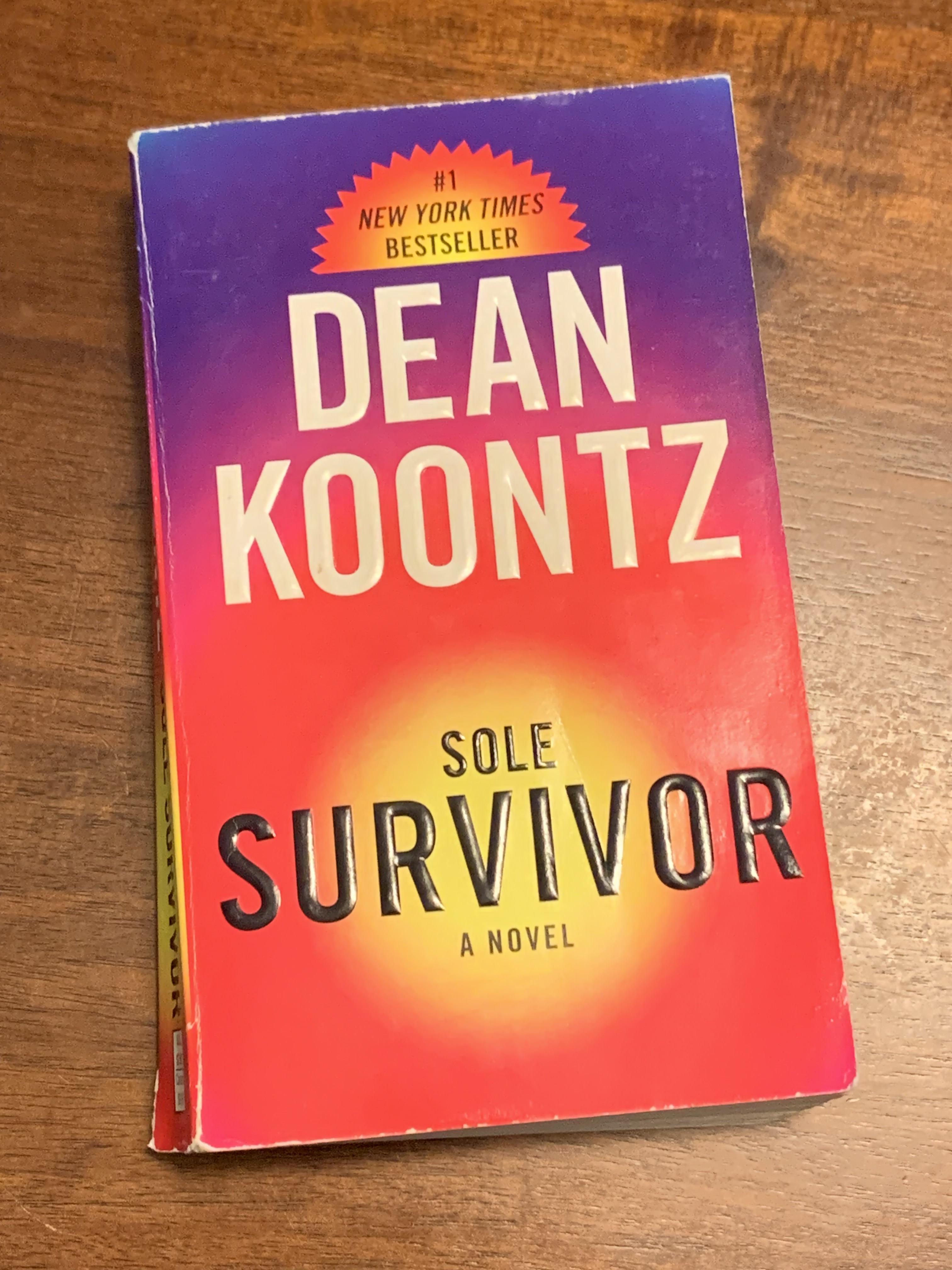
Inexplicable tragedy followed by unrelenting grief festoons the hearts of humans with longing, regret, anger, and the eternal wondering of, “Why?” This is the sandbox where Dean Koontz plays with the tools of good and evil and the characters at the center of the drama. In his 1997 book, Sole Survivor, Koontz grapples with why God would allow such inexplicable tragedy.
Koontz’s book seems inspired by USAir Flight 427 in 1994, the real life crash in Pennsylvania, which killed all 132 people onboard. Joe Carpenter is the “sole survivor” of his family (a nice red herring from Koontz early on) after Flight 353 carrying his wife and two young daughters crashed in Colorado, killing everyone aboard, or so it seemed. On the one-year anniversary, he’s still besieged with grief, directionless, and wishing he was “courageous enough” to just off himself. By happenstance while drinking beer at a beach in California, he learns he’s being surveilled by cops, or not cops, or those affiliated with something else entirely. Through the course of untangling the web of his surveillance, he runs into Rose, who beams with a certain presence, and who weirdly was taking photographs of his dead family’s tombstones (this is a conduit to the afterlife, fittingly). He touches base with the surviving family members of another crash victim, only to learn of her bizarre suicide. More survivors of crash victims die by bizarre suicides.
Thanks to a former member of the National Transportation Safety Board, who “blows the whistle” at least to him, Joe learns that the stated cause of the plane crash — mechanical failure — is belied by the cockpit voice recorder showing bizarre behavior by the pilot in the moments before the crash. The evil agency surveilling Joe, coming after him, and connected to the suicides, covered it up and forced the former NTSB member into retirement. Then, Joe and the former NTSB member investigate a witness to the crash who went to a nearby ranch (funny, unintentional connection is that it’s called the Loose Change Ranch; Loose Change is the name of the 9/11 conspiracy documentary, a befitting name for the conspiracy that unfurled from this fictional ranch) and they seem to think that the witness is actually Rose who was on the flight and survived. In other words, Rose is the purported sole survivor of the crash, and in fact, so as not to spoil Koontz’s plot with the title, there are two survivors because Rose was with a 4-year-old child.
After a few violent close encounters with the government agency coming after Joe, the former NTSB agent, and Rose — as well as an encounter with a more benevolent group trying to help them, albeit I find it funny that $1 billion is enough to fund their activities — Joe finally learns what the heck is going on from Rose. Essentially, Koontz gives us some intelligent design exposition, and from that, extrapolates scientists like Rose, working for this agency, who have tapped into and exploited the genomes of lab-created children who exhibit abilities, such as telekinesis, telepathy, and so forth. In fact, it reminded me of a book that came after this one, Stephen King’s 2019 book, The Institute, which is essentially the same concept. The most dangerous of these Frankenstein-like children the agency creates is a boy who can “remote view” places, and then actually embody the mind of someone remotely. That’s how the survivors of the crash victims killed themselves (upon learning Rose’s story, so they needed to kill them), and how the pilot of Flight 353 brought down the plane. It’s a form of possession.
Now, the child with Rose is the flip side. She’s a healer, and is the reason Rose (and herself) survived the plane crash. She was able to take them to a different dimension for the duration of the 60 seconds of hellish plane crash. In addition to that, she’s able to show people, like Rose, families of the plane crash victims, and others, the afterlife. That it exists, that their perished loved ones are there, and to also, recognize and repent for past sins, as it were. The reason the agency tries to violently stop Rose and her from absconding and sharing this with the world is that they think that power is too dangerous and needs to be stopped. But in effect, Koontz uses the character to show that an afterlife exists. Joe still doesn’t understand why a God would allow his family to perish in such a devastating crash, though. The child retorts that God’s existence is itself an encouragement for us to make the world better, and that shows He cares.
Joe is more or less won over with that argument, and somehow, with the help of the more benevolent group, they are able to escape the reach of the evil agency by the time the second anniversary of the crash rolls around. By then, Joe is not so subsumed and sidelined by grief anymore. Faith is Koontz’s answer to grief. Although, is it faith if you can literally be shown it? Granted, as the child kept telling Joe, he still had to open his heart to it.
Koontz does an extraordinary job building Joe’s character, how he works through his grief and violent impulses, and Koontz’s addition of how parents who’ve lost a child navigate their grief is well-done, too. But also, the violent plot points are a devastatingly fun time, too. So, if you enjoy Koontz’s suspenseful rides through the valley of good and evil, as I do, then you’ll enjoy the mystery around Sole Survivor.

 Milam's Musings
One thought