
Spoilers!
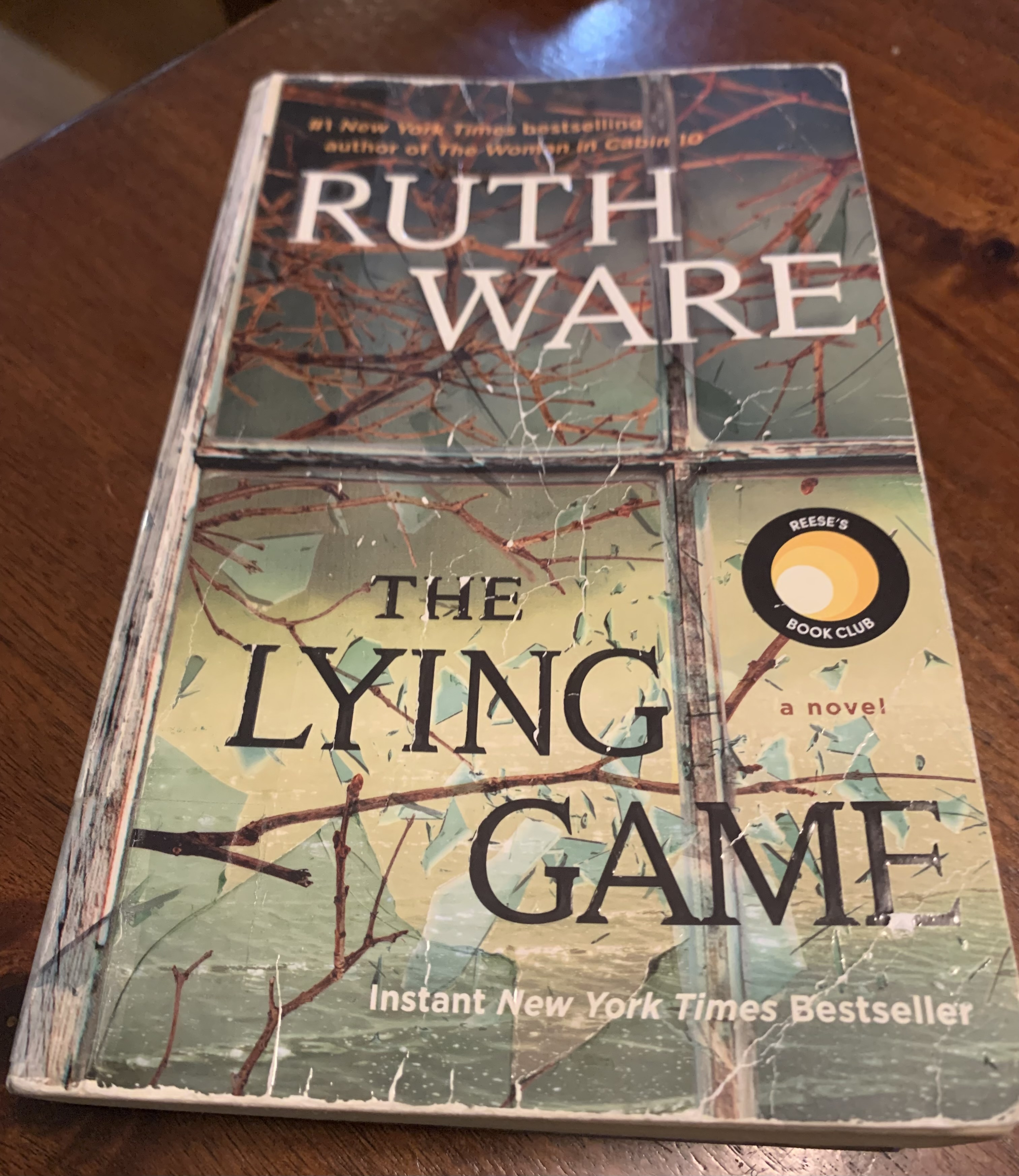
Lies are their own form of erosion, of ourselves and our relationships. Ruth Mare’s 2017 book, The Lying Game, explores the ways in which such lying erosion has deteriorated and continues to deteriorate four friends and their respective relationships. “The Lying Game” is a game created by friends Thea and Kate to get back at teachers and popular girls at their boarding school, with an entire point system for convincing lies. The five rules are: 1.) Tell a lie; 2.) Stick to your story. 3.) Don’t get caught. 4.) Never lie to each other. 5.) Know when to stop lying. The other two friends of the group, are Isa and Fatima. Spoiler alert: They break their own rules throughout the book.
Isa is the narrator of the story. She has a husband, Owen, and a six-month-old, Freya. The four friends haven’t actually seen each other in 15 years since one summer when they were all around 15-years-old (more on that in a moment). One morning, they all receive the same text from Kate: I need you. They each drop their day-to-day present lives and rush back to the past to a literally eroding Mill where Kate lives, ready to collapse into the sea at any moment. The setup was reminiscent of Riley Sager’s 2023 book The Only One Left I recently read where there is something amiss from the past and the setting is a house the sea is threatening to swallow mixed with the premise from the 1997 film, I Know What You Did Last Summer. In other words, the four friends colluded on something, and through flashbacks to their 15-year-old selves and the present dialogue, we begin to learn what it could be.
Kate’s father is an art teacher at the school they all go to, and is the classic older male figure in fiction all the younger girls pine over. Weirdly, he sketches the four girls in rather seductive ways, and outright naked, too. I’m not sure if Ware wants us to think this behavior was crossing the line or was misunderstood art. Nevertheless, there is a sixth member of this summer fun: Luc, a French transplant who is the son of Ambrose’s former fling. He essentially grows up with Kate as a quasi-stepbrother. They’re separated for a spell, and then return together as teens and fall in love romantically. Definitely not brother-sister vibes! I figured this was going on because of a scene Ward describes when they were teens, naked and playing with each other in the sea. I wasn’t sure about anything else though. After all, Isa and the other three friends are admitted liars.
So, what happened? Ambrose’s naked sketches of the girls were discovered by the school (or rather, given to the school) and before the world could know, Ambrose killed himself. Then, the girls helped Kate hide the body, ostensibly for the stated reason that Kate, being 15, would be sent to an orphanage if Ambrose was found dead. Similar to the premise of I Know What You Did Last Summer, someone seems to know what the girls have done because they killed a sheep and left a bloody note saying as much. The girls figure it’s probably Luc, who they think thinks Kate killed the only father figure he ever had.
Isa’s not likable in this book. For one, again, she lies, a lot, including to Owen. Owen, then rightly, starts wondering what the heck is going on. And Isa gets angry at him! It feels like projection. Worse still, when Owen wonders if she’s having an affair with Luc — because of all the lying, in addition to Luc sending Kate flowers to apologize for a mishap with Freya — she storms out and … into the arms of Luc! The allegation becomes fact. And she’s not filled with guilt or remorse.
Worse still, with Isa, Fatima, and Thea, is even after learning they helped cover up a murder — it was Luc, not Kate, who poisoned Ambrose because Ambrose was preparing to send Luc back to France to protect Kate — they absolve themselves of the guilt they’ve felt for 15 years at burying Ambrose’s body and not telling the truth. We did nothing wrong. Yes, you did! Even if you rationalize it as the mistake of youth, you’re adults now, and as the fifth rule of the “Lying Game” states, you have to know when to stop lying. Instead, they go on lying, even after Kate and Luc die in a fire at the Mill and the whole place goes up in flames, as was inevitable that it would all come crashing down. But the lies? That house of cards still holds.
Oh, and Isa returns to Owen and keeps on lying to him presumably about the affair, the danger Freya was in, everything she’d already previously been lying about, and of course, that she loves him. Poor guy.
I also thought it was a bit bewildering, like Owen did, that Isa (and Fatima and Thea) would drop everything and come when Kate sent that original text. Isa says throughout that she knows Kate because they’ve been best friends for nearly 20 years, which is why later, she can’t believe Kate would have murdered Ambrose. But while she later admits she didn’t actually know Ambrose — and instead was viewing him through the rose-tinted glasses of a 15-year-old girl — she doesn’t acknowledge how flimsy her friendships with Fatima, Thea, and Kate are. They knew each other as 15-year-olds for one glorious summer of fun and deception, and then stopped talking for the 15 years after burying Ambrose’s body until the present events of the book.
With all that said, however, I thought Ware’s book was a fun premise, and I’m always a sucker for getting a group of friends together at a creepy place with a mysterious past catching up to them, as happened here, sort of. That is, the past did catch up to Luc and Kate, the ultimate culprit and deceiver, respectively, but Isa, Fatima, and Thea faced no comeuppance for being and continuing to be liars. Maybe I’m too righteous. But they covered up a body and as I said, the lie to maintain the coverup poisoned, and eroded, everything around them. That’s a kind of comeuppance, though.
I did like this even more than Ware’s debut book I read, 2015’s In a Dark, Dark Wood. In my review of it, I mentioned Ware’s knack for atmosphere, and she also achieves that here. I just didn’t like Isa as much as I liked Nora, the protagonist of In a Dark, Dark Wood. Isa was flawed and I’m okay with flawed, but arguably, she was irredeemably (in terms of being likable) flawed. Does Ware want me to feel that way about Isa? If so, well-done!

 Milam's Musings