
Spoilers! (lol)
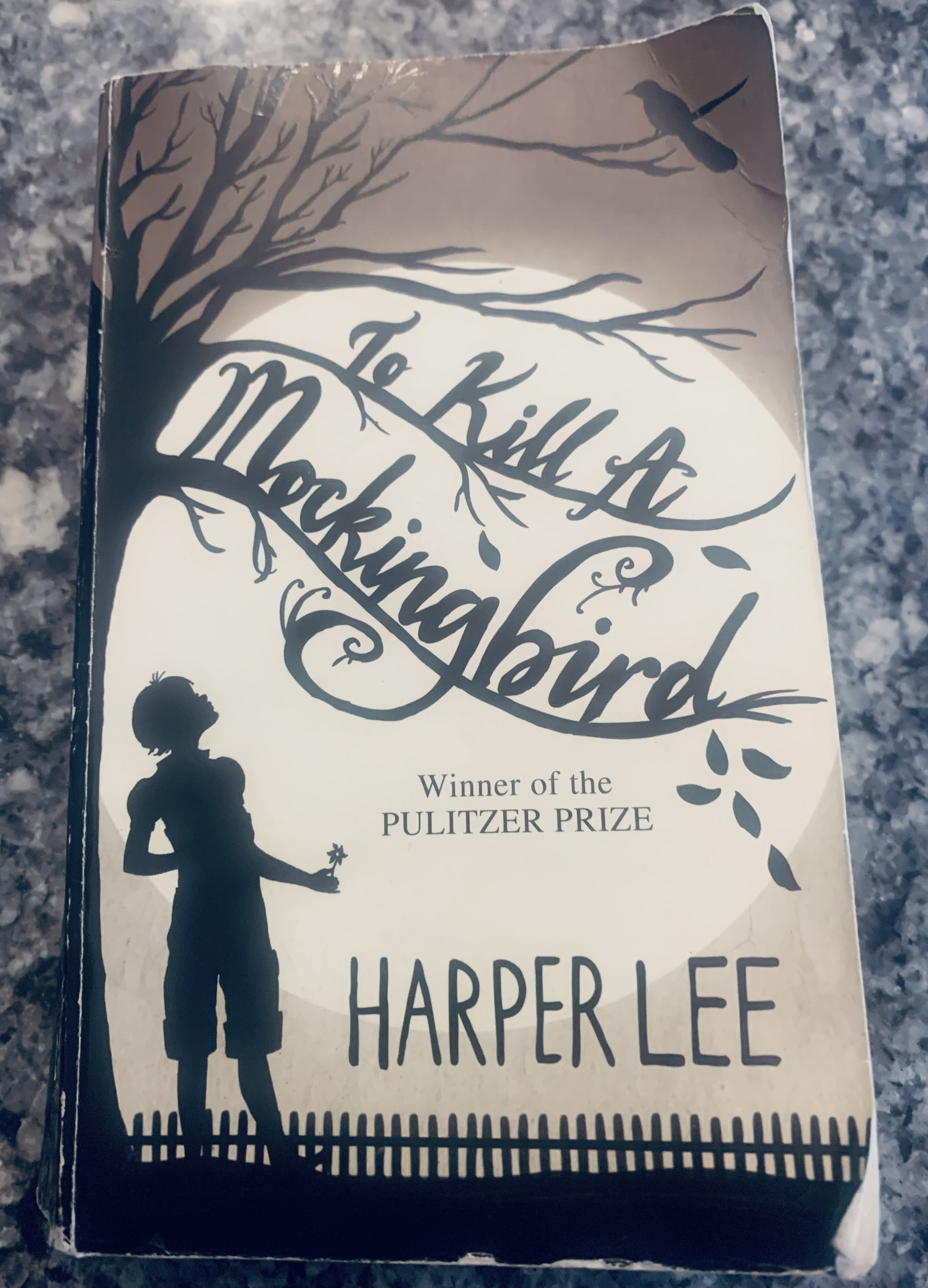
To paraphrase Ta-Nehisi Coates, there is beauty in the struggle — sometimes, to struggle is all we can do, and truth be told, it’s more than most offer. Not that it assuages our sense of injustice, the breadth of it all, but if there weren’t Atticus Finches of the world struggling against it, then we’d be a lot worse off than we are. I’ve finally read Harper Lee’s seminal classic, 1960’s To Kill a Mockingbird, and it’s revelatory as a coming-of-age story — the shattering of innocence, i.e., to “kill a mockingbird,” who merely wants to sing for us — but it’s also a deeply resonate love story, of a father who aches to look his two children square in the eye with a clean conscience in a world replete with dirtying it.
To Kill a Mockingbird is told from the point-of-view of Atticus’ daughter of around 7, Jean Louise, who goes by Scout, who is bucking societal expectations herself as someone who belies the delicacies, desires, and manners of a “lady.” Set in the 1933-1935 Great Depression era Alabama in the fictional town of Maycomb, Scout comes to realize that fellow children and the townsfolk see her father as a “nigger lover” because he’s a defense lawyer defending Tom Robinson, a Black man accused of raping a white woman. Those are fighting words for Scout, not because she (at that point) has affection for Black people, but because she can ascertain the invective of the phrase and is defending Atticus’ honor.
Meanwhile, like the classic perspective of children in a small town, there is a small town boogeyman, Boo Radley, who is said to be deranged, snacks on cats and squirrels at night, and has been locked in the Radley house for decades. Scout, her older brother, Jem, and their friend, Dill, become enthralled with dragging Boo Radley out of his place. They want to see what he looks like. Their attempts don’t work, and even turn dangerous when Radley’s father attempts to shoot Jem, thinking Jem a “Negro.”
Back to the Robinson case, a group of white men form a mob intent on tearing Robinson out of the county jail and lynching him. Scout, Jem, and Dill happen across the scene when seeking out Atticus, and Scout recognizes one of the men immersed within the violent mob. Her plain talking to him is able to dissuade the mob from violence on that night. But think of it. A man who knows Atticus well was willing to initiate violence against him merely because he stood in the way of their ultimate violent desires. Such is how dangerous the mob mentality is, and the hatred wrought by racism.
Atticus is clear-eyed about the Robinson case, though. While he knows Robinson is innocent, and he’s going to give the most steadfast defense he can proffer, he also knows he can’t overcome the racism embedded in the hearts of the white men of the town (and indeed, men, because women weren’t allowed on the jury). An exchange between Atticus and Scout elucidates this point and it’s why I started out paraphrasing Coates about the “beautiful struggle.”
“Atticus, are we going to win it?”
“No, honey.”
“Then why—”
“Simply because were licked a hundred years before we started is no reason for us not to try to win,” Atticus said.
That’s everything. When you’re morally right and righteousness, and you know the odds are against you, that you are perhaps even a minority of one, that you were “licked” before you started, you start and try anyway precisely because it is the right thing to do. To struggle against injustice and the wrongness of the thing. The real futility is to acquiesce to the licking. To stay silent. Atticus can’t stand for it, and eventually, as he teaches Scout and Jem through his actions, neither can Scout, Jem, Dill, and even a few others within the town, who I think through Atticus’ example, found their own voices in little ways.
Robinson is accused of raping 19-year-old Mayella, who comes from the Ewell clan, who would in today’s derogatory sense, be known as “white trash.” They live on welfare, the father, Bob, is a drunk, the children go hungry, stay dirty, and skip school. Yet, when you clear away the grime, they’re still white and that counts for more than being Black. So, if a white woman says Robinson raped her, even if it never happened and her injuries occurred because her father, Bob, witnessed her coming onto Robinson and beat her savagely, it doesn’t matter. The outcome was licked the moment Mayella hollered and Bob witnessed it. Robinson is found guilty, then later allegedly tries to escape and is shot and killed.
At first, Scout doesn’t understand a newspaper editorial criticizing the verdict. She thinks justice was done; after all, Robinson had her father’s defense through an open, public jury trial, and was convicted by a jury of 12 people (notably, not his peers). Then, it occurs to her:
“Atticus had used every tool available to free men to save Tom Robinson, but in the secret courts of men’s hearts, Atticus had no case.” Agh, Lee with another gut punch. Scout later also questions how her teacher could understandably be aghast at Hitler’s actions toward Jewish people, while also having approved of Robinson’s conviction and that “his kind” had it coming. Which also echoes one of the reasons she can’t bring herself to become a “lady”: the hypocrisy.
Robinson’s conviction and death is not enough for Bob, however, because while he knows the town gave into its racist ways, they were looking down upon him and his clan. He threatens Atticus. He tries to go after the judge. Then, eventually, he tries to murder Jem and Scout on their way back home after a Halloween party. Who comes to their defense, if not Boo Radley, real name Arthur. What a lovely way for Lee to bring that story back around, to show that the children never had anything to fear from Arthur and that they shouldn’t have believed the “othering” of him.
Atticus, Scout, and Jem are instant classic characters, as the two children come-to-age within the world they actually live in, Atticus unwilling to lean into the veneer of “live and let live” one Southerner espouses as a philosophy with race relations. More like, they (white people) want to live, and if they feel like killing a Black person for any reason, they can and nobody ought to interfere with that. Atticus is stoic, steady, and steadfast, his own veneer of his convictions rarely slipping, albeit Scout remarks upon his age and seeing him sweat for the first time in defense of Robinson. He was not infallible, merely a man standing athwart history, at least the microcosm of Maycomb, Alabama, saying, “No.” Scout was scrappy, inquisitive, and full of heart. Jem so clearly idolizes his father and takes the verdict harder perhaps than Atticus did, and even as he ages into a teenager, he still loves and protects his sister.
I feel I could go on and on about Lee’s work here. It hit all my feels: rage, righteous approbation of the path Atticus chose, laughter at the childlike and sibling ways of Jem and Scout, sadness about the plight of the Robinsons of that time, and happiness that even in our darkest of hours, there are Atticus Finches around to provide a light, and to stop the bleeding of generational hate.
If you’ve avoided To Kill a Mockingbird because you think it’ll be unapproachable as a literary “classic,” I would advise against that notion. Again, it reads as a coming-of-age love story, and in that fashion, it is endlessly readable while being abundantly profound.

 Milam's Musings