
Spoilers!
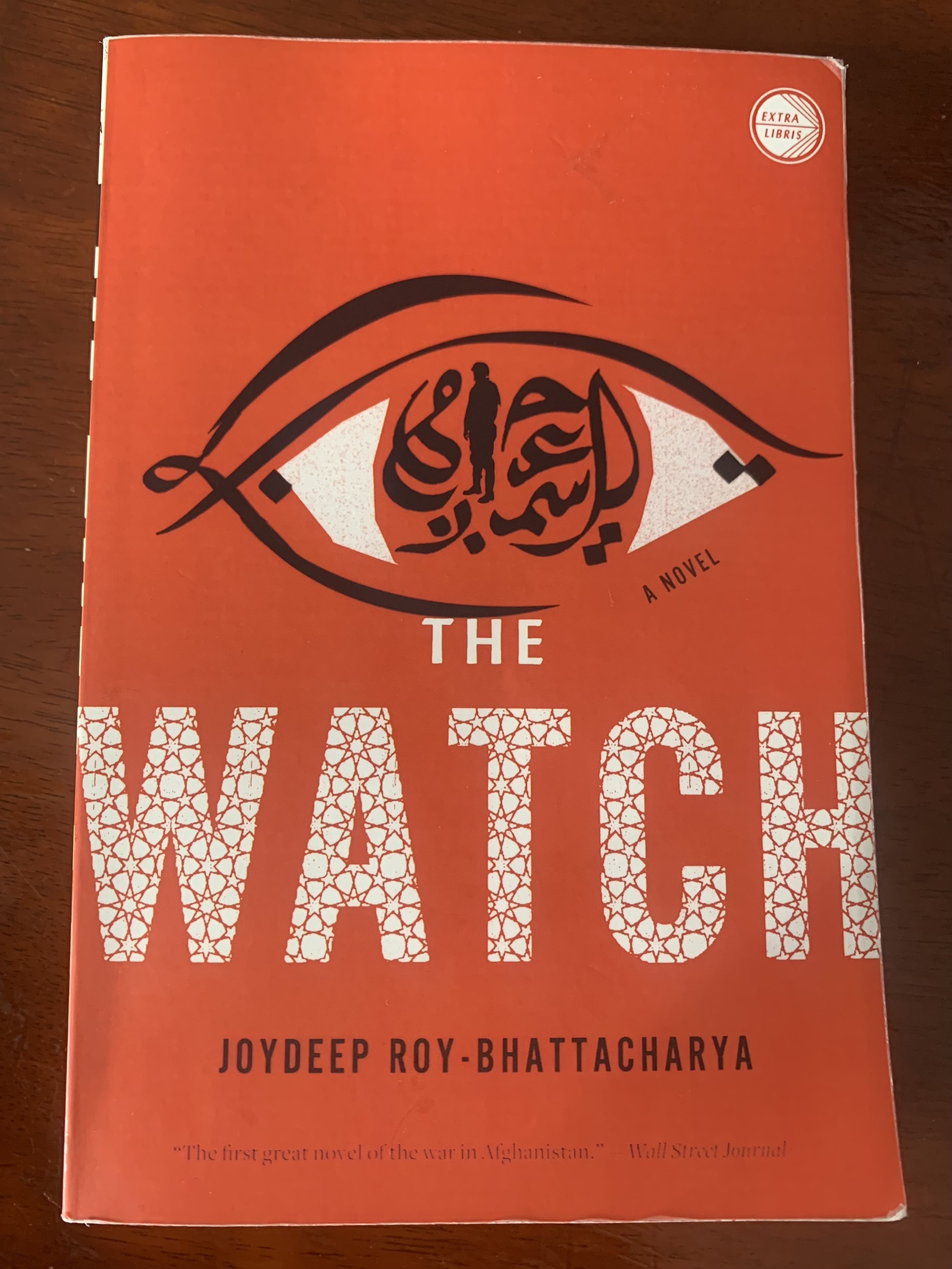
The fog of war is a common expression representing the uncertainty faced by those in in war. I would say a “fog of peace” has entered the conversation in the American context, too, which is to say, a lot of commentary has rightly examined the way in which persistent peace (relative to the past) has made our people bored, bereft of some Higher Purpose, and it’s caused wayward activities and a general listlessness. Interestingly, war since humans have fought war has been imbued with that Higher Purpose — honor, sacrifice, brotherhood — and a fog of a kind is encountering how far more ambiguous modern war is, incapable of granting the wagers of war those Higher Purpose ideals. The acclimation back to civilian life is always difficult for the soldier, but perhaps there is something to be said for the difficulty of a soldier returning from the fog of war to the fog of peace, too. Joydeep Roy-Bhattacharya takes the fog of war metaphor to its most disorienting breaking point in his 2012 book about the War in Afghanistan, The Watch.
In Roy-Bhattacharya’s poetic, unflinching hands, the “fog of war” is both metaphoric, where each of the characters experience distressing dreams and indecipherable realities, and also, literal, as the fog rolls down the mountains in Afghanistan into the base where the American soldiers are waiting, anticipating another attack from the Taliban — mixed in with that fog is an unrelenting, unbreathable coating of dust and despair. Structurally, Roy-Bhattacharya’s book represents the “fog of war,” too, as he maroons the reader with these soldiers, moving from the Lieutenant, the Medic, the Afghan interpreter Masood (modeled after Antigone’s sister, Ismene), the Second Lieutenant, the First Sergeant, back to the Lieutenant via his journal after he dies, and then the Captain. Within each of these chapters, Roy-Bhattacharya also moves from the present to the past to show how these men arrived in Afghanistan, and often the aforementioned lofty ideals that propelled them forward. Finally, Roy-Bhattacharya’s book also reminded me of a Cormac McCarthy novel structurally and with its prose: no quotation marks around dialogue, surrounded by visceral descriptions of the landscape (as readers, we certainly felt the grime of Afghanistan), and poetic ruminations on the meaning of life as expressed through the War in Afghanistan.
A woman, Nizam, who Roy-Bhattacharya models after Antigone from Sophocles’ Antigone, opens the book in what I’ve taken to be a prologue (and then the book works backward to the ending of the chapter). She has no legs, and yet, somehow made it to the American base from her village in the mountains more than 14 miles away. The reason she is there seems simple enough: to bury her dead brother, the presumed leader of the group of Taliban fighters the American soldiers just killed. And yet, this becomes a difficult “ask” of the Americans because they worry she’s a distraction and/or a Taliban Trojan horse of sorts. She could be a suicide bomber. In fact, I think the chapter ends with a heavy insinuation that she is a suicide bomber. She’d sacrificed a lamb as an offering to the base Captain followed by this closing sentence, “Then I reach under the blanket covering the lamb with my life and cut the plaited wire.” Agh!
Going backward thereafter with all of the aforementioned soldiers and leadership at the American base, we see how the presence of Nizam, who doesn’t want food or the bandages on her legs to be cleaned and replaced, and takes to playing a lute at night, disrupts the soldiers and helps to stir up the “fog of war.” The men begin questioning their mission and why they are there in the first place, much less why they should be so afraid of this woman who wants to bury her dead brother. Through all the stories eventually leading to the Captain, he finally makes the decision to help the woman (and get her prosthetics). But as the soldiers move toward her, she makes the movement I described and an American sniper takes her out, killing her. That’s how the book ends. Was she a suicide bomber or not?
What is most illuminating is how everyone, including American, Afghan, and Taliban, are held hostage, so to speak, to the dichotomy of honor and shame. The American soldiers are in Afghanistan to gain honor in the wake of 9/11; certain Afghans are helping the Americans because the Taliban dishonored and shamed them, which is also a similar reason the Taliban are fighting against the Americans, as well as for the honor of their country. The fight for honor and to avenge shame has quite the casualty record underneath it.
I particularly enjoyed the perspective from Nick, the Lieutenant, especially his second section through his journal entries. He’s only 24, and yet, he’s seen as old and feels old because of war. It’s cost him his wife, who sees him and what violence has wrought in him, differently. Nick also provides much of the poetic heft for Roy-Bhattacharya’s book, as well as the vehicle to explore the war-peace dichotomy I started out with. Included in one of his diary entries is a quote from Alfred de Vigny, a French poet and playwright, “War seemed to us so very natural a state for our country, that when, freed from the classroom, we poured ourselves into the army along the familiar course of the torrent of days, we found ourselves unable to believe in a lasting calm of peace.” Unfortunately, I think the real fog comes from the fact that war itself cannot satiate the incredulity in a lasting calm of peace, either. Neither state, war or peace, is one we are comfortable with — both are disorienting in different directions, a fraught honor and a suffocating shame, respectively.
In that sense, ultimately, I’m not sure it matters whether Nizam was a suicide bomber or not, whether she was intent on revenge or innocuous to a stubborn fault. Roy-Bhattacharya’s point seems to be that it doesn’t matter because dead is dead. From which direction the death came seems to matter not to the question of devotion and one’s passions therein, to whether one feels honor or shame, as those feelings are manifest all the same.
Haunting, lyrical, disquieting, and painfully realistic, Roy-Bhattacharya’s book is not for everyone, while also being for everyone who reads it.

 Milam's Musings