
Spoilers (lol).
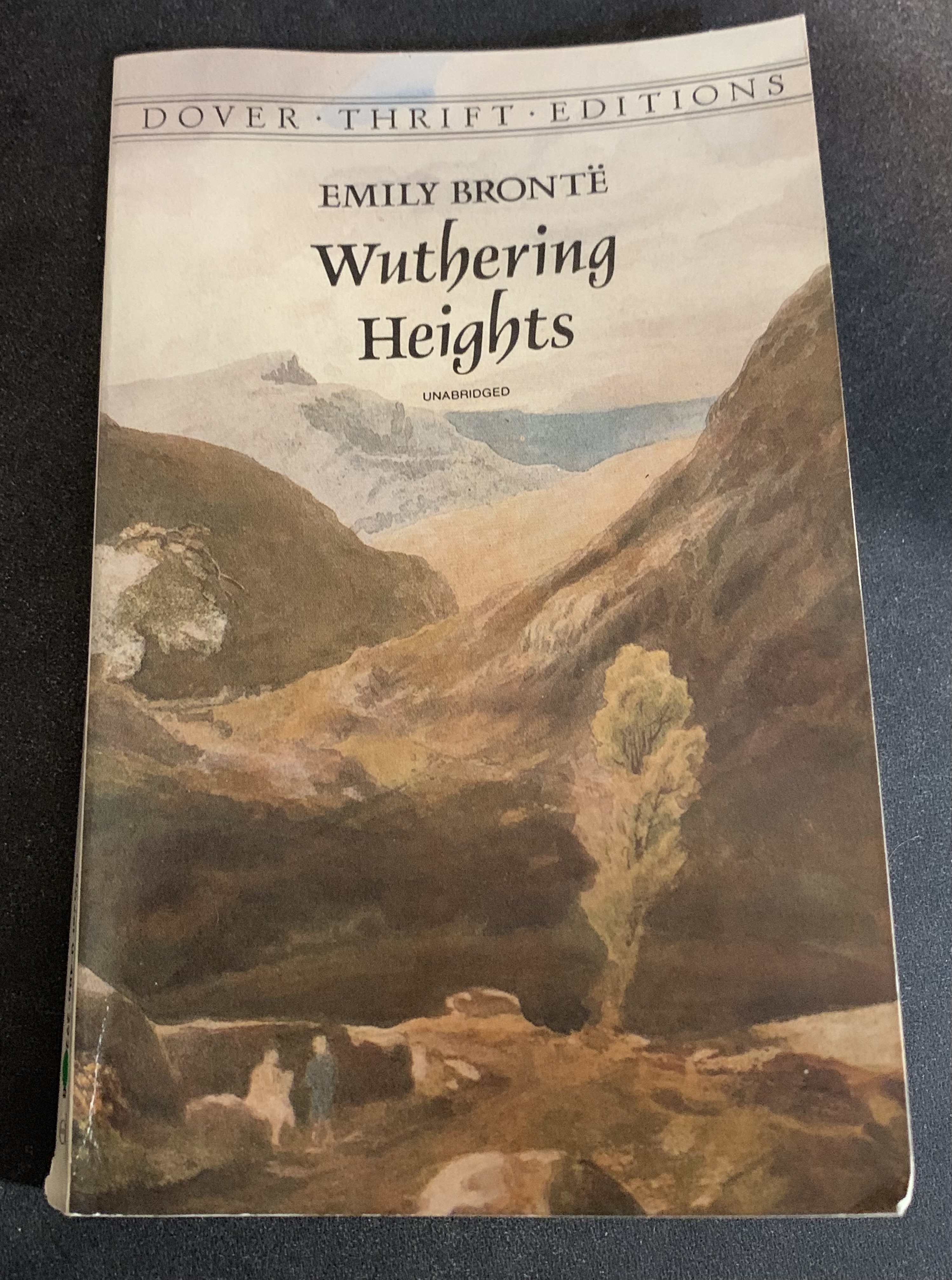
Melancholy is the almost wistful word we had for depression before depression itself (evoking more of an oppressive, omnipresent feeling). When reading about the lives of women before the 1970s, as written by women, melancholy thematically drips from the pages, and indeed, it’s wistful — women yearning for something more, but prohibited by the constraints of the time and the creatures of the time, i.e., brutish men. In reading Emily Brontë’s 1847 literary classic, Wuthering Heights, melancholy is generational, passing from one Catherine to another, as told through the eyes of a woman incapable of redirecting the brutishness at hand. I’m always a bit reticent about reviewing literary classics because what can I possibly say about the book that hasn’t already been said? Melancholy is what I find in the land of Wuthering Heights.
Gossip is the currency of the day in 1801 Yorkshire, where Mr Lockwood, a new tenant at Thrushcross Grange, wishes to learn more about the brutish character of Heathcliff. Heathcliff lives at the book’s namesake, Wuthering Heights. This is not a welcoming place, and Heathcliff, nor the others (Cathy Linton, Joseph, the servant, or Hareton) are hospitable hosts. Naturally, then, Lockwood is curious about Heathcliff, and he gains the currency of gossip via Nelly, a housekeeper who seems to be a reliable narrative of events 30 years prior (given how much she interjects, or tries to, throughout the stories she tells, I’m not sure sure she is!).
We learn that Catherine Earnshaw’s father brought home Heathcliff as an orphan and doted upon him much to the chagrin of Hindley, his son. Hindley is abusive toward Heathcliff, including later when he inherits Wuthering Heights from his father. Heathcliff, though, becomes close to Catherine Earnshaw. I think it’s worth keeping in mind they grow up as de facto brother and sister. Nearby at Thrushcross Grange, Edgar Linton and his sister, Isabella live. Catherine Earnshaw will end up marrying Edgar, and Heathcliff will marry Isabella, but in reality, Catherine and Heathcliff pine for each other. Edgar is also mean and abusive toward Heathcliff, for what it’s worth. Hindley’s wife gives birth to the aforementioned Hareton, who is also treated rather savagely and is illiterate because of it.
Catherine Earnshaw, now Catherine Linton after marrying Edgar, strikes me as having suffered “melancholy” after confessing her love for Heathcliff to Nelly and worrying that Heathcliff overheard her, and because she admits she won’t marry someone of a lower social class. The same situation, of a kind, ends up happening with Catherine’s child, Cathy, too. She’s only interested in marrying a rich, attractive man! Who, by the way, happens to be Heathcliff’s son, Linton.
Heathcliff is a monster of a character, who verbally and physically abuses both Catherine and Cathy, is terrible toward his own son, Linton, and even dug up Catherine’s grave. He wanted to ensure his claim to Thrushcross Grange. Like Catherine before him, Heathcliff’s death comes at the hands of melancholy, too, as he stops eating until his death. Cathy forms a relationship with Hareton, and teaches him to read, which is lovely.
Brontë’s book was not always an easy read, given the language of the time, albeit I like how things were phrased back then. Joseph’s diatribes were especially arduous given the difficulty in understanding his dialect. But the overarching dread and melancholy rolling along the hills of Wuthering Heights that Brontë evoked throughout was palpable and intoxicating. Even when I was moving slower than normal through the book, I was compelled to continue for wont of being in Wuthering Heights, including in the shadow of the dastardly, oppressively Heathcliff oddly enough.
I wouldn’t recommend literary classics lightly, but I enjoyed going back in time with Brontë and finding out why Wuthering Heights is considered a classic.

 Milam's Musings