
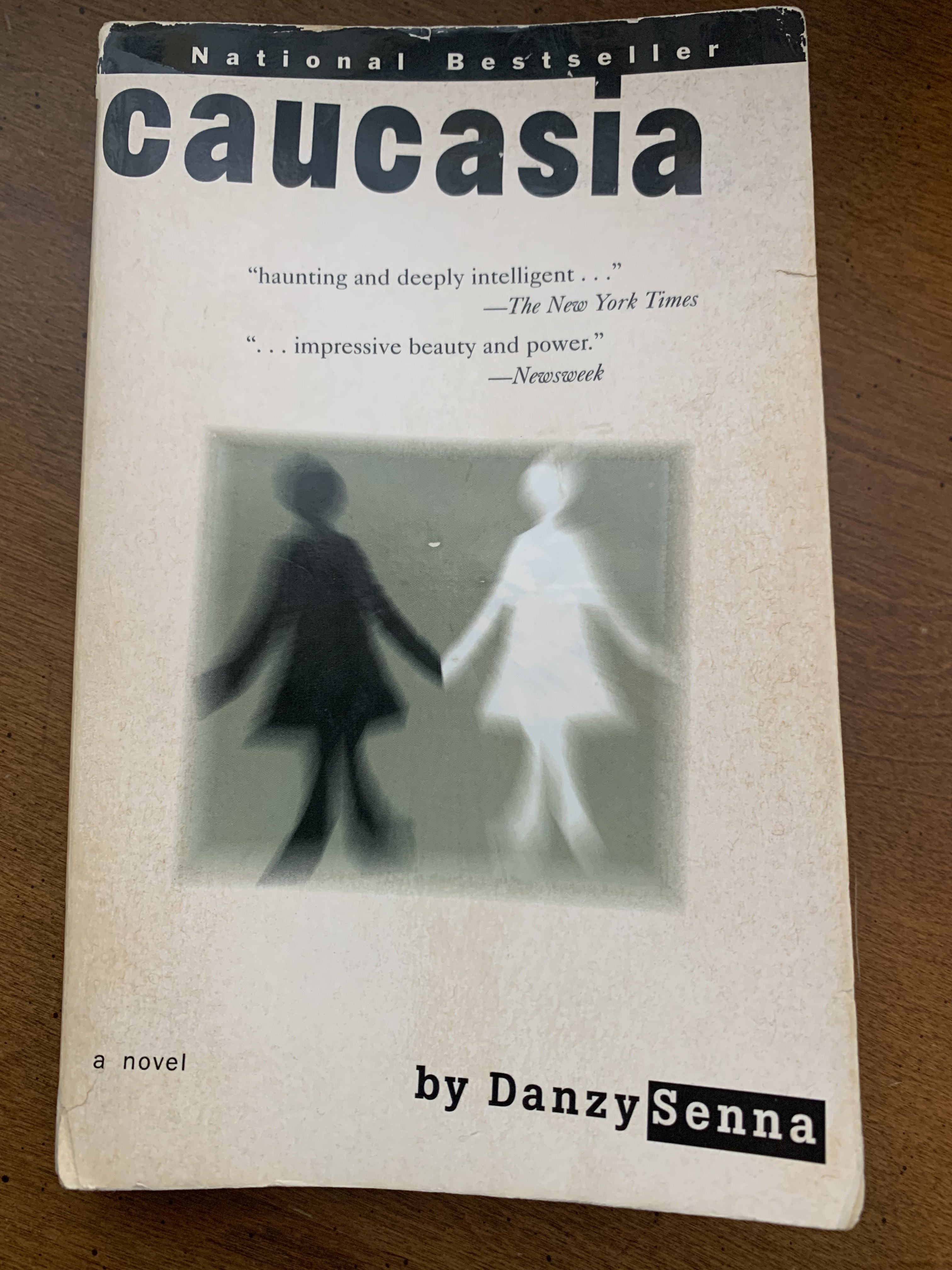
In a world where some view your race as a sign of inferiority, and others as a sign of not being Black enough, you seemingly must settle for invisibility, a sort of blurring, to survive. At least, that’s what Birdie does in mid-1970s New England. She becomes what her white mother needs her to be, which incidentally, is another persecuted minority, Jewish, in order to evade the FBI. She becomes New Hampshire country to fit in with her new friends, shedding her Bostonian city identity. She becomes adrift from her Black father and her sister, Cole, who presents as “more Black.” Ultimately, the “birdie” she becomes is her father’s highfalutin canary in a coalmine, an early warning system about the dangers of racist America. Birdie also becomes that which scares all of us: someone afraid of others finding out “all the world I had lived in, worlds I still carried inside me now.” Danzy Senna’s debut 1998 novel, Caucasia, is a deeply affecting journey book, both of self-discovery and the relationships that constitute a life. As Birdie learns, no matter how far she travels with her paranoid mother, or journeys back to find her dad and Cole, she’s still going to be the mixed girl, who is a social pariah to different segments of society.
Cole is three years older than Birdie. They grew up with their own very cute language, Elemeno, and had a strong bond, despite what was going on with their parents. Their father was an intellectual moving into the Black Power movement, and their mother was from a rich, white Bostonian enclave, but eschewed such things to be a radical, to shake the conscious of white liberals with (it seems) guns and bombs. The parents argued a lot, and as Birdie would come to surmise, they both wanted Cole more. She was the embodiment of their political aspirations and utopia. Birdie could pass as white. So, ultimately, when the mother needed to go on the lam for real or imagined reasons, it was Birdie she took because of her ability to pass, and Cole and the father went to Brazil with his new girlfriend, Cameron. Cameron, a Black woman, initially was sweet and bubbly to Birdie over the phone, but upon meeting her in person and realizing she wasn’t Black like Cole, rejected her. Cole took to her, however, because unlike her white mother, Cameron could do Cole’s hair properly and show her how to apply makeup. That made an impression on the 12 year old she would later regret.
After five years of being on the lam, Birdie and her mother settle on a farm in New Hampshire, where Birdie takes up the name Jesse and her “culturally Jewish” heritage. To survive, as Birdie believes later, she befriended white girls who were blatantly racist to Blacks, Jews, and others. They were particularly vitriolic to the “only” Black girl at the school, Samantha. Interestingly, the day before Birdie absconds from New Hampshire to return to Boston, she encounters Samantha in the woods and can’t resist asking Samantha what color she thinks Jesse is. Samantha jokes at first that she’s Jewish, but later acknowledges Jesse’s Black. She knew all along.
The reason Birdie went back to Boston is to reconnect with her dad and Cole. She needs to know what happened to them. Interestingly, she runs into an old schoolmate whose father also left him, but was close to Birdie’s father. It turns out that schoolmate’s father is gay, which is why he left his family. That’s interesting not only because, obviously, being an openly gay Black man in late 1970s Boston would be rather radical, but because throughout the novel, Senna subtlety hinted at Birdie also being gay. During one of the many stops her and her mother made along their escape route from Boston, Birdie practiced kissing and dry humping with a girl. It made her melt. Later, when she kisses an older boy who lives on the farm, she feels none of that. Anyhow, this old friend of her father’s is able to confirm that her father returned from Brazil and is living in Oakland, California now. Birdie uses that information to then cajole (mostly lie) her aging, rich, white grandmother into paying for airfare. Indeed, when your very identity has become a lie — which itself is already layered over the socially constructed lie of race — then what are these smaller lies to get at the truth, or at least a truth?
Birdie makes it to Oakland and reunites with her father, but it’s not a Hallmark movie moment. Instead, he’s as intellectually distant and aloof as always, and has no good answers for Birdie about why he didn’t seek her out. Still, he takes her to Cole, who gives a somewhat more Hallmark movie-like moment as they puts eyes to each other for the first time in seven years at a nearby cafe, but Cole also doesn’t have good answers. Nonetheless, Birdie has found her people she’d been unfairly untethered from for too long.
The book ends with Birdie observing that, unlike when she was a child and their parents were unabashedly radicalized by the issue of desegregating school buses in Boston, children of all races, including a girl that looks like Birdie, ride on the school bus together in California. They play and act like kids do.
Senna’s novel is an impressive debut, filled with poignant observations about how to navigate not only the messiness of race in America, but life itself, the messiness of our relationships and how we view ourselves separately and in relation to others. To use one more apt bird metaphor, no matter how far we fly from the nest, as Birdie surely did, albeit it was only 2.5 hours away from her Boston home, the nest will always beckon us home. The nest is who we are, whether we accept its accoutrements or not.

 Milam's Musings
2 thoughts