
Spoilers!
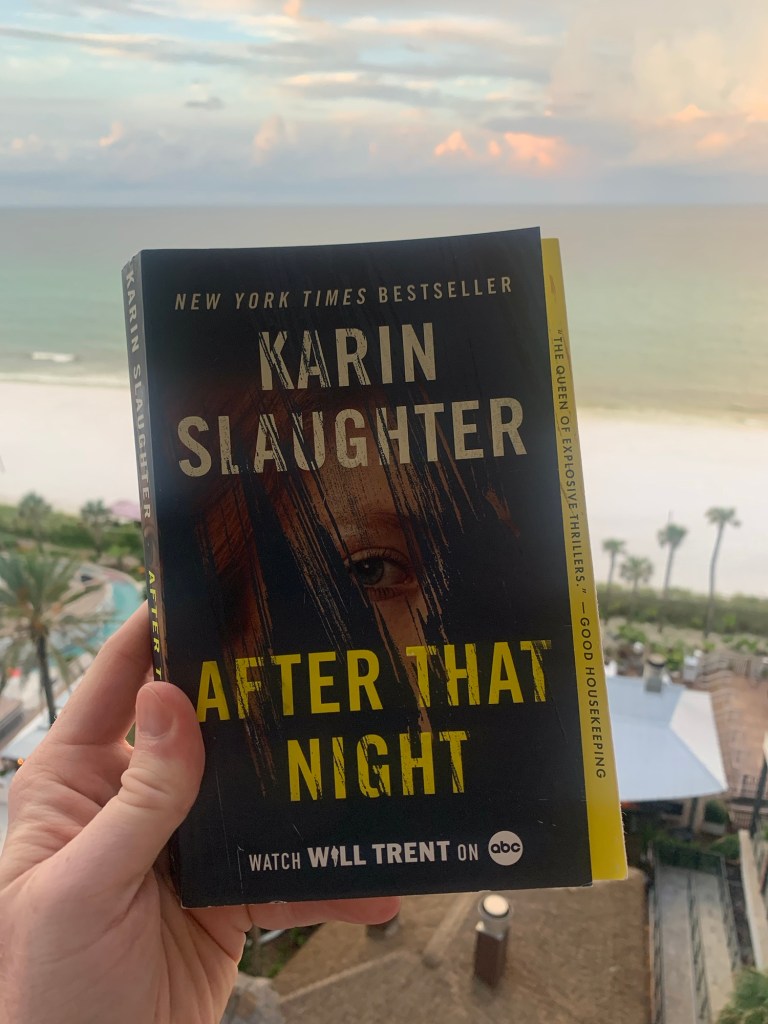
Toxic masculinity is a scourge in our society — or put another way, our patriarchal society still permeates, and influences, the systems and institutions of our society. This despite the great and noteworthy advancements in women’s rights the past 100 years, thanks to pioneering, persistent feminists (since our country’s founding, in fact), and the more modern #MeToo movement. When I first began writing about the machinations of toxic masculinity (including, but not limited to, misogyny, treating women as objects, conquests, or a game, emotional and physical abuse of women, and sexual assault and rape), I optimistically presumed we as a country, society, and culture were in the last vestiges of it. Even the first election of Donald Trump in 2016 to the presidency, a quintessential figurehead for toxic masculinity, I hoped was merely the death throes — the final gasps — of such a culture rather than something far more insidious and long lasting. Alas, toxic masculinity and the patriarchy are here to stay for now, and women, men, gay men, and all of society are worse off for it. My soapbox there is relevant because of Karin Slaughter’s 11th book in her Will Trent series, 2023’s After That Night. Slaughter has always invested her considerable writing talents to unflinchingly writing about sexual assault and rape, and its victims and survivors, believing that such stories aren’t told enough, but After That Night felt like the zenith of those efforts. Indeed, Slaughter addresses the backlash to #MeToo, what can happen when toxic masculinity feeds upon itself, and of course, with care and precision, the ways in which survivors fight back against a system designed to thwart them.
Sara Linton, the medical examiner for the Georgia Bureau of Investigation, has been Slaughter’s main character since she started her prior Grant County series in 2001. In this series, she’s engaged to GBI agent Will Trent. As I said, Slaughter has invested a lot of time into stories about survivors because Sara herself is a survivor of a rape from 15 years ago while in residency at the fictional Grady Hospital. To my knowledge, Slaughter until this book hasn’t delved too much into the grisly details or the way in which the rape (and attempted murder, for the record) shaped Sara’s life. The man who raped and nearly killed her by stabbing her was a janitor at the hospital, was convicted and imprisoned (a rarity), and is out on probation. Slaughter uses that trauma as an inflection point for the story that unfolds in After That Night. A young adult, Tommy, is being sued by the parents of Dani, a woman who was raped and then later died at Grady under Sara’s care three years prior to the events of this book, but not before she told Sara she was raped. That makes Sara the key witness in the wrongful death civil suit. I should note that Sara knows the parents, Mac and Britt. She did residency at the same time as them and was loosely in their “gang” that met up for drinks at a weekly Friday mixer. Mac and Britt are fabulously wealthy, and their defense of Tommy relies upon discrediting Sara as a witness, which involves arguing she is bitter, still, that Mac beat her out on a prestigious fellowship. Later, Sara and Britt have a chance encounter in the bathroom. Britt lets slip that she essentially knows Tommy is guilty, but is going to protect him anyway, and that she can’t stop the “rest of them.” Worse, she tells Sara there is a direct connection between her rape 15 years ago and Dani’s. Oof. But also, whoa.
What I absolutely loved about this book is that perhaps more than any other Slaughter book I’ve read so far, Slaughter imbues it with more detecting! Actual detective work of trying to unravel the mystery and how every disparate clue connects. Heck, she even had Faith, Will’s GBI partner, do the meme of all the connecting strings on a board! And I liked that Sara, Will, and Faith were working on a case more closely together than ever. No secrets between them — open communication and all working seamlessly and supportively to solve the case. Which to that point, to reinvestigate Sara’s rape, Dani’s rape and death, and an additional rape of a woman named Merit (who also died after a seizure under the care of Cam, another one of the residency gang, who years later fatally shot himself), they need to work off the books because the GBI has not been invited to look into those cases. The dialogue between the three as they thought through each case and their connections was so compelling. What really helps him along is that Merit’s brother was able to get Cam‘s laptop with 16 years of internet chat history between at least seven members of the residency gang: Cam, Mac (the presumed ringleader), Chaz, Richie, Mason (Sara’s former boyfriend), and two unknown members. Faith refers to the group as the Rape Club, but thinks better about that in front of Sara and just calls it the Club. But it’s exactly what it sounds like: seven men coordinating how to stalk, menace, abduct, torture, and rape women. The chat logs, not surprisingly then, are filled with misogynistic and demeaning talk about women. And it’s clear that Mac abuses and controls Britt out of sadistic pleasure and to the delight and amusement of the others.
Will is able to infiltrate this club through a literal country club they are members of — thanks to a rich aunt he suddenly has (Slaughter is self-referential about this), who abandoned him when he was in foster care being abused, who is a fellow club member — and gets them to think he was part of the gang 15 years ago. Moreover, he convinces them he helped Cam from being caught for prior rapes, which compels Mac and the others to try to buy John’s (his alias) silence. John’s cover story is that he came from Texas to Atlanta because he was “#MeToo’ed.” Meanwhile, Sara is also doing her own investigation, talking to Sloan, one of Cam’s first rape victims, and Faith interviews Leighanne, the latest victim who survived the ordeal. The Atlanta Police Department, particularly Officer Leo Donnelly who has been in a number of Slaughter’s books as Faith’s former partner, concocted some whole ridiculous theory that Leighanne wasn’t actually raped and was just trying to hide from her mom that she had sex. Disgusting, but unfortunately, an authentic depiction of what happens to victims in real life.
Mac, the sadistic, sick bastard, was culling the Club’s victims from children he operated on. It doesn’t get more depraved than that. But how they really end up nailing the club is twofold. First, Jeremy, Faith’s 20something son, decides he doesn’t want to continue with his chemical engineer career and instead wants to be like his grandmother and his mother: a cop. It just so happens that part of Will‘s cover story is that he has a son named Eddie with a similar background of Jeremy, so, Jeremy goes undercover as Eddie with Will to see what they can get from the Club, including from Tommy and Chaz’s kid, who have been initiated in. Tommy filmed raping Dani and the other kid showed it to Jeremy, which means the GBI has it. (As I said, this wasn’t a GBI case, but eventually, to be able to do undercover things and actually get to a prosecution at some point, they needed the GBI to get involved. So, they all spilled the beans to Amanda, the deputy director and their boss.) What is particularly disgusting is that not only are father and son in Mac and Tommy (and Chaz and his son) participating in the menacing, kidnapping, torture, and rape of women, but Tommy apparently saw his first video in middle school. Middle school. Second, Sara confronts Britt at her home and pushes her Tommy button: give up Mac and the Club to protect Tommy. In a twist, though, Sara realizes as Britt’s talking that she’s one of the seven in the online chat. She’s part of all this. It’s not just father and son, but the mother, too. She’s the one who coordinated everything and also beat Dani nearly to death to protect Tommy. In her sick mind, it was how she kept Mac “satiated” and married to her. Sara was given Amanda’s gun before she went to Britt’s house. After they scuffle, Britt grabs the gun, does a full confession in front of Mac’s cameras he used to watch her, and fatally shoots herself. But she was only able to shoot herself because Sara told her how the gun worked off mic, so Amanda couldn’t hear. I’m torn on this outcome, even though I predicted one of the seven would be Britt, just because nobody would expect a woman to be involved in such abuse of other women (news headlines tell a different story). Was Britt’s confession a legitimate admission of her culpability or the death throes (to use that expression again) of a woman trying one last bid to protect her son and/or also the words of a victim herself? Of course, she could be both culpable and a victim. But why I’m torn is you had at least six awful men, who kidnapped, abused, and raped 50 women over 16 years, and as Faith and Will reference, all anyone is talking about is Britt. I’m not sore how to feel about that choice from Slaughter.
Nonetheless, phew, Slaughter did it again. A highly compelling, if grotesque, story, pitting an array of characters I’m fully invested in against the worst of humanity. As always, Slaughter conveys such brutality — but also such compassion and strength and anger and humanness from the victims, survivors, and their support system, like Will and Faith — realistically as can be expected with fiction. I love where Sara and Will are as a couple in the series; they’re on the cusp of marriage, and fully themselves with each other. That means more time for solving crimes rather than each other, which made After That Night a standout in the series. I also liked the small subplot I’ve been waiting to see: Will and Amanda being more forthcoming about what they mean to each other. For all intents and purposes, Amanda was Will’s mother figure who rescued him from foster care and set him on his career trajectory to the GBI. She wants to be in his wedding. At the end of the book, Will realizes as much. And something good came out of the curmudgeonly aunt. Because she’s dying, and apparently wanted to make amends of some kind, she left considerable money for Will and Sara to start a foundation to help foster kids. I love that. I also love that in her Acknowledgments, Slaughter gave a shoutout to one of my favorite charities to support, the Rape, Abuse & Incest National Network. In addition to running the National Sexual Assault Hotline, they provide resources to help victims and survivors. Learn more about them here.
At the beginning of her book, Slaughter has this anonymous quote, “Remember to speak from the scar, not the wound.” I think that quote is a nice summation of Slaughter’s oeuvre. Sara, Will, and Faith have plenty of physical and mental scars they readily, candidly speak from and us as readers are better for it.

 Milam's Musings
2 thoughts