
Spoilers!
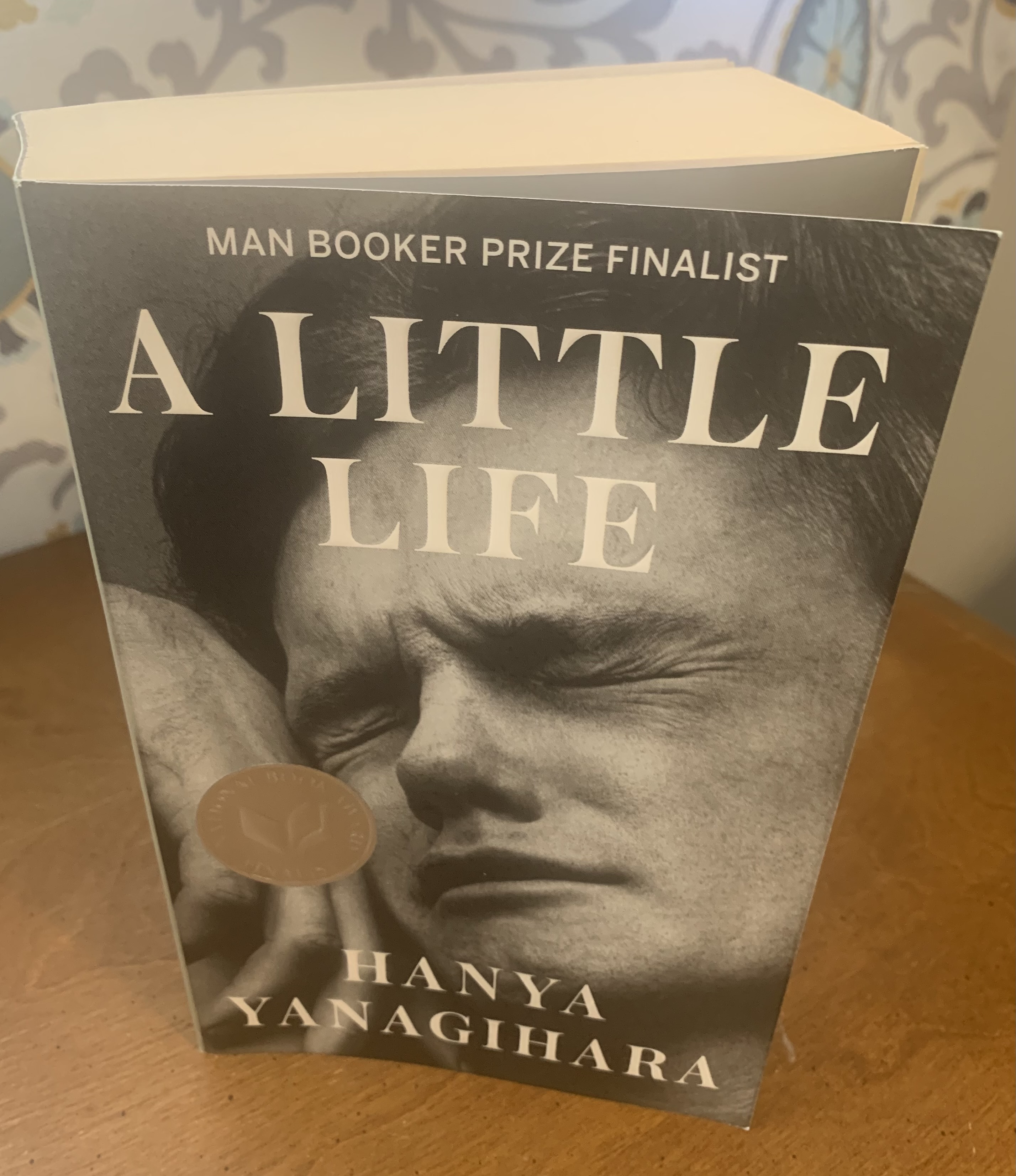
The vagaries of life is intrinsic to a life lived, for better or worse, and even within the worse is the better and in the better the worse still. In Hanya Yanagihara’s sprawling 2015 book, A Little Life, the extent to which those vagaries can constitute a life, however expansive within its smallness, is exposed in the starkest possible terms. Yanagihara’s book is not for the faint of heart, not merely owing to its 814 pages (paperback edition), but for the unyielding, intimate depravity, bereavement, pain, bitterness, longing, and suffering throughout. And yet, like life itself, it felt worth enduring, as it were, for the deeper richness that is life in all its forms — the better components, too, like friendship, love, compassion, the power of food, artistic endeavor, the comfort of a well-designed space, and the benefits of traveling the world. From the depths to the highs, to the enduring of the in-between, Yanagihara’s book arrives at a complicated place: being both one of the best books I’ve ever read, but also one I’d be wary of recommending to anyone.
In New York City, a college friendship foursome is developed. JB is a Black, gay man from Haiti, with a doting mother, aunts, and grandmother, almost doting too a fault, i.e., babying. He’s a painter and an artist, who dreams of galleries filled with people validating his talent and vision. Malcolm is JB’s righthand man, who is also Black and sometimes think he’s gay, too, with well-off parents, a highly intelligent father who Malcolm and his friends find intimidating, and a mother described as “affectionate but absentminded.” He is an architect, who also wants to follow his own vision for what he can construct and offer to people, especially his friends. Willem is white and ostensibly straight, with dead parents, who were there for him when alive, but not particularly affectionate. His prior two siblings died, and his third, Hemming, suffered from cerebral palsy before dying, with Willem acting as loving brother and caretaker to him. Willem is an actor who works as a waiter until his (he hopes) big break. And then finally, Jude, who is at the epicenter of Yanagihara’s story. The reason I’ve been mentioning each friend’s race and sexual orientation is because it becomes a topic of conversation among the friends what race and sexual orientation Jude is. His race is deemed “undetermined,” and he is seen as almost androgenous. The second section of the book, “The Postman,” is Jude’s nickname given to him by JB because he’s “post-sexual, post-racial, post-identity, post-past.” Jude’s parent situation is unknown, as is most of his backstory before arriving at college at 16-years-old and meeting the others. He has a limp from the pain in his legs and back, and he regularly self-harms by cutting himself. Jude is closest to Willem, which makes sense that Willem would continue his quasi-caretaking ways. Being helpful is his love language, although Willem will often feel he’s not doing enough to support and help Jude. As for his occupation, Jude starts in the U.S. Attorney’s Office, and then eventually goes into corporate law as a lawyer defending big pharmaceutical companies and other corporations. JB is the loud one of the group — I feel like each friend group has one! — and is somewhat envious of Willem’s affection and closeness to Jude. Jude and Willem are roommates at a rather dilapidated, small apartment on Lispenard Street. In fact, one of the early dynamics of the book I found so fascinating is how people, like these four, can be so close to each other, and yet, still have misperceptions about them. Yanagihara switches to each friend’s perspective: JB thinks Jude isn’t appreciative enough of his good looks and body (JB is depicted as doughy) without realizing how much Jude absolutely despises his body sees himself as disgusting, hence the self-harm; everyone thinks Malcolm has it made with his well-off parents, but he feels stifled by his father’s presence; everyone I think overlooks how cerebrally insecure Willem actually is; and of course, Jude can’t understand why any of them would want to be his friend.
As Yanagihara weaves the yarns of their lives, we begin to get bits and pieces of Jude’s past, not because Jude is actively revealing it to any of the friends, mind you. As a baby, Jude was left either on a garbage bag or in a garbage bag, depending on whose story you believe, near a monastery. The “brothers” of the monastery found him, took him in, and essentially raised him for the first eight years of his life, but not without a great deal of verbal, physical, and sexual abuse. Only one brother, Brother Luke, seemed to be caring and kind to him. It is Brother Luke who introduces Jude to music, books, other languages, mathematics, and so on. Everything that Jude uses in his adult life. Which is what makes the trauma that goes on to occur all the more difficult to disentangle from. Brother Luke even opens up the possibility for Jude to dream of a world beyond the monastery by promising him that they could one day live in a beautiful cabin in the woods, as Jude reminded Brother Luke of his son who is no longer alive. Unfortunately, it was all a lie, even down to Brother Luke’s name. He was a pedophile and a predator grooming Jude to trust him, so that when the time was right, he could kidnap Jude from the monastery. He drove them to Texas, where they stayed in motels ostensibly evading capture from the brothers, but in reality, more likely, the police. Using his lies and the trust he’d brainwashed into Jude, Brother Luke tells Jude that they need to make money, and the only way to make money is by pimping Jude to “clients”: men, sometimes groups of men, for sex (rape). Jude is 9-years-old at the start of this. Brother Luke stays in the bathroom when the “clients” arrive and rape Jude. Then, eventually, inevitability, Brother Luke begins raping him, too, making it seem like it’s more enjoyable for Jude than what happens with the clients. It is also Brother Luke who introduces him to the bag of razors and cutting. One day, the police arrive at one of the motels they’re staying at, but before they break down the door, Brother Luke runs to the bathroom and hangs himself.
Back in the present day, a legal professor named Harold takes on a fatherly posture toward Jude — a real fatherly posture of respect, admiration, and caring — and helps Jude greatly, for example, move into the legal world. He hosts Jude and the other friends at his dinner parties with his second wife, Julia, and other legal minds where they have fascinating philosophical discussions (I wish we heard more of Jude’s pontificating!). This is a new opportunity for Harold to “try again” with a son, as it were. His son, Jacob, died at only 5-years-old from a rare disease, which ultimately resulted in splitting from his first wife. What is so painful about Harold’s lovely relationship to Jude is that Jude is always waiting for the Brother Luke-like other shoe to drop — that all of this kindness has a built-in nefarious ulterior motive. He’s not lovable; ergo, why would anyone love him? When Jude is 30, after about 12 years of knowing Harold and Julie, they adopt him! It’s mostly symbolic since he’s an adult, albeit he would get the inheritance from Harold and Julia, but for Jude, it’s basically all he’s ever wanted. Except, he’s again anticipatorily waiting for Harold to change his mind, to rescind the adoption offer, and as such, Jude turns to cutting his arms more aggressively than ever. He can never be fully happy because on the other side of happiness is pain, inevitability, as he sees it.
The two things Jude does to abate the frequency of his cutting — cutting he does to “purify” himself of the dirtiness within him from his days in Brother Luke’s motel rooms — is to bake and to clean. (I’ve also used cleaning to abate depression.) But it never fully goes away. Indeed, throughout the book, no matter the highs Jude experiences, like being adopted, he still cuts, even if it’s down to once or twice a week. Even when Harold becomes aware of the secret bag of razors Jude keeps duct taped under the bathroom sink, he still keeps cutting, this despite Harold’s attempts to repeatedly throw the bag away. Even when Willem learns of the cutting, Jude still keeps cutting. Even when Andy, who is Harold’s primary care physician and becomes a vital friend in his life, learns of the cutting, Jude keeps cutting. And Harold, Willem, and Andy feel powerless and helpless to stop it. At one point, Andy elucidates his quandary: he’s asked psychiatrists he knows about what he should do with Jude, but he still can’t determine what the right answer is. He tells Jude he’s so high-functioning, as a lawyer and a friend to others, that he almost doesn’t want to upset his equilibrium, as it were, by committing him to a hospital. Later, when Jude has bruises on his face and Andy’s worried Jude did that to himself, Jude assures him he hasn’t (he’s telling the truth, but still lying about the source of the bruises) and that he’s not doing anything else to himself, “just the cutting.” To which Andy says, “Just the cutting!” That’s where they’re at, when “just the cutting” could be seen as a relief. No matter how insistent Andy and Willem and others are, Jude will not go into therapy, and he certainly won’t allow himself to be committed to a hospital. He says he needs to cut. It’s so damn tragic. Because of his cutting, nobody, at least until Andy, has ever seen his arms. They certainly haven’t seen his back that looks like it’s been flayed by a whip or the grotesque wounds that open up on his legs that we learn is from some sort of “car crash.” Nobody can touch or hug him, either, because he takes it as a sign of incoming abuse; he’ll flinch away.
At one point, Willem is wondering about Jude’s relationship status again, and whether he would be interested in meeting a woman who is interested in him that Willem knows. Jude is not interested because he can’t imagine that anyone would be interested in him. Just as significant, he doesn’t want to have sex. He associates sex only with pain and discomfort, just another thing to be endured if it happens. He reflects how people in his life must view his situation: either singlehood is not his decision but a “state imposed upon him,” or with hostility, that singlehood is his decision, a “defiant violation of a fundamental law of adulthood.” To be single at 40 is much different than being single at 30, he surmises, and with each passing year, his singlehood “becomes less understandable, less enviable, and more pathetic, more inappropriate.” It’s fascinating how invested parents, siblings, grandparents, friends, colleagues, etc. become with someone else’s romantic life. I say that as someone currently single at 35. But all this questioning of Jude’s status does open up to him the possibility of being in a relationship, so, when he meets Caleb, the CEO of a fashion store, at a dinner party, he allows himself to have a follow-up dinner with him. Afterward, he allows Caleb to drive him home and even walk him up to his building in the rain. Caleb then (rather forcefully) kisses Jude, and Jude allows it to happen. We fast-forward a few months where we learn they’ve become an item and have even been having sex, not that Jude is enjoying it, of course. Worse still, Jude’s preconceived idea that happiness is always followed by pain is vindicated — as is his belief that he’s disgusting and unlovable — when Caleb punches him in the face. Jude, and certainly, Caleb, tries to excuse this as a one-off, but then he gets punched in the sternum later. Caleb supposedly had parents who ended up sick and in wheelchairs, and the sight of Jude using his wheelchair, which he sometimes does when his legs and feet are in great pain, sickens him. He savagely beats Jude one night when Jude trips over his feet and drops a plate of food, and then he rapes Jude. The worst moment, and a moment for which I alternated between tears in my eyes and haunted chills, is the next “incident.” So, Jude meets Harold and lies to him and others that the bruises on his face are from a tennis accident (these are the bruises Andy confronted above). While at dinner with Harold, Caleb drunkenly stumbles in to confront Jude. Upon realizing Harold’s his father, Caleb spits out, “How do you feel about having a cripple for a son?” My jaw was on the damn floor. Harold is obviously ready to fight this guy, but Jude is mortified and prevents any further escalation. After Harold drops Jude back off at his house, Caleb, who has a spare key, surprises Jude back in his apartment. He first rips Jude’s clothes off and makes him standout his Greene Street apartment, whereupon he’ll only let Jude back in if he acknowledges how gross he is and if he apologizes to Caleb. Humiliation. Then, he throws Jude down the stairs. Pain (and attempted murder). Harold, who hasn’t heard from Jude, comes over to the apartment and finds Jude alive, but savagely hurt. The tears in my eyes came when Andy, who was so close and helpful to Jude, sees him in that condition. Ugh. Caleb was the damn worse, and I hated him for validating Jude’s worst thoughts about himself. As Jude reflected before the latter incident: There is a sort of symmetry to his pairing with Caleb that makes sense: they are the damaged and the damager, the sliding heap of garbage and the jackal sniffing through it. Jesus. Caleb, like Brother Luke, dies prematurely, this time by cancer.
Roughly speaking, all of this was about 370-ish pages into the book, and my brain started wondering, how the heck is Yanagihara going to keep this up for another 400-plus pages? She does.
As the friend foursome grows older, they each have success in their endeavors: JB has his successful art galleries; Malcolm starts his own architectural firm; Jude joins the aforementioned corporate law firm and becomes a partner; and Willem is a famous, critically successful, award-winning actor. However, the foursome sees their first real crack when JB falls in with a bad, rich dude named Jackson, and becomes addicted to meth. When the other three try to stage an intervention, JB, in his frantic, drugged state, mocks Jude’s disability resulting in Willem knocking him out with a punch, and Jude and Willem not talking to JB for quite some time. Eventually, each would forgive JB.
After the Brother Luke situation, Jude is put into a foster care home. He thinks he may get adopted by this older couple, but they end up rejecting him (the scene where the foster kids go to an auditorium, waiting to see if they’ll be adopted, is a brutal, heartbreaking image). Meanwhile, while at the home, the counselors, like the brothers at the monastery, verbally, physically (they are the ones who flay his back), and sexually abuse him. One night, after being raped again, Jude escapes into the forest. He then uses what he sees as his only “skill” — being raped by men — to make his way from Montana to Boston, but he only gets as far as Philadelphia before he is kidnapped by someone named Dr. Traylor, ostensibly a psychiatrist. He keeps Jude locked away in his basement until inevitability, he begins raping him, too. This might also explain why Jude is hesitant to see a psychiatrist. Jude tries to escape from Dr. Traylor, but he catches up with him and beat him with his belt. Later, when Jude starts getting too old (he’s still only 15!), Dr. Traylor releases him, but not before running him over with his vehicle. That’s when the “car crash” happened and Jude was never the same with his legs. After that incident, Jude is with a good social worker named Ana, who keeps trying to get him to tell his story because he needs to essentially get it off his chest, but he won’t even tell Ana, who he comes to trust perhaps more than anyone up to that point. She dies of cancer, and that’s what eventually leads into the beginning of the book with Jude in college and meeting JB, Malcolm, and Willem. While still in college, police tell Jude that Dr. Traylor is dead. If there is any silver living to Jude’s trauma, it’s that the perpetrators of it all die prematurely and are still physically around to harm and/or haunt Jude.
A year after Caleb tried to kill him, Jude tries to slit his arms enough to kill himself. It doesn’t work. Not long after that, when I believe they’re in their early 40s, Willem realizes he has feelings beyond friendship with Jude. That he’s attracted to him. At first, though, he’s not sure if he’s conflating his friendship love with romantic love out of duty or some other misguided benevolence. But he acts upon it, and Willem and Jude become a couple! I didn’t see that coming at all. The reason that Willem was even available to consider Jude is because his girlfriend broke up with him after he cheated with another woman. Willem cheating does not fit his character at all, in my humble opinion, and it’s one of the few parts of Yanagihara’s book I felt missed the mark. Nonetheless, as before with Harold and Caleb, Jude doesn’t feel worthy of Willem’s affection and love. Like with Caleb, Jude also endures sex with Willem, even though it’s still not pleasurable. And as before, Jude is still cutting himself. I should note, by the way, that these two becoming a couple, which should be a happy time, is under the section self-referentially and ironically denoted “The Happy Years.” But things only get worse, living up to the irony. First, Willem stops having sex with Jude once he stops deluding himself that Jude likes it. They talk about it late at night. In a relatable reflection, Jude says he prefers having deeper conversations at night or in the early morning upon waking (same) because it’s almost like the darkness is a comfort and/or a shield in those vulnerable moments. But again, where I think Yanagihara strays in Willem’s characterization, is that Willem and Jude have an “open relationship” after they stop having sex, where Willem can have his sexual needs fulfilled by women. Willem would never cheat on Jude! Weirdly, too, is that Willem, despite being with a man and having had sex with that man, doesn’t consider himself gay.
In their first fight in nearly 30 years, Willem sees Jude cutting himself for the time and is aghast, not only at the sight of it, but that despite being with Willem, Jude is still cutting himself. Willem grabs the razor and slices himself across the chest multiple times. After this fight, they drive to Harold and Julia’s house for Thanksgiving (Yanagihara made Thanksgiving something of a reoccurring motif, where family came together no matter the ups and downs of life). At night, Willem finds Jude cutting himself again, this time in the thigh, despite the danger of infection from his always-wounded legs. In another goosebumps moment, Willem claims Jude loves cutting more than him, and Jude retorts something about how Willem just sees Jude as another Hemming to take care of. Oof. They eventually come back together, but damn. You can’t unring the bell of those words. Their relationship truly comes to a head when, after I believe Jude has promised to stop cutting himself for Willem, he instead decides to burn his arm. He pours olive oil on it and lights it on fire. After putting his burnt flesh out in the sink, he pours freaking salt on the wound. Willem cannot believe it when he finds out the truth (Jude lies a lot in this book to cover up his self-hatred). Ultimately, Willem gives him an ultimatum: he either sees Dr. Loehmann, a psychiatrist, or commits himself to a hospital, or Willem is leaving. Jude goes to Dr. Loehmann’s, but he’s still not quite taking it seriously and he’s certainly not offering anything up.
If all of that wasn’t bad enough, Jude’s legs finally give out on him, like Andy knew would happen, and Jude, who never wanted to think of himself as disabled, deep down knew would happen. Andy has to amputate Jude’s legs below the knee after a few awful bouts of bone infection. Jude does not want to give up his legs or the fiction that they could be well again one day. He relents, after enough prodding from everyone, and eventually is walking better than he did with his actual legs on his custom-made prosthetics. After all of this, everything seems to be going well. Jude and Willem even reflect upon how remarkable their life is: starting from Lispenard Street to Greene Street to having a lovely home constructed by Malcolm in Upstate New York to also having their own flat in London. Then, inevitability, at the end of “The Happy Years” section, Willem is bringing Malcolm and Sophie to his and Jude’s Upstate New York house when a drunk driver smashes into them; Willem, Malcolm, and Sophie are killed. This scene didn’t have the impact Yanagihara perhaps intended because I expected it! Willem’s death was blunted by the tragedy and depravities that kept befalling Jude, so, I was conditioned to anticipate Willem’s tragic, premature death. To be fair, I didn’t expect Malcolm and Sophie to die as well. The friendship foursome is down to two.
After their deaths, Jude is obviously adrift and bereft without Willem, someone he knew for nearly 40 years, both as a close friend and then as a lover. He realizes that now is the time to finally kill himself, but it doesn’t truly begin in earnest until Andy, who is nearing retirement age, tells Jude he’s transitioning the practice over to a new doctor. Jude doesn’t want to try with another doctor. He’s tired. And he misses Willem fiercely. Despite his promise to Harold that he wouldn’t try to kill himself again, Jude, I guess you could call it, passively, begins trying to kill himself by not eating. Eventually, like always, Harold, Andy, and his other friends catch on to this, and commit Jude to the hospital with a feeding tube and strict instructions to get his weight back up. However, in the final section of the book, “Lispenard Street,” bookending the beginning, and told from Harold’s perspective, we learn Jude succeeded in killing himself. Shortly thereafter, Harold mentions other deaths, like Andy’s, that occurred. Harold is 84-years-old at the end of the book, and reflects on what he could have done differently for Jude. That no matter what Jude had in his life — loving friends and parents, a fulfilling job, meaningful nonprofit work, money, the ability to travel the world, even newfangled “legs” — it was not enough to surpass the trauma he experienced. Indeed, that it was almost inevitable for the trauma to win in the end, or as Jude came to see his memories of Brother Luke and Dr. Traylor, the hyenas would eat him alive. At a certain point, you get tired of running from the hyenas. You get tired of expending so much energy trying to be normal, of holding off your traumatic past, of cutting to feel “clean” again.
Harold finds an album of Jude singing to him that Jude hid in a bookshelf as his adoption day gift, which he was ashamed of for being too small for the moment, and that I had forgotten about. What a lovely reminder, though. But Harold and Julia also read the letter Jude left behind detailing everything that had happened to him in the past. Harold can’t wrap his mind around Jude dying thinking he owed an apology to them, or that he died still thinking he was unwanted, unlovable, and disgusting. In fact, it makes Harold think his entire life has been a failure. He doesn’t know what to make of any of it, only that he tries to be kind to everything he sees because “in everything I see, I see him.”
Similarly to Harold, I’m not sure what to make of Yanagihara’s book, a book where you endure a character’s trauma, page after page, even endure the trauma and pain that accompanies happiness, and there is no happy ending to try compensate it all, as if it all could be compensated anyway. Instead, there is only more heartbreak, another life, Jude’s, cut short (perhaps pun intended there). Life is beauty and pain, and we all try to make something of our “little lives,” whatever may constitute them. Jude reflected at one point in the book how millions of people, billions even, experience unfathomable misery and yet, still keep living. Like he has, although he tried to override whatever evolutionary circuitry compels us to keep on living, and ultimately, did override it. I don’t think Jude succumbed, as it were, to his trauma and his past, however. I don’t think the hyenas won because Jude died by his hand. He lived a beautiful life in spite of that trauma, that past, and those hyenas. That I think is what’s worth holding on to, and maybe what Yanagihara was getting at.

 Milam's Musings