
Spoilers!
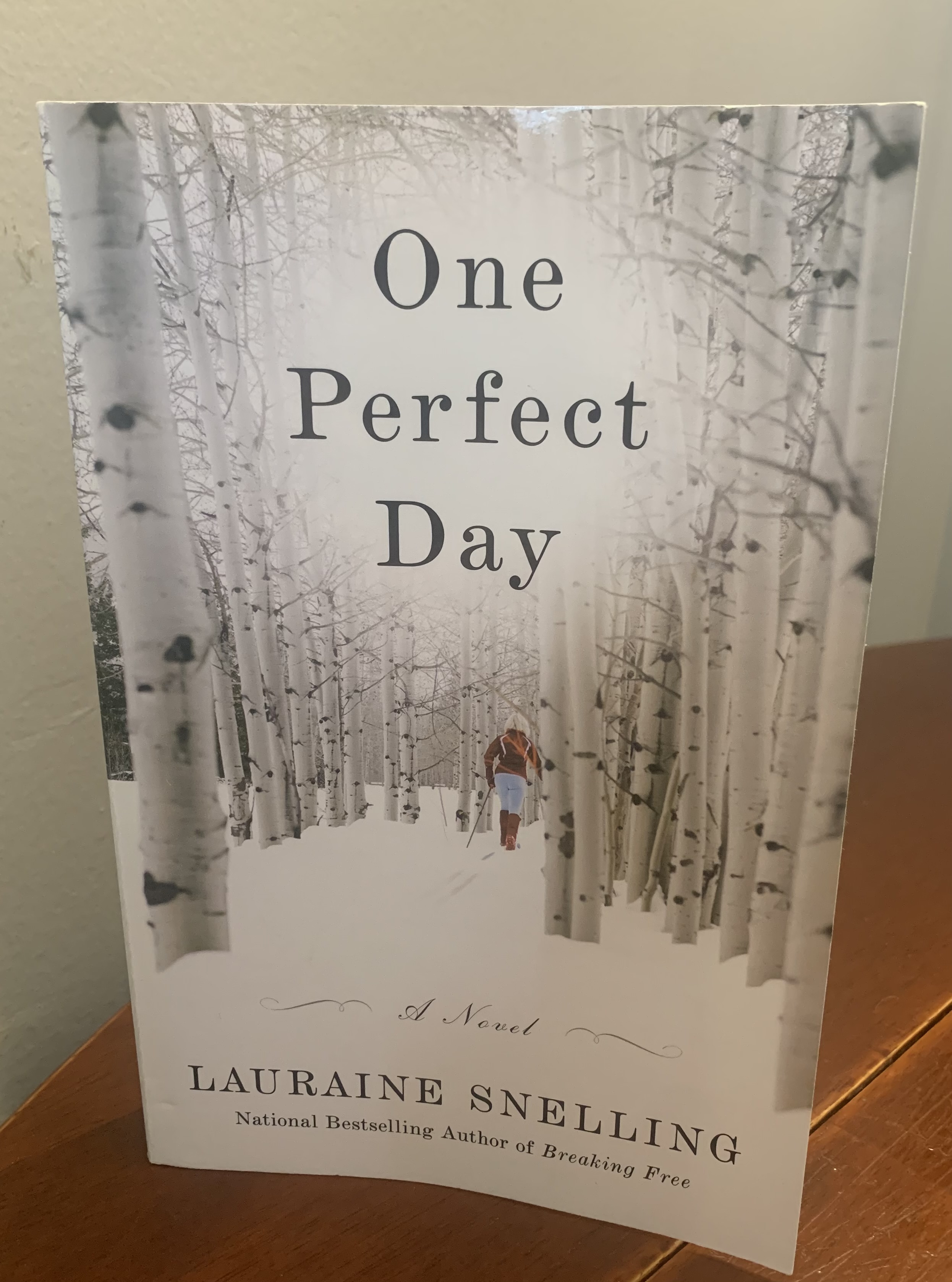
Grief is love, and if love is enduring, grief will never abate as such. Instead, grief remakes us, and eventually, we learn to continue living in its image. The most complex aspect of organ donation and transplantation is the yin and yang of grief and happiness manifest: someone, somewhere has died in such a manner as to become an organ donor, and someone, somewhere is a match for that gift. One family is thrust into the new reality of grief’s making; and another that of newfound happiness and relief. But also, the first family may feel a profound sense of hope that their loved one was able to help someone else; and the recipient and their family sadness at the origin of their gift. In these complex emotions are the wellspring of hope, remembrance, and legacy. Lauraine Snelling in her 2008 book, One Perfect Day, captures the yin and yang of organ donation, where one’s worst day is one’s perfect day, one’s tragedy is another’s salvation. As in yin and yang, such a dichotomy is beautiful and inspiring, and deeply, abidingly human. Snelling did a commendable job bringing such raw, unflinching feelings — distilled through faith and questioning of God — to bear in her book.
Nora lives in Minnesota with her twins, Charlie and Christi. They are on the cusp of graduation, high school, and leaving the nest. Charlie is the more extroverted of the twins, who spends his time volunteering and working as an elf during the holiday season. Christi is more reserved, a painter, and dotes on her brother. Nora’s husband, Gordon, travels a lot for work, and is gone in the lead-up to Christmas. Busy with preparations for Christmas, Nora wants to make this Christmas — the last vestige of her twins’ childhood — special. She views it as the “last one” in that sense. Jenna in Nebraska is an ER nurse, whose daughter, Heather, is desperately in need of a life-saving heart transplant. Her husband died when Heather was a baby, but her brother-in-law, Randy, is involved in their lives. Similar to Nora, but for a very different reason, Jenna views the upcoming Christmas holiday as potentially the last one with her daughter. She constantly aches with the thought of her daughter dying. Nora wants one last “perfect day” with her twins; Jenna wants “one perfect day” to be Heather receiving a new heart. Something both women share in common is faith in God. Because of her work and caregiving duties, Jenna hasn’t had as much of an opportunity as Nora to stay plugged into the local church and her faith. (Nora regularly journals and reads her Bible, as well as attends church.)
In short order, Nora’s seemingly idyllic life is turned upside down. That’s how fast life can change. Charlie is hit head-on by a driver who skidded on black ice. When Nora and Christi arrive at the hospital, the news is grim. Charlie is brain dead and a ventilator is the only reason his heart is still pumping. They are approached about organ donation. Nora is aghast at the idea because in her head, Charlie’s still alive and could recover. He’s in God’s hands, after all. When Gordon finally arrives, Nora isn’t ready to change her mind yet, despite Charlie designating himself as an organ donor. She seems to only relent when Charlie says she can no longer sense her twin’s presence.
Meanwhile, Jenna answers the most important call of her life: a heart is available for Heather, and they need to rush to Omaha, Nebraska as fast as possible. Thanks to the help of a doctor, the police, and local pilots, they are whisked away to the hospital quickly. Jenna now is having different conversations with God. Where before it was wondering if Heather would live to see another day, now it’s wondering if she’ll come out of the major transplant surgery well. She does. There’s a minor blip with the antirejection medication, but Heather manages. In fact, she’s up and walking, providing moral support to another patient in the hospital who just received a living kidney transplant from his brother. Heather on the mend introduces something new to the fabric of her and Jenna’s lives: hope, and the possibility to dream about that future. That’s where Jenna’s budding romance develops with Randy, and Heather adopts two dogs. Heather is also already trying to reach out to her donor’s family to express her gratitude.
Back in Minnesota, Nora is not doing well, obviously. She’s besieged by grief, as is Christi and Gordon, but everyone experiences grief differently. For Nora, her grief is virtually debilitating, whereas Christi expresses her grief through anger, including dark paintings, and Gordon returns to work. Complicating matters is that Nora’s faith is rattled. How could God do this to her? How could he take Charlie? What kind of plan is this? I’m such a goober because the most heartbreaking scene in the book wasn’t even Christi crying over her twin — and I’m a twin! — but when the family returns home after Charlie’s death and Betsy, the family dog, is excitedly wagging her tail. That juxtaposition did it for me. But it’s through the unconditional love and comfort of Betsy, as well as her insistent human friend, Susan, that Nora begins to claw her way out of the debilitating manifestation of her grief. And it wasn’t quick; it took four months to even begin to have a modicum of normalcy within this new reality, that is, occur. Honestly, though, I didn’t much like Gordon! In addition to there already seeming to be some unspoken bitterness between the couple over the nature of Gordon’s work, Gordon seemed too quick to want to “move on”, and I use that phrase intentionally because that was his sentiment to Nora. I don’t think he was as comforting as he could have been. Then, when Nora is worried about Christi being suicidal after the sudden loss of her twin, he brushes it off.
Even so, the book does end on a positive note for both families. Randy proposes to Jenna, and the family of three move into a new house with their two dogs (and a disgruntled cat). Heather also writes her letter to the donor family. Nora and Christi begin to make headway on their headbutting relationship. The book ends with the two reading Heather’s lovely letter. I really liked the one line she used, “My mother says He is the original recycler, never wasting anything.” In other words, God found a new purpose for Charlie. Certainly, to be clear, not an easy way for Nora and her family, but one that can give a measure of hope to them, nonetheless.
I work in the organ donation field, and I’d be remiss if I didn’t address some of the misconceptions and/or facts mentioned in Snelling’s book:
- Comatose and brain death are not the same. One can possibly recover from being comatose, whereas brain death is an irreversible cessation of all brain functions.
- The doctor is not involved in discussing organ donation with the family (the initial doctor in this book was rather curt about it, too!). Hospitals are legally required to refer potential donor cases to organ procurement organizations, or OPOs (which is the organization I work for). Representatives from the OPO are the ones who address organ donation with the family. Doctors do not have access to a donor’s driver’s license, as the book’s doctor did, nor the donor registry.
- While you may hear the word “harvest” in connection to donation, we prefer the world “recover”. We recover gifts for donation; we do not “harvest.” The use of the word “recover” is not just a word game. It conveys dignity and respect upon the selfless gift, the donor, and the donor family.
- Nora is upset when the doctor, her family, and the priest begin discussing organ donation in front of Charlie. She was right to be upset because that shouldn’t happen. The OPO representatives do not discuss organ donation in front of the donor, again, out of respect.
- The book is correct that even though Charlie designated himself as an organ donor on his license, since he’s 17, the parents still make the decision. That is why we encourage anyone under the age of 18 to discuss their decision with their family, should something like this occur. (But even if you’re over 18, you should still discuss your decision with your loved ones!)
- Also correct is that ideally, if you want to reach out to your donor’s family as a recipient — or the recipient as the donor family — the best method is through the OPO, who has a team ready to facilitate correspondence. That said, it’s worth remembering that not every donor family and recipient corresponds since grief is complicated and so individualized, and it’s even more rare for the donor family and the recipient to meet.
Overall, notwithstanding some of those misconceptions I mentioned, Snelling’s book was a compelling look at the two sides of organ donation: the donor family and the recipient. It’s not an easy story to tell because of how complex donation is, and how complex the feelings are for everyone involved. But it’s a story worth telling for its positive, life-saving impact, and for that reason, I’m grateful Snelling used the power of the pen to tell the power of the gift of life.

 Milam's Musings