
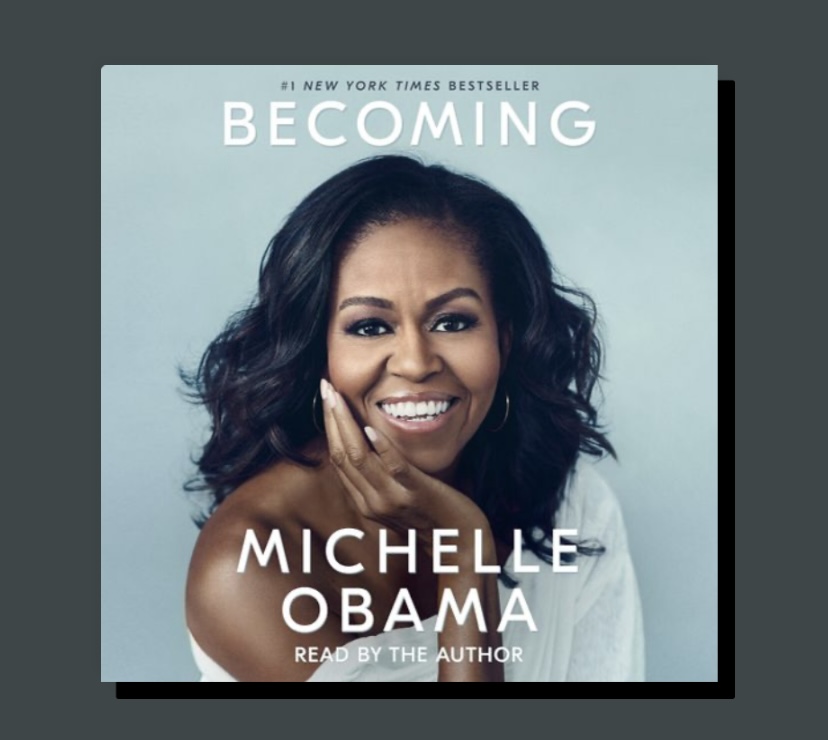
I’ve always been fascinated by presidential history precisely because of the power the office confers upon its occupant and the momentous, often deleterious decisions, that officeholder makes. I’ve given less attention, however, to a far more peculiar and unofficial position in the federal government: the First Lady. More a role defined by historical custom and tradition than constitution or law, the First Lady occupies a murky position in American democracy wherein she (because it’s always been a she even if not necessarily always a wife) is expected to be all the things as it pertains to those customs and traditions, but far more subtle and unseen as it pertains to policy since they weren’t elected per se. The First Lady is meant to be a regal hostess for the White House in a society that ostensibly shunned such regality. The notable exceptions to this First Lady paradigm were Edith Wilson, who some argue was a de facto president after Woodrow Wilson was debilitated with a stroke (this was prior to the 25th Amendment); Eleanor Roosevelt (wife of FDR), who was actively involved in civil rights; and finishing off the 20th century, Hillary Clinton, who tried to spearhead healthcare reform (an attempt at universal healthcare coverage). The First Lady role since Eleanor then, has maintained that ceremonial hosting aspect, while also incorporating the championing of certain social causes, with Hillary largely being an outlier. Michelle Obama, as the First Lady to President Barack Obama for eight years between 2009 and 2017, not only maintained the traditions and pushed social causes she was passionate about, but had the added burden of being the first Black First Lady, which itself confers that same sort of yin-and-yang of being all the things to different people and yet, remaining unseen, something anathema to Michelle’s disposition and intellect despite nevertheless feeling it at times. In her 2018 autobiography, Becoming, Michelle charts the way she “became” someone unwilling to remain unseen, and how the ultimate measure of a person is to embrace a perpetual state of becoming. For those who aren’t political junkies, Michelle’s book isn’t policy heavy; indeed, the first 70 percent or so is about her pre-First Lady duties. Rather, Michelle’s book operates more as a manual for how to navigate a world designed by and for men, especially the political world, as a woman and particularly, a Black woman — and how to balance one’s inner aspirations and growth with devotion to family, which in this case, necessarily meant casting aside one’s aspirations in service to a loved one’s, or at least, reimagining them through a new paradigm. I listened to the audiobook version of Becoming, which was read by Michelle. I was captivated from the beginning, as she detailed her improbable rise from the South Side of Chicago to the South Lawn of the White House. What I especially appreciated about Michelle’s book is that because a lot of it is her pre-political life, it offers the ability for Michelle to be more candid and vulnerable. Even during her First Lady tenure, she expresses raw feelings of insecurity, frustration, and sadness. That makes for a more complete, accessible, and interesting book.
Michelle grew up in South Shore on the South Side of Chicago with her parents and brother, Craig, in an apartment above their Great Aunt Robbie and Uncle Terry. Robbie and Terry were strict, but it’s through Robbie Michelle learned how to play the piano. Her mother was a stay-at-home mom during much of her upbringing; and her father was what she called a “withstander.” Which is to say, he was going to grin and bear whatever was happening — his multiple sclerosis, racism, and other injustices, including one anecdote Michelle shares of someone keying her dad’s prized Buick when they visited their Black friends who had moved to the suburbs — while also doing his part as precinct captain for the city’s Democratic captain. Sometimes, she would have to sit in on those meetings as he visited local residents. That’s perhaps the blossoming of her bitterness toward politics, ha. Growing up in late 1960s and 1970s Chicago meant Michelle was growing up at the time of white flight from the city into the suburbs. I think that would go on to shape her educational experience. Speaking of which, her parents owned an entire Britannica Encyclopedia set, and they expected their children to use good diction, although that had the result of other people asking them why they “talked white.” She attended Whitney Young High School, the first magnet high school in Chicago. There, she met her Santita, the daughter of Jesse Jackson (wild aside, when I got to this part, I was thinking, is Jesse Jackson still alive?, and so I Googled; the next day, he died). She also attended Jackson’s political events and Operation PUSH, again reinforcing her early disdain for politics. I’m not embellishing; at one point, Michelle says politics “made her queasy.”
A recurring theme for Michelle, even at this formative time in her education and life, was the sense and need to prove herself on account of her gender and race, as well as, I think, her perfectionist attitude I believe one school counselor even tried to dissuade her from applying to Princeton. Regardless, she was going to work doubly hard, do double the extracurriculars, and outdo everyone. A great quote she has is that, “Failure is a feeling before it’s an action.” Failing is a self-fulfilling prophecy in that way. And often, preordained when government officials, administrators, educators, and teachers don’t see certain students as worth investing in. This is also an informative sensibility to one of the bigger “planks” of Michelle’s time as First Lady in terms of what she would champion. After arriving at Princeton University and majoring in sociology, Michelle tells an anecdote that clearly still sticks with her: her white roommate’s mother had her daughter moved so she wouldn’t have to room with a Black person. This was 1981. But that enabled Michelle to become friends with Suzanne, her new roommate. A much funnier takeaway comes from that: Suzanne’s messiness prepared her for Barack. Suzanne also gave her an early (unwanted, of course) life lesson in life’s unfairness. At 26, Suzanne died from cancer, and Suzanne’s mom also died of cancer around the same time. Oof. The next leg of Michelle’s educational and work experience is where she intersects with Barack. After graduating from Harvard Law School, she was a junior associate at Sidley & Austin back in Chicago working on intellectual property law and became Barack’s adviser in 1989. She was already frustrated with him because he was tardy. She hated that. Messy and late. Another turn-off was that Barack was a smoker. Not a good start for the future president! At this point in her life, Michelle was focused on her career and not dating, so she actually tried to match-make Barack with someone else. That obviously didn’t work out, and it was Barack who first asked Michelle out.
Back on the career front, however, she was done with being a lawyer, but didn’t know what she wanted to do instead. During her search for what to do next, one of the more formative and long-lasting relationships of Michelle (and Barack’s) lives occurred. Michelle met Valerie Jarrett in 1991 while the latter was serving as Deputy Chief of Staff for Chicago Mayor Richard Daley, who if I recall correctly, Michelle didn’t support. After getting the job, Michelle introduces Barack, now her fiancé, to Valerie. Valerie would go on to be one of Barack’s advisers during his presidency. Personally turbulent times continued for Michelle because her dad finally succumbed to his MS at only 55 years old. It was heartbreaking to read about his decline and pointedly, his refusal to go to the hospital despite Michelle’s protestations. He remained a “withstander” until he could withstand no more. A little more than a year after his death, Michelle and Barack, who calls Michelle “Miche” (pronounced “Meesh”), married. A figure that would prove controversial during Barack’s first run for president appears during this time: Jeremiah Wright officiated their wedding. Instead of a protracted honeymoon phase and wedded bliss, six weeks later, Barack goes off to Bali to write his memoir, Dreams from My Father, for six weeks. Ope. Meanwhile, Michelle worked for a few years at a nonprofit (Public Allies, which she said was the best job she ever had), and then, eventually became the Associate Dean of Student Services at the University of Chicago and its Medical Center, which would grow into a Vice President position after she returned from having Malia and Sasha.
Michelle’s aversion to politics since she was a child resurfaces when Barack considers a run for the Illinois State Senate in 1996. She’s against it because she doesn’t like politicians and he would be away from home. Around the time he decides to run, Barack’s mother also passes. It’s unfortunate Michelle’s dad and Barack’s mom never got to see the heights they reached and the history they made. Barack would win that race and be re-elected two more times (he tried for national office in 2000 and failed, and then succeeded in 2004). I don’t want to gloss over their first child, Malia, who was born in 1998, though, because one of the most vulnerable parts of Michelle’s book is when she talked about the difficulties they had conceiving. Michelle had a miscarriage and mentions how unspoken miscarriages are and how unseen the (many) woman who have them are. The Obamas would turn to IVF to conceive.
When Barack seeks to become a United States Senator, Michelle still has an abiding hatred for politics. She doesn’t quite get into the nitty-gritty of what those conversations with Barack were like, especially once they had Malia and Sasha to consider. It is fascinating to grapple with, as Michelle does, what it means to be such a public person, as the Obamas are, but at least they, unlike Malia and Sasha, chose that life. What Michelle struggled with, and again, I loved her honesty, is she didn’t want to become (heh) “Mrs. Obama.” After Obama won election to the Senate, one senator’s wife wanted her to join the “D.C. club,” of senators’ wives, as it were. Michelle still lived in Chicago, however, and she sensed this wife was judging her for not moving to D.C. with Barack. Michelle said, “I can be supportive, but I can’t be a robot.” Each campaign, from state senator to U.S. Senator, Michelle not only thought Barack might not win, but it “put a dent in their marriage.” It wasn’t an easy life. But of course, Obama’s Democratic National Convention speech in 2004 changed everything — although it was far from a sure thing from that momentous moment to the White House four short years later. (Already after that speech, reporters were asking Barack about running for president.)
In the lead-up to the 2008 presidential election, the Obamas did their first family interview, which included Malia and Sasha, with Maria Menounos for Access Hollywood. That stood out to me only for what Access Hollywood portended for the presidential election (or didn’t) eight years after that. Michelle’s first presidential campaign “gaffe” was when the conservative media latched on to a moment in one of her campaign speeches where Michelle said, “This is the first time I’ve been proud of my country.” Michelle was rather distraught at feeling like she messed up and hurt Barack. The interplay between Barack and Michelle here, and particularly, their two campaign teams (and later int he White House between the West Wing and the East Wing), is interesting, if understated. Largely, Obama always cuts the chill character. The Obama campaign said Michelle’s comment was in reference to political engagement and hope for the future, not derision of the country. My takeaway is how quaint the 2008 presidential election was compared to the Republican primary of 2015, and the presidential elections of 2016, 2020, and 2024. My other takeaway is that as before when she was a student at Whitney Young, Princeton, and Harvard, Michelle is a preparer and a studier. She’s going to course correct, if she feels she erred. And she’s going to be as ready as possible to excel. I think ultimately, she became a great orator in her own right.
Before I dive into Michelle’s first term as First Lady, it’s now time for my obligatory throat-clearing. Throughout Barack Obama’s eight years as president, I had profound, vociferous disagreements with him, primarily as it regards fundamental disagreements about war, immigration, and economics.
However, a I have a number of points about Barack that I think are worth mentioning, and relevant as well to Michelle:
- He’s surely one of the smartest presidents we’ve had in the modern era and it’s worth adding in stark contrast to the current occupant, someone who genuinely engages with and loves American culture.
- He’s a great orator, obviously. (Incredible that we’ve had 10 years of poor orators since.)
- As the first Black president, he was never going to please everyone, whether it was those who imbued such historical significance with too much weight to enact their preferred changes, even for the power of the presidency, and certainly, those who still to this today depict him as a racially divisive president were always going to view him that way on account of his skin color.
- Indeed, one of the most baffling facts of the derision the Obamas received for eight years is that they are the quintessential American image the right (religious right, particularly) ostensibly advocated for: nuclear family, with a monogamous, loving relationship (impossible to imagine Melania writing lovingly about her relationship with Donald the way Michelle does of Obama, despite the rockiness sometimes of the marriage because of politics), two good kids, and no personal scandals therein. It’s just … they were Black and Barack has a “funny name,” so their exceptional resumes, experience, education, comportment, upbringing, background, relationship, and family didn’t count.
- Barack, as president, genuinely cared, I think. He notably would read 10 letters Americans wrote to him each night, including from critics, and would respond. Could you even imagine the current occupant reading, much less responding, much less with any modicum of decorum and decency? It’s unfathomable, and again, quaint at this point.
- Throat-clearing again: I don’t think anyone is “qualified” to be the president since the presidency has too much power for any one person, but if I’m accepting the premise for the sake of a point, the Obamas (yes, the Obamas) are among the most qualified President and First Lady we’ve likely ever had as a country. Barack’s story is well-trod, but Michelle was exceedingly well-educated and experienced in her own right before and after she met Barack.
- I think it’s also clear from reading Michelle’s vantage point as First Lady, and my sense of Barack, that they had a proper awe, humility, and respect for being in the White House and having such power and positioning. As one anecdote, Michelle, as First Lady, felt such awe when she meet the Queen of England. As much as I disdain the idea of royalty, that humility is admirable, and again, could you imagine the current occupant of the White House or the First Lady displaying such humility or awe for the White House, the power, and the position? No. Remember, upon winning in 2016, some thought the presidency would humble Trump. Ha.
In other words, Michelle’s book just reminded me of how deranged a lot of the discourse around the Obamas was and still remains (and I didn’t even address the ludicrous and disgusting comments made about Michelle’s body and looks), most profoundly in the context of what followed with Trump, who is the antithesis of everything the right (and again, especially the religious right) professed to desire in a president. For as long as I live, I will never understand how any American voted for Trump, but it’s enduringly depressing that the man who made his reentry into national politics in 2011 by pushing the birther conspiracy followed the first Black president as president (Michelle said in addition to the birther conspiracy being racist, it was dangerous for her family; “And for this, I would never forgive him.”). And then proceeded to violate every high bar the Obamas were supposed to clear as it concerns personal character and standing and what one expects from a president. Relatedly, another quaint aspect of the book is the pleasant treatment George and Laura Bush gave Barack and Michelle upon the peaceful transition of power at the White House, which the Obamas maintained with Donald and Melania, even if they likely had to do it through gritted teeth and stone hearts. Juxtapose that with the Trump’s treatment of Joe and Jill Biden during that violent transition of power.
Okay, one more aside. It’s low-key coded, but also, I think important to the overall demystifying of the Imperial Presidency and its power. I would love for the next president who comes in, among other things, to do away with the pomp and circumstance of the presidency. I mentioned Americans quite literally built their country rejecting a monarchy and regal accoutrements. We should act like it now! We don’t need inaugural balls and ostentatious ceremonies otherwise. We don’t need those absurdly theatrical, pointless State of the Union speeches. Scaling back the real, raw power of the presidency is vital, but I would argue it’s also important to scale back the ceremonial power and importance we imbue the presidency with, too.
The life of a First Lady, while being the mother of two young children, was interesting to read about. Michelle’s life changed significantly, primarily as it concerned her security, obviously. For example, when Malia wanted to go with a friend to get ice cream, she can’t just go with a friend to get ice cream. It becomes a thing with the Secret Service. Michelle was often frustrated by this and tried to push back inasmuch as security would allow. On the social causes front, Michelle’s two priorities coming in as First Lady was supporting military spouses (that led to the “Joining Forces” campaign to boost employment for veterans, and educate and bring awareness about their needs), and to build a White House garden that would segue into a broader project for children’s health in 2010 with the roll-out of the program, “Let’s Move.” The stated goal of the program was to end childhood obesity within a generation. While it raised public awareness and revamped school meals to be more nutritious and healthier, I don’t think it met that lofty goal. But again, it’s amusing that something that was met with wide derision from the right when Michelle championed it has been met with sheep-like approval when RFK Jr. does it under the moniker “Make America Healthy Again.” Baffling. That said, one of the enduring legacies of Michelle’s, which I was prepared to learn was paved over with concrete by Trump, is the White House Garden on the South Lawn begun in 2009. By her final year in office, the garden represented 2,800 square feet and produced more than 1,000 pounds of vegetables and fruits. The third initiative from Michelle, which is a throughline back to her education sensibilities I mentioned earlier, was a mentorship program for 10th and 11th grade girls with senior White House officials. That itself was also part of a broader effort to make the White House more accessible to more people and in turn also, to bring new, different cultural traditions and emerging trends to the White House.
I would have been intrigued to get a more behind-the-scenes look at the deliberations the Obamas had for Barack to run again. I’m surprised there wasn’t more reflection on, can we do this for another four years? Rather, it was, there is still so much to do, so let’s gear up kind of thinking. Upon Barack winning that second term, I did chuckle at Michelle thinking that also meant at least the end of her political life was in sight. Of course, she’s been tasked with campaigning and giving more DNC speeches since then (and I think perhaps the best speech, even better than her husband’s, at the 2024 DNC).
Michelle’s second go-around as First Lady didn’t merit as much time in the book, but there were still interesting tidbits. For example, the awful shooting at Sandy Hook Elementary in 2012 was the first and only time Barack ever asked Michelle to come to the Oval Office for work-related reasons. During the next four years, Michelle would continue her education efforts, starting the Let Girls Learn initiative, which actually broadened Michelle’s efforts to the global stage: trying to ensure access to a quality education for girls everywhere. That came on the heels of Malala Yousafzai being shot by the Taliban in 2012 for her advocacy of girls’ education, and Boko Haram’s kidnapping of more than 200 schoolgirls in Nigeria in 2014 because they were opposed to their education. As she talks to little girls, she tells them she knows what it’s like to be invisible on account of race and gender. Although, by that point, as such high profile leaders, they were far from invisible to attacks. By the 2016 DNC, Michelle made what, again, feels like a quaint, but famous, line in regards to Trump and MAGA, “When they go high, we go low.” I personally think Michelle is right, not only with that sensibility as it regards the importance of not getting in the gutter to combat the gutter, as it were, but also the implication to not give in to cynicism. Michelle is fiercely against the idea of cynicism. Even when dealing with the rise of Trump, she doesn’t want to give in to cynicism, although, she wonders how so many women could have voted for a misogynist (I wonder that, too). Cynicism doesn’t mean one has to be happy-go-lucky, of course. You don’t have to smile while you walk through hell. Indeed, Michelle said she, “stopped even trying to smile” during Trump’s 2017 inauguration (and good for her). While she told staff at the White House, particularly her minority staff of women and women of color, that not everything was lost with Trump’s election, it is hard to look at the last 10 years as anything other than a repudiation of the Obama years, not just symbolically, but with policy, too, even if Obamacare has managed to endure. I said before how I will never understand how any American could vote for Trump. I reserve even more befuddlement at the two-time Obama voters who became Trump voters. Estimates suggest there were upwards of 8.4 million Obama-to-Trump voters, and interestingly, about 2.5 million Romney-to-Clinton voters. The Romney-to-Clinton voters I can square in my head, but Obama-to-Trump voters? What an enigma the American voter is. But I don’t want to digress further.
One of the most unambiguous codas Michelle offers is not a surprising one given the recurring theme here: she still doesn’t like politics and will never run for office. This, despite I think, her popularity (in a hypothetical face-to-face with Trump, she probably would have wiped the floor with him). Good for her that she doesn’t have such ambition though.
Overall, Michelle’s book, which not surprisingly was exceedingly well-read by her, even if sometimes it veered into still pleasant speechifying, was an insightful look into her upbringing, experiences, thinking around what it’s like to be a public figure, and the pressures of being First Lady, and the first Black First Lady. I think for all the unwarranted maligning Michelle received and continues to receive, her (and Barack’s) comportment and dignity through it is admirable and aspirational. Because when they go low, we should go high. That’s a mark of good character. Whether you’re into politics or not — and we know Michelle isn’t! — and whether you agree with Michelle and her husband’s politics or not, you’re bound to find much that will resonate with you from reading Becoming.

 Milam's Musings