
Spoilers!
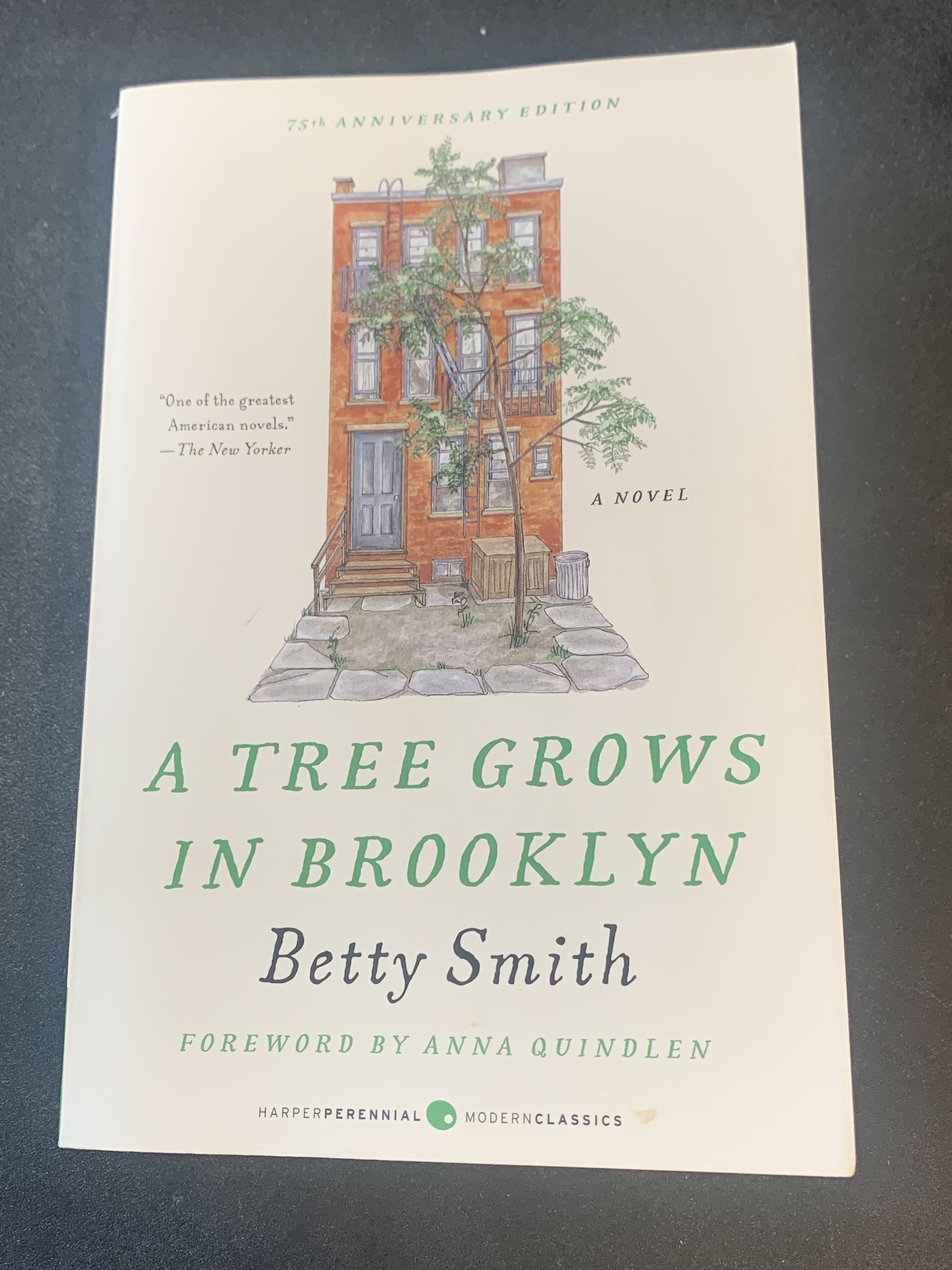
Coming-of-age is difficult enough a proposition — hormones run amok, peer pressure, family dynamics, and confronting the world anew with young adult eyes — without also adding in the dynamism at the turn of the 20th century and thereafter. Imagine being born in 1900. The world you’re born into is a world of no electricity, low literacy rates, walking likely being the main mode of transportation, at-home births the norm, inability to write for most of the population, and so on and forth. As you maturate, the world develops the automobile, the airplane, movie theaters, electricity, births inside hospitals become more common, literacy for each successive generation grows, and so much more still to come. But it also becomes a world that sees at least 15 million people die during a global war and another perhaps 50 million from the 1918 influenza. It’s a world where women still can’t vote and if they ever manage to do so, surely they’ll vote the way their husbands tell them to. Indeed, it’s a world where after you’ve come-of-age and perhaps are building a family of your own, the world will tailspin due to the Great Depression and be followed by an even deadlier global war. Still, though, the technological changes will be far-reaching, with the advent of the radio, the films become “talkies,” and washing machines and other now-common household appliances became standard. I’m utterly fascinated by what it must’ve been like to grow up during such a tumultuous time, but also such a wonderous time. This trajectory is where we find the protagonist of Betty Smith’s 1943 novel, A Tree Grows in Brooklyn. Frances, or Francie, as she goes by, is born in 1901 to Katie, a hardscrabble janitress, and Johnny, a whimsical singer bedeviled by alcoholism and a fear of his own maturation, in Brooklyn. Her brother, Neeley, is one-year younger. In 1901, the Teddy Bear didn’t even exist yet! However, what did exist was Katie’s unwavering commitment to ensuring her two children grew up to be better off than her, primarily through education. She reads to them each night a page from the Bible and a page from the collected works of William Shakespeare. It is from this commitment that Francie and Neeley both, and in time, Katie herself, experience a literal “rags-to-riches” story (at least “riches” relative to where they started). But beyond that, Smith’s book is the quintessential American story, one evidencing the “beauty in the struggle.”
Francie is hungry. She’s always hungry because they’re poor and food is hard to come by. Indeed, Katie has to fashion all sorts of food stuffs from stale bread and condescended milk. At least they have hot coffee. The children scrounge up pennies and nickels by collecting and selling junk. Sometimes they have enough leftover for a piece of candy. Unfortunately, Johnny isn’t much help, owing to his alcoholism and his flakiness. That said, he’s doted upon by Francie and he dotes upon her, filling her head with his songs and promises of a better future. What also assures Frankie can survive her initial destitution is her imagination, her keen sense of observation and people-watching, and her curiosity about the world.
The corollary, though, with being aware of the world is that Francie is aware not only of how poor she is, but that others perceive her poorness and use it against her, from her teacher to her peers. In fact, what is so sad is how the poor will castigate those among them because it’s better (in their view) to be the bully rather than the bullied, the perpetrator rather than the victim. One of the best exchanges in Smith’s book relevant to this issue is between Katie and her mother. Her mother brought Katie and her siblings to the “new world” from the “old country” because she wanted her children to be born in a free land. The mother goes on, “There is here, what is not in the old country. In spite of hard unfamiliar things, there is here—hope. In the old country, a man can be no more than his father, providing he works hard. In the old country, a man is given to the past. Here he belongs to the future. In this land, he may be what he will, if he has the good heart and the way of working honestly at the right things.” Obviously, this sentiment, this yearning for the American dream, is a tough one to swallow for people even in 2025, as many lament the death of the American dream, but it was also the case for Katie in the early 1900s! She’s in abject poverty barely scraping by. She doesn’t see how she or her children will be better off. But her mother is stubbornly insistent: Yes, you only made it to the sixth grade, but it’s still better than what she had. “Already, it is starting—the getting better. This child [speaking of newborn Francie] was born of parents who can read and write. To me, this is a great wonder.” That surely is, and it’s why I love America, its many faults and all.
Not long after being put down by this teacher and her fellow pupils, Francie, thanks to scheming from her dad, is able to get into a better school district 48 blocks roundtrip from her home — fascinating that more than 100 years ago, Francie rightly observed children like her are stuck in schools determined by where they happened to live, and that is still a problem today, but I digress. She’s much happier at this school where she’s not looked down upon due to her station in life. Furthermore, it becomes transformative in an important way. Smith observes, “It showed her that there were other worlds beside the world she had been born into and that these other worlds were not unattainable.” Therein lies one’s liberation and freedom. To know of other worlds is to imagine a future not restricted by the world you currently occupy.
Perhaps the most heart-wrenching part of the book is when Francie, a beautiful writer, decides to turn her considerable talents to writing about her poverty and her father. She wants to write about the grinding poverty she comes from and witnessing his alcoholism. Her nasty teacher tries to dissuade her from doing so, though. There is nothing worse than a teacher who squelches a student’s dreams and talents because of preconceived biases and blind spots. The teacher tells Francie, “But poverty, starvation and drunkenness are ugly subjects to choose. We all admit those things exist. But one doesn’t write about them.” Blasphemy. The teacher wants Francie to write about “beauty” only. Of course, as Smith’s book, and the Francie character, proves, there is “beauty in the struggle,” which is to say, beauty in the ugly facts of life: poverty, starvation, and alcoholism. Because Francie and her family found the beauty and kept going. The teacher is just too shortsighted and closeminded to see it. Nonetheless, this leads Francie to burn up all her prior compositions, albeit, she thankfully keeps the ones the teacher derided.
Johnny dies young, just under the age of 35, and does so leaving not only two children and a wife behind, but Katie is also pregnant with his third child. The family of three now is worried how they’ll get by. Not that Johnny contributed much, but literally every penny counted. Thanks to a lonely barman — a theme throughout Smith’s book is how lonely men, even with wives, are and how they need constant support and uplifting by women, and for what it’s worth, a similarly situated, but somewhat more subtle theme is how women are in unhappy marriages (likely being raped) because that is what was expected of them — Francie and Neeley are able to get jobs and keep the pennies flowing. Eventually, Francie even gets a nice job at a newspaper clipping company. Neeley is encouraged by Katie, much to Francie’s chagrin and just further proof to her that Katie loves Neeley more (and honestly, Katie doesn’t do much to disabuse her of such a notion!), to go to high school in the fall while Francie should keep working. Like the aforementioned theme, Katie knows Neeley needs the nudge, whereas Francie will “somehow” find her way to high school. Instead, actually, she ends up taking college courses during the summer and eventually, thanks to the help of a fast-track career boy, Benjamin, she’s able to pass the college entrance exam despite not having a high school diploma.
Smith fills Francie’s world with a great cast of characters, who bring such color and support into her world and none more so than Katie’s siter, Sissy. She’s had multiple husbands and 10 children, all of whom died stillborn. This doesn’t sound like a heartwarming, colorful side character, but she’s not beset by any of it, even though she longs to still have a child. She lives life to the fullest and importantly, on her own terms, in a way Francie finds admirable and aspirational. Neeley doesn’t get much in the way of his character or what he’s thinking, but he’s always supportive of Francie and the family. For his part, he also grows up into someone who reminds Francie of her dad, with his attractiveness and singing abilities. And of course, Katie herself, with her steadiness and her attentiveness to ensuring Francie has a better life than she had, is such a core part of the book. While she’s not exactly hiding her superior affection for Neeley, her love for Francie is poignant enough. Everything she does is for those two. And I think she rightly understands that Francie needs a little adversity in her life, as a woman, in order to make it in a world dominated by men. Hence why she thinks Francie will find her way to further education (and she did!).
Despite the turbulence of the United States’ entry into WWI (Francie lost her job thereafter), Francie is able to find work, continue an education, and even (after a jerk ghosted her in the parlance of today) a man to fill her lonely nights in Benjamin. Katie marries a wealthy widow. Neeley seems to be doing well through high school and with the goal of playing the stock market (watch out for 1929, though!). For all the struggles in the book the Nolan family goes through, what emerges is one of the most American stories: hope delivered and a future conceived of where each successive generation will have it better than the last. From the nothingness wrought by the “old world”, embarking upon the “new world” with only the vague trappings promised to thriving in that new world, that is the essence, the very idea of America and what it means to be an American. Anyone from anywhere in the world can become an American. And only two generations removed, the Francies of the world can flourish.
Smith’s book made me sentimental about the promise of America through a simple coming-of-age story about a girl in Brooklyn. Like the titular tree that grows in spite of the hardest of circumstances, Francie grew in spite of the hardest of life’s circumstances. In this metaphor then, America is the rich soil in which any tree under any circumstance can grow.
A Tree Grows in Brooklyn takes its place in the pantheon of the best books I’ve ever read, with Francie an unforgettable character.

 Milam's Musings
Love the review and the cover. I also highly recommend the film of 1945, if you have not seen it.
LikeLiked by 1 person
Thank you! And I’m definitely going to give it a watch!
LikeLiked by 1 person