
Spoilers, sort of, but not really! You’ll see.
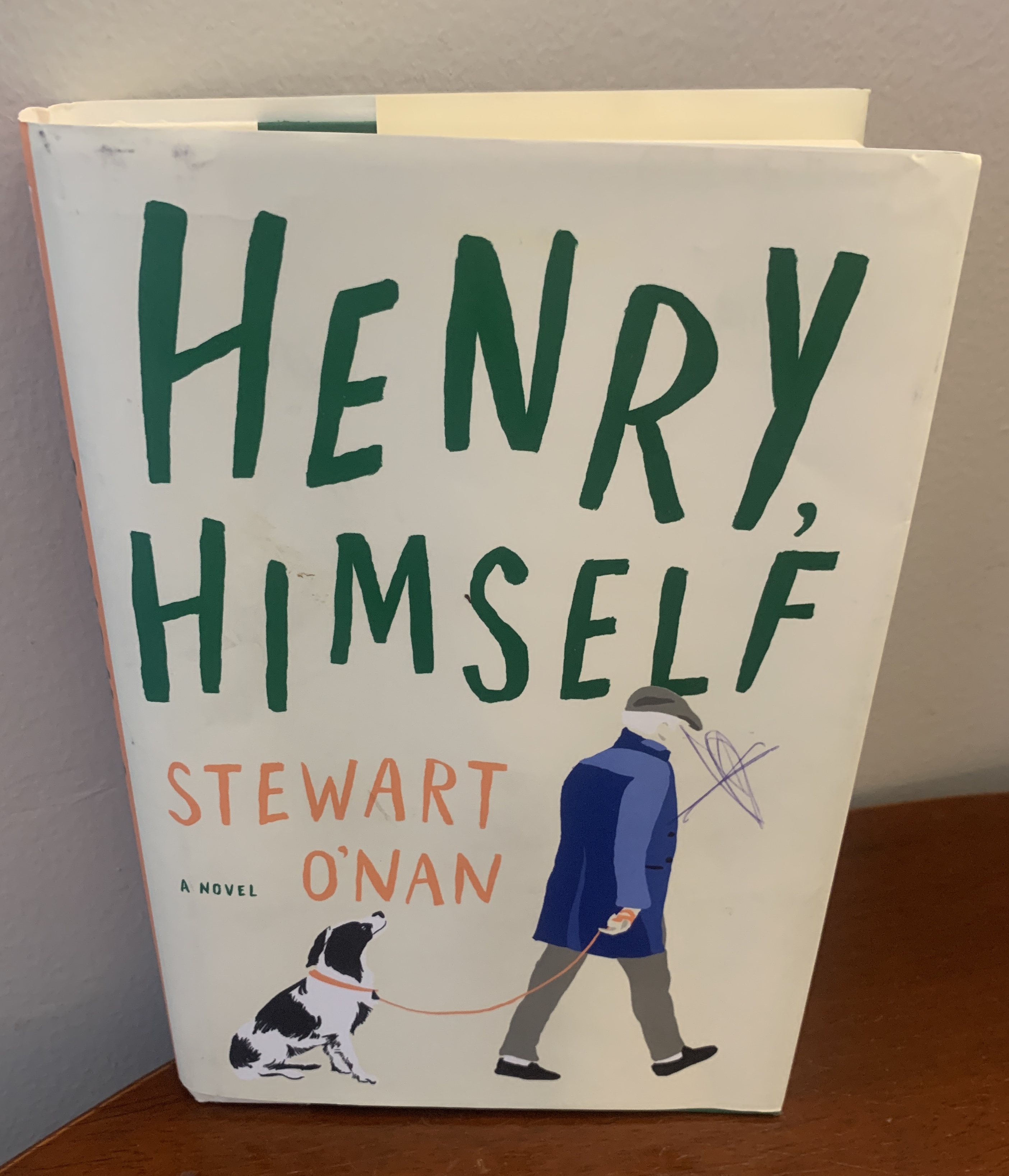
When I go blind into a book, as I almost always do, my brain defaults to waiting for murder. Or at least, a death of some kind to propel the story and its central character(s) forward. So, as I was reading Stewart O’Nan’s 2019 book, Henry, Himself, I was waiting for a death. It could be of the titular character, who turned 75-years-old and his mortality is a subtle pall over him; or his wife, Emily, because despite her faults, Henry would be lost without her; or it could be their daughter, Margaret, who has struggled with alcoholism. Instead, as I neared the last 50 pages of the book, a belated epiphany occurred to me: O’Nan wasn’t going to use a death to propel the story forward; rather, the fact of Henry’s mortality itself is the story’s propulsion. The mundanity and beauty of life, in equal measure, under the shortening runway of his life, is the story. That made for a rather unique narrative arc in the sense that … there’s no arc per se, but rather, a dwindling arc, as it were. The inanities and loveliness of life abound, to be sure, but the only propulsion is toward the ultimate end, not a surprise end. As this “arc” continued, I came to love Henry and Emily, their dog, Rufus, their children and grandchildren, and the quiet, but contended life they were leading.
Henry is named after his mother’s brother, his uncle, who served and died in WWI. For his part, our Henry served in WWII, and then had a very successful career as an engineer working on projects that would go into space. Now it’s about 1998, and he’s been retired more than 10 years. As one chapter title indicates, he needs to remain “useful.” To Emily. To his children and grandchildren. To his own opposition to his mortality — because there are signs he’s slowing down, like his forgetfulness, aches and pains in his body, some of them he doesn’t remember how he got them, and constant reminders that he’s old and could die at any time, like his primary care physician passing at 75 from brain cancer, the same age as him. He often wonders what his family will say about him upon his death: was he a good father? Honest? Good? Surely they will say those things. Even so, he feels like he’s underperformed, as it were, or not extended enough love, to Margaret. But after many years of dealing with her alcoholism, he doesn’t feel like he knows how to respond anymore. Once she’s sober, as she is throughout the book, he’s constantly anxious or expectant that she’s going to relapse. When she is in a car crash and injured, he assumes she must have been drunk or high. But she wasn’t.
The sweetest part of the story is the love between Henry and Emily, and the way in which it morphs over time. From wild lust and desire during the courting and honeymoon phase to family life with spurts of that former wild lust and desire to a different kind of love in their older age after nearly 50 years of marriage: contentment accompanying companionship. This is most evident when Emily leaves Henry in Pittsburgh to attend to Margaret in Detroit. At first, he finds peace without her structure and well, she’s also perpetually short with him. But then, upon her return, he realizes how much he missed her. He’s adrift and bereft without her. I think Emily’s structure, need to make lists, put things in order, and be there for others is her way of being useful and staving off her own mortality. It just happens that it often comes at chiding poor Henry, who is trying his best to be useful in his way.
Overall, you wouldn’t think a nearly 400-page book where, for all intents and purposes, nothing particularly happens, would be an enjoyable read, and yet. I’ve always been fascinated by these small moments in life, especially within marriages and the contours of one’s family dynamics (Margaret’s husband, Jeff, intends to leave her and supposedly has been having an extramarital affair; Lisa, wife to their son, Kenny, has never gotten along with Emily), and with O’Nan’s writing, as I mentioned, I came to care about these characters so that I was invested during these “small moments.” If that also sounds like something you’re interested in, then I’d recommend Henry, Himself to you.


One thought