
Spoilers!
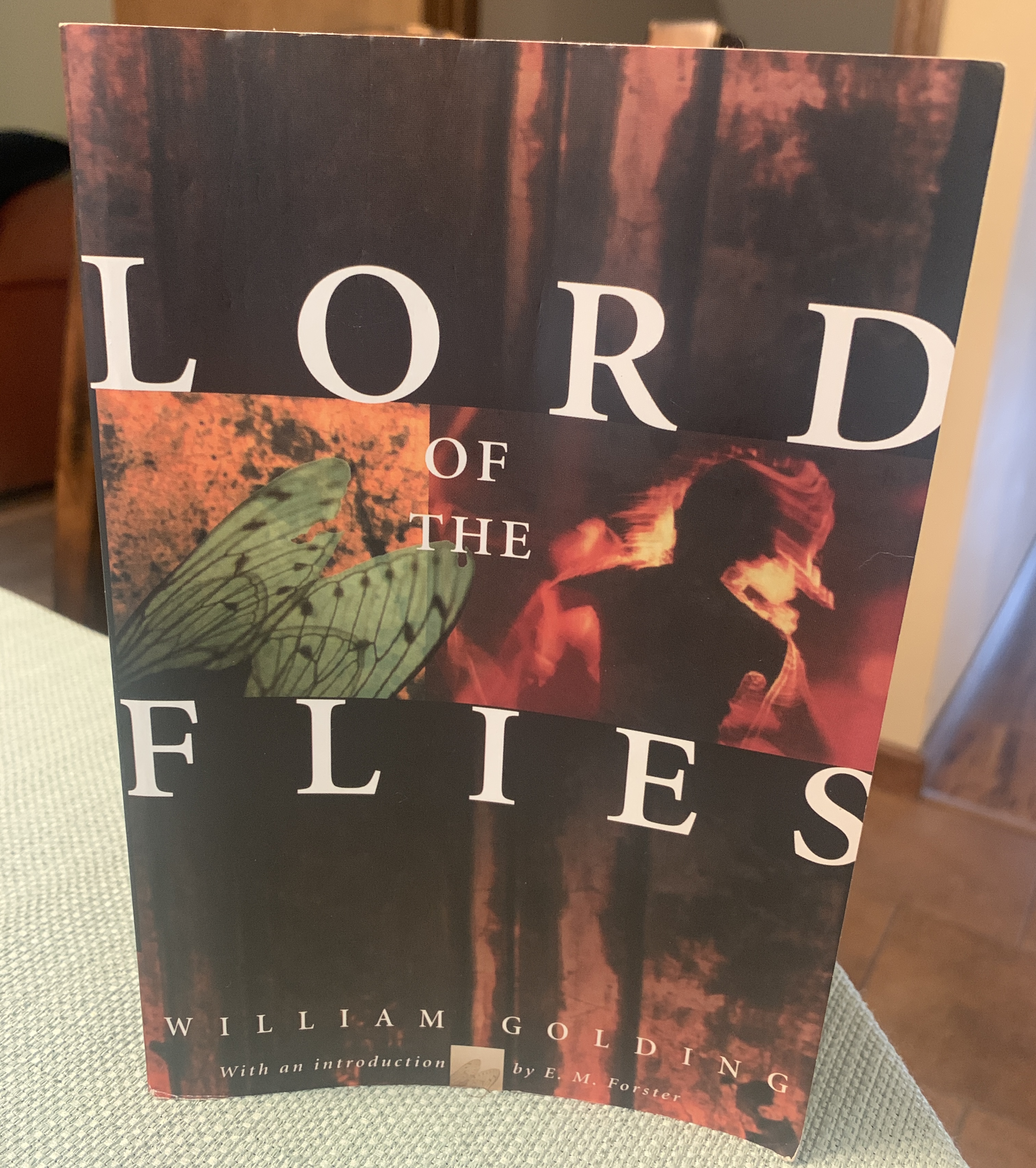
If man has darkness in his heart, then so it is with children. If men turn to savages in a bid for survival, then so ought children. This, despite the innate innocence of children. But weren’t we all, once? What about society writ large? If man has darkness in his heart, and men can turn to savages, then it follows that societies can embrace darkness and savagery. So it has been with dictatorships and authoritarian regimes in modern times. Those under the bootheel of such regimes may wonder when the “grownups” are going to come. But they’re not coming. No smoke signal will be enough. We have to save ourselves. We can only save ourselves. These are my initial ruminations after finally reading William Golding’s classic 1954 debut book, Lord of the Flies.
British schoolkids fall victim to a plane crash and arrived at a deserted island, but miraculously, they survive. Initially, they are elated to be free from grownups. They can play! For, after all, they are mere children without the foresight yet of what their predicament means. Besides, it’s too scary to consider. Golding’s democracy and decency stand-in is Ralph, who will become spurred by the devolution around him to stand up. Encroaching dictatorship is represented by choir boy, Jack, who belies his previous life. And the derided character most needing of empathy and an honest listening to is represented by Piggy, an intelligent, patient, and introspective boy; he’s what democracies are created to protect from the thuggish societies dictatorships engender. The same is true of the “littluns” that Ralph and Piggy shepherd and watch over, as opposed to Jack and the other “biguns,” who don’t concern themselves with kids unable to protect and feed themselves. Eventually, Ralph realizes the most important action the boys can take while on the island is maintaining a fire and a “smoke signal” to effectuate their rescue. His clarion call will not be enough to outshout the drumbeats of Jack’s savagery, though.
Not necessarily by a strict democratic vote, Ralph becomes the “chief” of the boys, and he calls meetings. Because even stranded boys on an island must hold meetings to decide things: who is in charge of creating shelters, how will they accumulate food, again especially for the littluns, and how will they maintain the fire. The “democratic” aspect of the meetings is that only a person with the conch shell is allowed to speak, ostensibly. (I now understand the SpongeBob episode!) Ostensibly because Jack and the others don’t respect Piggy. After all, they’re calling him Piggy on account of his size. He also wears glasses, which they promptly use to create their first fire.
An unknown amount of time on the island passes, but we know it’s considerable enough that the boys have grown out their hair, have created shelters, and even formed a hunting party with working spears to kill pigs for meat. The hunting party is the reworked choir group led by Jack. A choir boy he is not because he has a certain amount of bloodlust in his eyes and temperament. And the inevitable result of that is the desire for the power Ralph has, including via the conch shell and the ability to make fire with Piggy’s glasses, and the respect of the other kids. His pathway to achieving that is first, by killing a pig and providing meat to “prove his mettle,” as it were, and secondly, by brute force and thievery: to steal the conch and glasses from Ralph’s camp.
Enough time has also passed that the previously unspeakable fears return and are mulled over. What if there is a beast on the island? What if they don’t get rescued? What if the biggest thing to fear on the island is the other boys, like Jack? What if “might over right” begins to feel inevitable, unstoppable? That is especially the case when red lines are crossed, including the death of Simon, mistaking him for the “island beast,” and then the death of Piggy. Once that switch happens from “othering” pigs to “othering” your fellow humans — such distancing made all the easier by Jack’s savages, as Ralph calls them, due to them wearing clay paint, which also imbues more fear into Ralph’s heart — then violence and justifiable death become not only possible, but to use that word again, inevitable.
The last tense, dreadful few pages of the book are Jack’s savages quite literally “undulating” across the island, hunting Ralph, with the ultimate goal of spearing him like the pigs they’ve caught. Indeed, perhaps the goal is to separate his head from his body and spike the head for all to see, like they did with the titular “Lord of the Flies” pig that so scared Simon. Fortunately for Ralph, the British Navy does show up, shocked to find the boys in such a condition, and shocked that they had devolved as they had. Perhaps that is the most haunting aspect of Golding’s novel. Both how thin the veneer between civilization and savagery is — from Ralph initially doing front flips at the prospect of no grownups to fighting for his life — and how quickly that veneer can slip away when enough pressure is exerted upon it.
Ralph has had enough at the end. He finally allows himself to give into his terror and weep great grieving sobs. Golding reflects, “Ralph wept for the end of innocence, the darkness of man’s heart, and the fall through the air of the true, wise friend called Piggy.” Golding, writing only a number of years after the end of the most destructive war mankind has ever known, WWII, which quite literally pitted democracies against dictatorships, right vs. might, most certainly weeps for the “end of innocence” and the “darkness of man’s heart.” Because, yes, Ralph survives, just as the Allies won, but you can’t unring the bell of what Ralph endured, nor what WWII wrought upon men’s souls. (Golding fought in WWII, it should be noted.)
Lord of the Flies is often taught to high schoolers, so you may be forgiven for thinking it wouldn’t get as heavy or deep as it does, but Golding most certainly goes there. High school kids can handle it, and they need to hear the message about right vs. might, about empathy vs. bullying, and about the importance of civil rules and norms that are the difference between coexisting civilly with each other and savagery. I suspect I will be reflecting on this book for a long time to come.


