Spoilers for the whole first season!
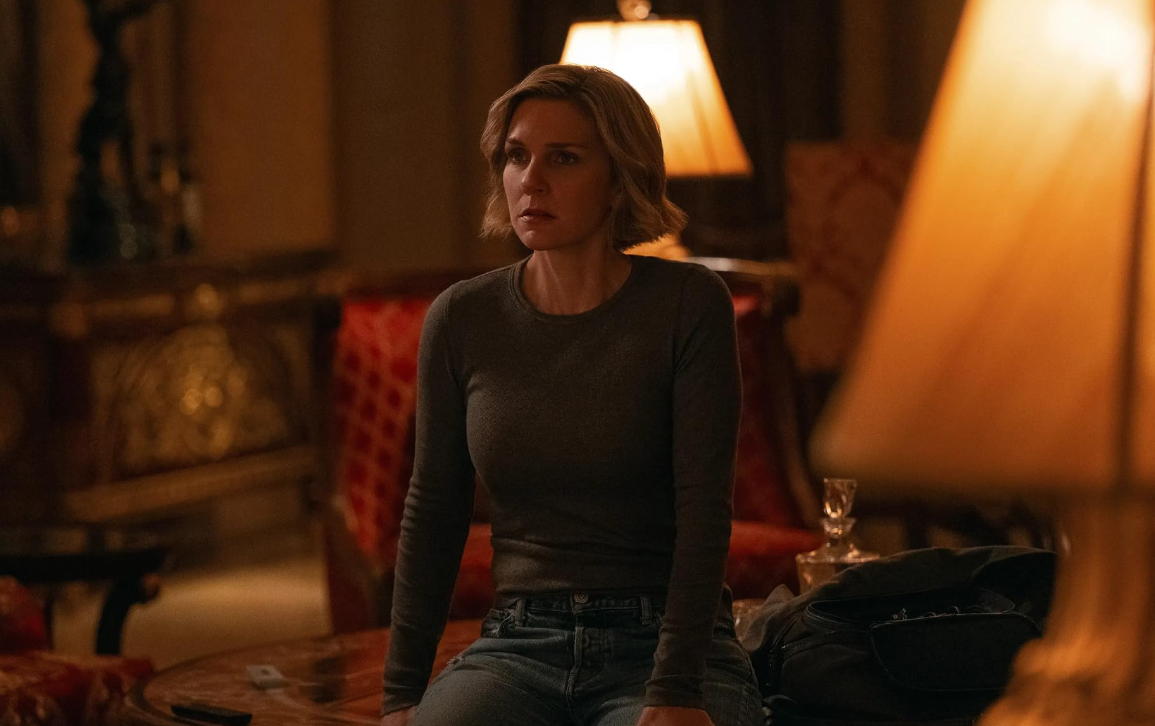
It took me almost exactly a year, but I finally watched Vince Gilligan’s latest project, 2025’s Pluribus, on Apple TV. Given that I consider Breaking Bad the greatest TV show I’ve ever seen — and the only dramatic TV show I’ve seen beginning to end twice —, it was inevitable that I’d be intrigued by Gilligan’s latest outing. The pilot of Pluribus, “We Is Us,” is easily the best pilot I’ve seen in quite some time. It’s one of those pilots where, despite it being 56 minutes long, it felt like mere minutes. I was enthralled by this new take on an “alien” invasion, and especially by its unlikely antihero, Carol, played with aplomb (and napalm!) by Rhea Seehorn.

Carol is a famous, successful author of the romance (maybe romantasy), Winds of Wycaro. We’re first introduced to her, and her partner Helen, at a book signing, part of an extensive book tour for her latest in the series. Carol seems engaged and sociable with her many adoring fans. As soon as the book signing is over however, the facade falls and we learn how much of a cynical, self-loathing curmudgeon Carol is. She’s also an alcoholic, such that we later learn that when Carol had her eggs frozen, Helen installed some sort of device in their liquor cabinet to monitor if the door was opened by Carol or not. Oof. It’s not a surprise then that Carol hates her books! Helen is her #1 cheerleader, though, encouraging Carol to write the serious book she’s dreamt of, and looking to toast the latest Wycaro book hitting the New York Times best-seller list. (Carol is chagrined it’s only at number 2, naturally.) This toast is just what they do when they return to their home in Albuquerque, New Mexico, hitting up a local bar.
All of which is with the backdrop of knowing something is deeply wrong in the world, and in space. Astronomers have detected a weird radio signal many light-years away. They know that it contains an RNA sequence, they reproduce it in a lab, and test it on a rat, of course. A rat bites one of the researchers and all hell breaks loose. In one of the most mesmerizingly horrific scenes of television I’ve seen, the infection spreads from person-to-person — with a kiss — and then within about 439 days, this infection has taken over the world. This “infection” is the Joining, the Othering. Which is to say, the “we” of the “us.” All humans, who survived the infection, have become one. So, for example, I now could fly an airplane or perform brain surgery or sing Whitney Houston’s, “I Will Always Love You,” because I have all the collective wisdom, memories, knowledge, and muscle memory of humanity. According to this new collective we, that engenders peace and happiness on Earth.
There’s just the minor detail that it came at the cost of 886 million humans who didn’t survive the infection. One of those is Helen, in what is another horrifying and haunting sequence of events. Helen starts convulsing outside the bar. When Carol goes inside the bar to get help, everyone is in this infected convulsing transitioning phase. It’s wild to see! Carol uses a popup sign as a stretcher to get Helen into a truck she has commandeered (she can’t drive her own vehicle because of the breathalyzer device on it) to drive Helen to the hospital where the same sort of infected-convulsing-transitioning scene is playing out. Helen dies. Then, the people who survived the infection come out of their convulsive stupor and are alive, but different, moving as this collective organism. Agh! As Carol’s trying to get away from them, they say in unison, “We just want to help, Carol.”
Which turns out to be true, as far as that goes (which isn’t far). Meaning, ostensibly, this collective does want to help the surviving humans — 13 in all, including Carol — immune to the infection and make them happy. At least, for long enough until they’re able to figure out how to turn these humans and “join” them into the collective. They can’t harm the humans; they can’t even harm an ant or harvest an apple from a tree. (The implications of that will be addressed later.) They can’t lie, although, importantly, they can lie by omission. So absurd is their attempt to make Carol happy, we learn that they would quite literally give her a nuclear weapon if she asked for it, although they advise against the request. That’s where the dark comedy of the show comes into tremendous effect. It’s freakin’ hilarious how acquiescent the collective is to Carol’s whims, but it’s also horrifying how mechanized and in unison it all is. There are two mesmerizing examples I can think of showcasing this in action. First, is when Zosia (played by Karolina Wydra) is brought from her home country to be Carol’s chaperone because she apparently looks like Carol’s fictional fantasy character. That’s manipulative as hell, but the way in which her travel was methodically accomplished thanks to the collective was beautifully shot, if, again, horrific. Second, is when Carol goes to her local supermarket, annoyed that it’s completely empty as the collective harnesses and economizes resources, so, she asks for it to be returned to normal, whereupon it is, methodically again. Creepy, but fascinating to watch!
I bet there are humans who have watched those scenes and thought, this is neat and maybe it wouldn’t be so bad. Plus, the whole peaceful thing, notwithstanding those 886 million deaths. However, there are two things I would say to that. First, humans are capable of this widescale mechanization and working in unison. We just don’t see it in this way in our day-to-day lives. Quite literally the entire global economy is this in action, day in and day out, over and over again. Peacefully, too, for the most part. And there is still choice and decision built in and the ability to say no. Second, humans are notably revolted, at the moment, by artificial intelligence, even as we sometimes use it as a tool. There’s something hollow about it, weirdly duplicative, flat, and fake about the “art” it creates, and something rather creepy about its acquiescence to our thoughts, charming us and agreeing with us. That’s the Others here.
Back at Carol’s home, still in the pilot episode, she receives a television message from the Under Secretary of Agriculture Davis Taffler (played by Peter Bergman), addressed specifically to her. Why Taffler? The President of the United States didn’t survive the infection. When Carol is speaking to Taffler, she’s speaking to all 7.4 billion remaining humans. Sheesh. Naturally, she’s aghast at this whole situation, especially as she learns the collective will wield Helen’s memories against her (like revealing Helen’s true, negative thoughts about Helen’s “serious book” effort). Carol also wants to meet the other survivors so that they can figure out how to reverse the infection and save the world. When Carol does meet these handful of survivors who speak English (so that she doesn’t need the collective to translate), including Koumba (played by Samba Schutte), Laxmi (played by Menik Gooneratne), and Kusimayu (played by Darinka Arones), she learns, bewilderingly, albeit believably, that they are quite sanguine about the whole situation. Koumba likes it so he can live out his playboy lifestyle, as the collective fulfills his requests, and Laxmi is in denial, believing her turned boy is still her boy and not just a manifestation of the collective. Kusimayu is just lonely, as everyone in her Peruvian village was turned. How maddening would that be, if you’re Carol?! It’s like they’ve shrugged off the 886 million deaths! Worse still, they’re actively mad at Carol because of her anger issues. So, another thing to know about the collective is that if you get angry with them and you’re no longer happy, it causes them to convulse and some to die. When we’re talking about 7.4 billion people, “some” is a lot. One time when Carol gets mad at Zosia and she begins convulsing, it results in 11 million people dying. What the heck?! For this meeting, Carol had to fly in a plane, which would make me uneasy if they can convulse and die at the slightest bit of rebuke.
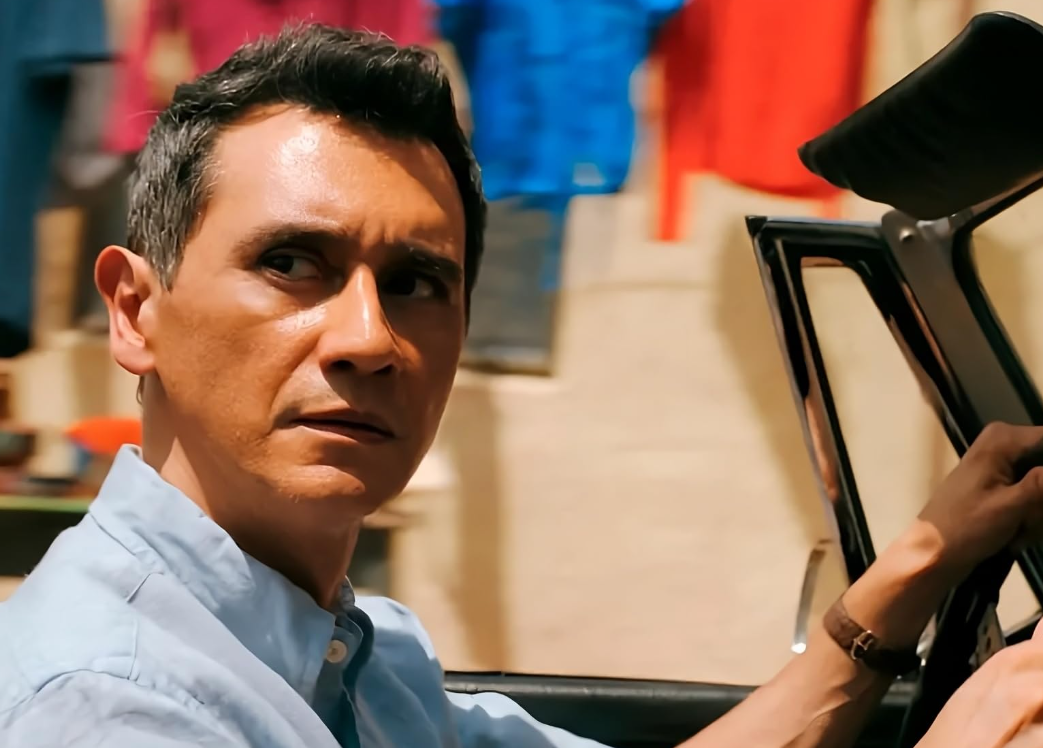
Meanwhile, we learn there’s another survivor, Manousos (played by Carolos-Manuel Vesga), living in Paraguay, who hasn’t even attempted to communicate with the Others. He’s actively walled himself off from them and their attempts, via his “mother”, to provide him food. He is so stubborn, so principled, so steadfast, that he would rather eat dog food than take their food. Otherwise, he’s trying to understand the radio frequency in which they communicate. When Carol tries to contact him, he yells at her, thinking she’s one of Them, and Carol yells right back, which makes him realize she’s not.
Carol is on the hunt for how to reverse the infection, and she knows that means interrogating Zosia, who she’s also accidentally sent to the hospital. Carol flippantly asked for grenade and Zosia delivered it. The grenade went off because Carol didn’t think it was actually real. At the hospital, Carol is trying to get truth serum, which makes for another funny scene involving a doctor saying they have heroin, to use on Zosia to learn more of what they know. In the course of experimenting on herself, we learn that the collective’s plan was smart because Carol is attracted to Zosia. When Carol administers the sodium thiopental to Zosia, she has a heart attack. As the Others come out to save Zosia, they creepily keep saying, “Please, Carol.” After that episode (literally), the Others leave Albuquerque and Carol, with a recorded voice message (used repeatedly thereafter for comedic effect) about how “their feelings for Carol haven’t changed, but they just need some space.” Lmao.
That’s when Carol’s sleuthing and investigating uncovers the next big reveal: the Collective is eating humans. Because of their aforementioned aversion to killing animals or even harming plants, they will eventually run out of the leftover human food available to them. So, they’re eating the human remains; it’s a sort of smoothie concoction mixed with other foodstuffs, or what the Collective calls HDP: Human Derived Protein. Skin-crawling, but hilariously presented in a cameo by John Cena playing himself (well, as part of the collective). Even with HDP, the Collective will likely starve within 10 years. More than 7.4 billion mouths is a lot to feed! For the record, Carol travels to Las Vegas to confront Koumba about all of this, and to see if he’s received the videos about her findings she’s been sending the survivors, including him. Turns out, Koumba knew a long time ago about HDP. He think it’s unfortunate, but shrugs shoulders. He’s too busy playacting. Indeed, the opening scene is him playing poker with a mob boss type, and winning. Literally as soon as Koumba leaves the room, the Collective drops the playacting facade and return to the mechanized oneness. It’s creepy, a word I’ll keep using. But at that moment, Carol calls the Others and gets them to promise not to use her stem cells without her consent to change her into one of them. They agree. It’s another lie by omission to be explored in a moment.
Once Manousos, however, watches Carol’s video, he’s finally ready to leave Paraguay and come to her to save the world together. His unyielding stubbornness when it comes to interacting with the Others, including using their help to make the 5,245-trip from Paraguay to Carol in Albuquerque, endeared me to him, and dare I say it, he became my favorite character on the show. As he retrieves his car from his home and sets out, his “mother” says she can help him. Manousos deadpans, “Don’t call me son. You’re not my mother. My mother is a bitch”. Lmao. He’s bad-ass, if sometimes perilously headstrong. As he arrives at the impassable Darién Gap, a roadless 60-ish-mile forest between Panama and Colombia, the Others implore him not to do it. It’s too dangerous. He will die. They even offer to bring his car he loves so much to New Mexico. Manousos looks at them with utter contempt, and says, “You can’t give me anything because everything you have is stolen.” He then sets his car on fire and walks into the Gap. Wow. insert multiple fire emojis One of the most skin-crawling scenes occurs where Manousos stumbles backward into a Chunga palm tree (look it up), spiking his back. He tries to cauterize the wounds with his flaming machete. Unfortunately, the infection nearly kills him, and the Others can’t have that. They use a helicopter to rescue him. Damn, I was really hoping this crazy bastard could make it through the Gap on his own. Alas. Once Manousos is awake in the hospital, though, he escapes, but not first without writing out an IOU to the hospital (on his way out of Paraguay, he’d been leaving money for all the gas he was using). He continues on his way to Carol.
Carol is at her breaking point, as it’s been more than 40 days without the Others and specifically without Zosia. She makes a plea in her cul-de-sac, written in white paint, for the Others to come back. They oblige. Zosia returns, too. They kiss and have sex. The episode was titled, “Charm Offensive,” and I was worried that Carol would give into their charm offensive via Zosia. She did, to be sure, but she was also playing a charm offensive against them, as she still kept her notes going of what she’d learned about them, including underlying: They. Eat. People. Even so, I was bummed that she gave into Zosia, but I get the complicated feelings around it all and the stress of, y’know, the end of the world.
This emotional state of Carol’s, more enraptured now, or at least sympathetic, to the Others than ever before, is where Manousos finds her at the end of the season. I was so, so happy to have these two on screen together because it was sure to be magic and it was. Carol was an outright jerk to him, oddly fearful of Manousos, and Manousos was trying to be evasive of the Others, whether of their drones in the sky or listening devices he suspected were surely planted inside her home. So, they meet under a pink umbrella outside and use a translating service to speak to each other. Lmao. Perfection. Also funny that Manousos keeps calling the Others “weirdos,” which is accurate. Carol is dismissive still of Manousos, saying that the Others can’t even harm an ant, so they’re not exactly evil. To which Manousos correctly responds, “And isn’t it evil to value a man the same as an ant?” Mic drop.
Later in the evening, with Manousos in a neighboring house, Carol is talking to Zosia, who had just divulged what she knew to Manousos, as he’s okay talking to them now knowing they can’t lie, when Zosia begins convulsing like they previously did when Carol was angry. She realizes it must be something Manousos is doing. Indeed, he’s interrogating one of the Others, still trying to figure out the radio frequency in which they communicate. Carol fires a shotgun in the room to stop him. Ugh, Carol. She fully leans into her Koumba side and goes off on a ski resort fantasy vacation with Zosia. Reality comes crashing back regarding the Joining, as Carol realizes the Others have access to her frozen eggs and can use them to force Carol to join them. It’s only a matter of months. Zosia isn’t a chaperone; she’s a distraction for Carol while the Others have been busy working toward turning her.
Speaking of turning, the final episode opens with another haunting “playacting” scene, where Kusimayu has decided to join the Others. The village is quite active with singing, chanting, and encouragement. As soon as the joining occurs, the “playacting” stops on a dime, and the villagers all leave, with the goats left behind in disarray. All of that beautiful Peruvian culture flattened and left behind in an instant. I keep saying creepy and haunting, but it was creepy and haunting!
After Carol was betrayed by Zosia and realizes the true evilness of the Others, she’s back on her antagonism shit, and returns to her home in Albuquerque with an atomic bomb, lmao. The implication being, I think at least, that she’s willing to blow herself up rather than join the Others. Autonomy or death. I will my freedom rather than acquiesce. Carol learned, as Koumba hasn’t learned or doesn’t care to learn, that while the Others can deliver on virtually anything imaginable, including a nuclear weapon, freedom, the autonomy to say “no”, is something entirely different, an intangible the collective can’t offer. It’s the most human of qualities. And that’s what Carol and Manousos, through stubborn force of will, are going to attempt to resurrect for humanity in the second season.
What a show. What acting and directing and storytelling. Seehorn, who rightly went on to win a Primetime Emmy for Outstanding Lead Actress in a Drama Series, and Vesga, are so captivating, even when they don’t have any screen partners to work with or dialogue otherwise. I could watch them figure out the end of the world all day long. Then, as I said, they were magic together in the brief opportunities we had to see it in the season finale. I also have to give particular love to Seehorn for showcasing, often with her face alone, the grief and loneliness she was experiencing after Helen’s death and all that had happened, again making her acquiescence to Zosia understandable. Wydra was also brilliant, straddling the line between this creepy Other representation and seeming earnestness in her affection for Seehorn’s character. Gilligan has done it again so far with Pluribus, and I can’t wait to see what else is in store for its sophomore outing. Unfortunately, it seems like I’ll have to wait another year or longer for the season to drop. If only I had the Others to distract me until then. (Just kidding.)