
Spoilers!
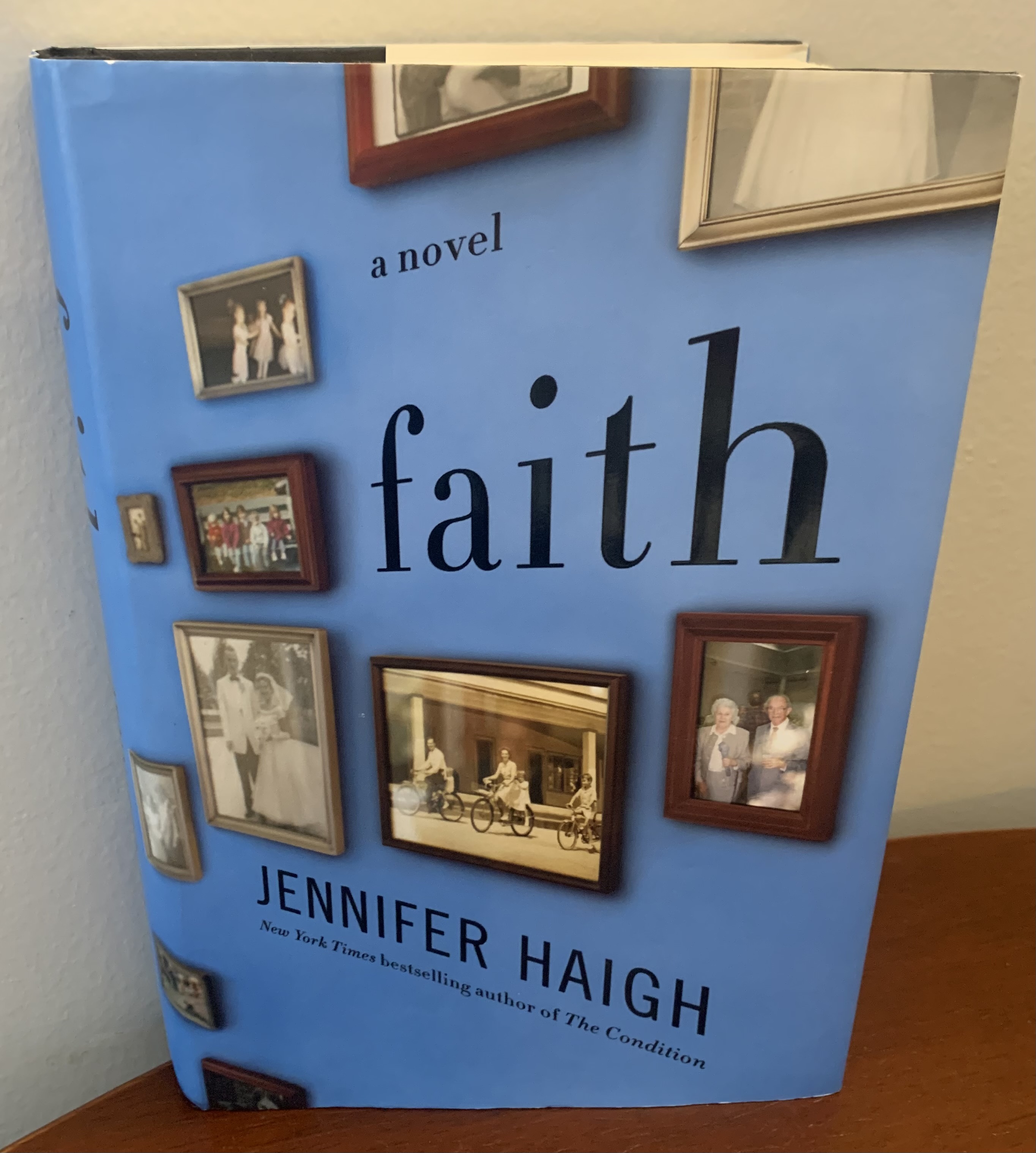
Despite being such social creatures, humans have a difficult time giving and maintaining faith in others. That faith is often shaken, dislodged, and abandoned by some form of betrayal. In Jennifer Haigh’s 2011 book, Faith, it’s a betrayal of an unimaginable kind — a level of monstrousness difficult to fathom existent in the real world, much less among our own family. Haigh’s book is a subtle thriller, a low-key heartrending unspooling of events set in 2002 at the height of the Catholic Church’s scandal involving Boston priests. The priest at the center of it is a son, a brother, a father-figure, and a Father to the community, who is painted as a predator while himself having been the prey. Beautifully written and constructed, unflinching in presenting its weighty themes of connection and loneliness, family and faith, Haigh’s book is among my favorite reads of the year.
Art is barely a baby when his father runs out on him and his mother to outrun gambling debts. In the intervening time before she remarries an alcoholic named Ted and turns to strict piety, the family of two is often helped by the mother’s uncle, Father Ferguson. We later learn from Sheila, Art’s sister through Ted (they also have another child, Mike, the youngest), that Art was serially molested by Father Ferguson. Art was only eight at this time. Because of that traumatic experience, Art, who became a priest in the Catholic Church, too, eventually came to fear that he would be like Father Ferguson. That he was broken in that way. Compounding that was his general Church vow of celibacy — he never seemed drawn to women anyhow — and the enduring loneliness well into his adulthood. But imagine that. A priest feeling like he is irredeemable.
In the early 2000s, though, this swearing off of even getting too close to children (or women) is ended by the arrival of Kath and her 8-year-old son Aiden. She’s the daughter of someone who works in Art’s parish. He ascertains immediately that Kath is a user; he later learns, a meth-addict. Owing to the similarities with his mother before Ted, although she never used drugs, an affinity develops for Kath and Aiden. He begins to help them, and often watches Aiden after school while Kath is working. Then, in 2002, Kath accuses Art of molesting Aiden, and he is kicked out of his local parish to a temporary apartment until the Church can figure out what to do. Art’s name and face are in the newspaper. And his family is aghast. His mother doesn’t believe it. Neither, initially, does Sheila. Mike, on the other hand, who has three boys of his own, can’t imagine that a kid would lie about something like that. The scandal and allegation also creates a rift between Mike and Abbey, his wife, who is not Catholic and already didn’t like his family. Ted, for his part, is addled by his alcoholism and doesn’t remember much. What he does remember is Father Ferguson molesting Art, which he reminds Art of on Mother’s Day after the scandal breaks, confusing Art with Father Ferguson. How did Ted find out? Does that mean Art’s mother knew, too? Sheila never finds the answer to that question, or the courage to ask it directly of her mother. (Indeed, though, it is Ted’s arrival, for all his other faults, that puts an end to Father Ferguson molesting Art.)
What about Art? He denies the allegation, but he’s willing to let the Church settle the lawsuit Kath has brought because it would mean Kath and Aiden receiving a large sum of money and living better lives. That’s what he wants for them and thinks they deserve, even if it’s at the cost of his reputation. Sheila’s incredulous at that, and it’s what for the first time shakes her faith in her brother: she starts to wonder if he could have molested Aiden. The story she uncovers, though, is not quite that, but it’s complicated all the same.
First, Mike, a former police officer who is now a realtor, decides to investigate on his own under the guise of his profession. On the face of it, he’s selling the house across the street from where Kath and Aiden live. In reality, it’s his way of getting close to Kath to see if it’s possibly true that Art molested Aiden. What happens instead, though, is that Kath reminds Mike of his first love, Lisa, and he begins a torrid affair with her. She’s everything Abbey isn’t, and that’s appealing to him. As Sheila remarks, both in reference to Art and Mike, is that we tend to try to fill the voids in our hearts left by lost loves, and we do that with shadow imitations of them. Finally, after a few dalliances and interactions, Mike hears the story from Kath. As she tells it, she, Aiden, and Art went to the beach one day, and while she was napping, Aiden and Art were “frolicking” in the ocean where the molestation occurred. Mike immediately knows it’s not true because Art has always been fearful of the water, just like his mother (her father died in a boating accident). Before he can confront Art with the truth of it, he finds out Art was rushed to the hospital. He killed himself with OxyContin pills, which he only had in his possession confiscating them from Kath. Art left behind two letters, one for Sheila and one for Kath. That’s where we learn another truth. Yes, as we already knew, Art became close to Kath and Aiden, seemingly a father figure to both. Instead, however, after years of wondering if he was a “man” or not, Art gave in to his impulse and had sex with Kath. So mortified by what he had done, especially feeling like he was another man in a long line of men who had taken advantage of Kath, he never called her. That silence proved dangerous. When Kath’s drug-peddling boyfriend, Kevin, wanted to take advantage of the breaking news of priests ousted as pedophiles by accusing Art of being one in order to get a windfall from a lawsuit, Kath went along with it. The rest is as it occurred. Art also likely took his life because he was facing down brutal chemotherapy treatment for lung cancer.
Mike is going to have to live with not only his infidelity — and the book ends with him and Abbey having a fourth boy! — but with his brother thinking he thought he was guilty. Sheila likewise is going to have to live with the faith she lost in her brother after initially having it. Art, in life and in his death, lived with his broken promise to the Church and what he did with and to Kath, and most pointedly, what he didn’t do, which is to say, broach the silence he left her to flail in alone.
What a stunning novel, layered with meaning and a profound sense of what it means to be human and fallible and broken, as we all are imperfect, even priests. Art was broken as a child by an unspeakable trauma, but he was not irredeemably broken as he thought. Sadly, his life ended with the world thinking him so.

 Milam's Musings