
Spoilers!
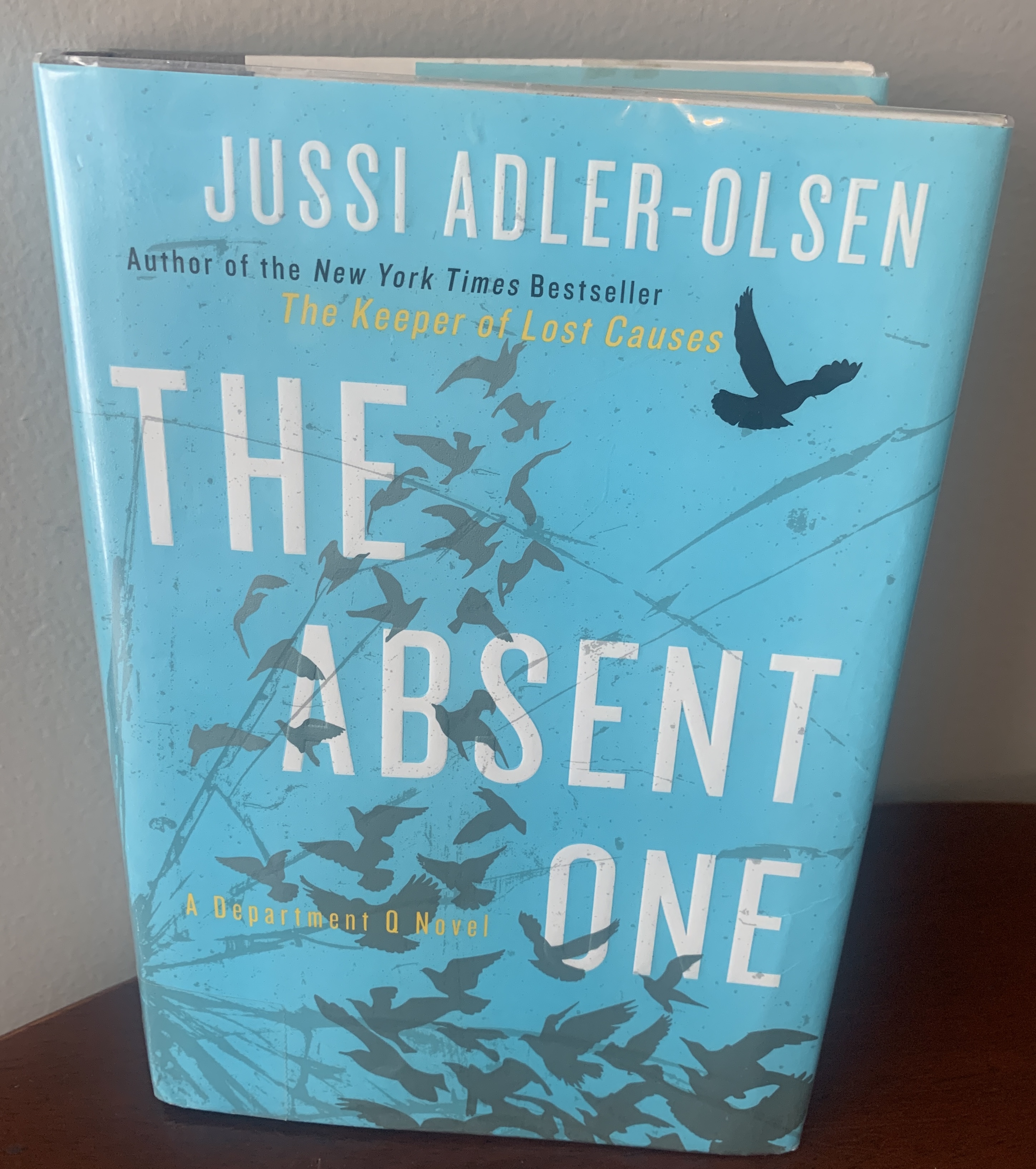
Nordic crime thrillers have a certain nasty darkness to them that surpasses their American and English counterparts. That was certainly the case with Jussi Adler-Olsen’s 2012 book, The Absent One, the second in his Department Q series. A Dane, Adler-Olsen’s book is brutish, unflinching, and unafraid to be bleak. You know how at the end of the horror movie, the quintessential final girl is covered in blood, sweat, and grime, with gaping wounds and a wild look in their eyes? After finishing Adler-Olsen’s book, the reader feels like that. He’s not offering anything warm and fuzzy to close it off. Hell you’ve endured; your reprieve is to move a little further away from the flames. Nordic crime thrillers, man, they’re the best. They feel different in that way.
Detective Carl Mørck is the newly assigned investigator to helm Department Q. Like any crime thriller detective, he’s flawed, horny, forlorn, and seemingly divorced, but also, brilliant, detail-oriented, scrappy, and contrary to his outward appearances and utterances, loves to work with his partners. In this case, Assad, despite the language barrier, and Rose, despite her, well, everything. His prior two partners, presumably in the opening book of the series, were killed and/or severely injured. A new, but old, case quite literally randomly appears on his desk. That is, old in the sense that it concerns the murder of a brother and sister back in 1987, as this book is set in 2007, but new in the sense that someone clearly wants them to reinvestigate it, this despite someone named Bjarne behind bars for the crime. He admitted to the crime in 1996, and was convicted thereafter. We later learn it was the killed sister’s boyfriend at the time, who 20 years later, is still obsessively inquiring about the true culprits behind the senseless murders. Indeed, the emphasis there is the plural: more than one culprit.
This isn’t an Agatha Christie whodunit. We know quite readily whodunit. Elite bored boarding school kids: Ditlev, Torsten, Ulrik, Kristian, Kirsten, and Bjarne. They watched Stanley Kubrick’s 1971 A Clockwork Orange, and it changed their lives. They all hated their rich, aloof fathers, too, which makes it all the more surprising none of them killed their fathers. In any event, this mode of randomly attacking people to cause wanton mayhem and destruction with no rhyme or reason just because became their personality. Just because they could pay their victims off to keep quiet or “make them disappear” and continue on with their elite, rich lifestyle. Sure enough, after the murders of the brother and sister, they all went on to live rich, well-known, well-publicized lives in Denmark. (Not so much Bjarne, who didn’t come from rich families like them, hence his willingness to be paid off to take the fall for them nine years after the fact.)
So, then, what is the propulsion of the story, if we know whodunit? Well, there’s certainly the cat-and-mouse game of Carl and his team trying to figure out how everything ties back to this Clockwork Orange gang. But the real thrust of it is Kirsten, who goes by Kimmie, and is the titular “absent one.” Indeed, Adler-Olsen’s story is actually a tightly-wound, fucked-up revenge story! And despite everything that we learn happened to Kimmie, she’s not exactly a sympathetic figure per se, which makes Adler-Olsen’s story all the more compelling and nuanced.
As we learn, piece by agonizing piece through intermittent flashbacks, Kimmie was part of the Clockwork Orange gang, but then the five men turned on Kimmie because she decided to live with Bjarne in the mid-1990s. They are sadistic control freaks. One day, the other four arrived at her house and assaulted and repeatedly gang-raped her. When Bjarne arrived home, he joined in. She became pregnant by one of them. They threatened to kill her if she didn’t get an abortion. Even after Kristian violently assaulted her in her home and landed her in the hospital, it wasn’t enough. Kristian came to the hospital and attacked her again, this time resulting in a stillborn birth. Somehow, Kimmie was able to escape the hospital with her dead baby and live on the streets with money she had from her father and wicked evil step-mother. For years thereafter, she plotted her revenge against her former “friends.” The first revenge was enacted early on against Kristian, who she shot through the penis, watching as he bled out to death. Everyone thought it was a hunting accident gone wrong.
Speaking of hunting, Torsten, who seemed to emerge as the real ringleader of the group, at least after Kristian’s death, added more salt in the wound of Kimmie by buying the company that owned the pet shop she worked at; he promptly had her fired. He used the pet shop as a way to funnel pets and exotic animals to his estate, where him and the Clockwork Orange gang, along with other elitist types, hunted the animals. Gross. But that’s the setting of our climax: Carl and his police gang, hot on the heels of connecting the brother and sister murder to these elitist bastards, with Kimmie also bringing a gun and a grenade to Torsten’s estate ready for the final confrontation (this after she’s killed her best friend on the streets, the boys’ private detective, her step-mother, and her step-mother’s housekeeper!), and Torsten and his team gearing up for one of their routine hunts with a rabies-infected fox as the centerpiece, because, of course.
Carl and Assad were a bit silly to go on the estate without a better plan, or backup, and sniff around for clues. They did it on the pretext that Kimmie might be held hostage already and her life in danger. But shortly upon their entering the estate, and to my shock at Adler-Olsen not holding back, they are both caught (Carl sustains a bolt driven by a crossbow into the shoulder; oof), accosted, and prepared for death by Ditlev, Torsten, and Ulrik. Carl is able to escape, at least temporarily, while Assad is put into a cage with a hyena. Obviously, and ironically, it seemed like their salvation would come from Kimmie of all people, which it does. She arrives with a pistol drawn, having freed many of the animals caged on the estate, and helps Assad out of the cage with the hyena and orders Ditlev, Torsten, and Ulrik into the cage instead. She then tosses the grenade in after them, killing them.
Afterward, Carl, Assad, and Kimmie go to the train station where they find Kimmie’s bag, which contains a notebook of all the Clockwork Orange gang’s evil deeds. But also in the bag is the mummified corpse of her stillborn baby. Carl and Assad are rightly horrified, and during the shock of it all, Kimmie takes the baby and jumps in front of an oncoming train, killing herself. In the Epilogue, Carl goes to the house of the mother of the murdered brother and sister to tell them they caught the real killers, only she died literally later in the day of the last time he visited her. Carl then tries to have a romantic moment with a psychiatrist, only for his estranged wife to interfere with those plans, too. We can’t have anything nice! But seriously. Not only do Ditlev, Torsten, and Ulrik not face true justice, albeit they faced the satisfying revenge genre violent death at the hands of Kimmie we anticipated, but the poor mother didn’t get to know about it prior to her death. Rough.
Like I said, Adler-Olsen’s book is bleak as hell, but that’s what makes it such a riveting, can’t-put-down Nordic crime thriller. I loved it, and I look forward to more Department Q adventures.


