
Spoilers!
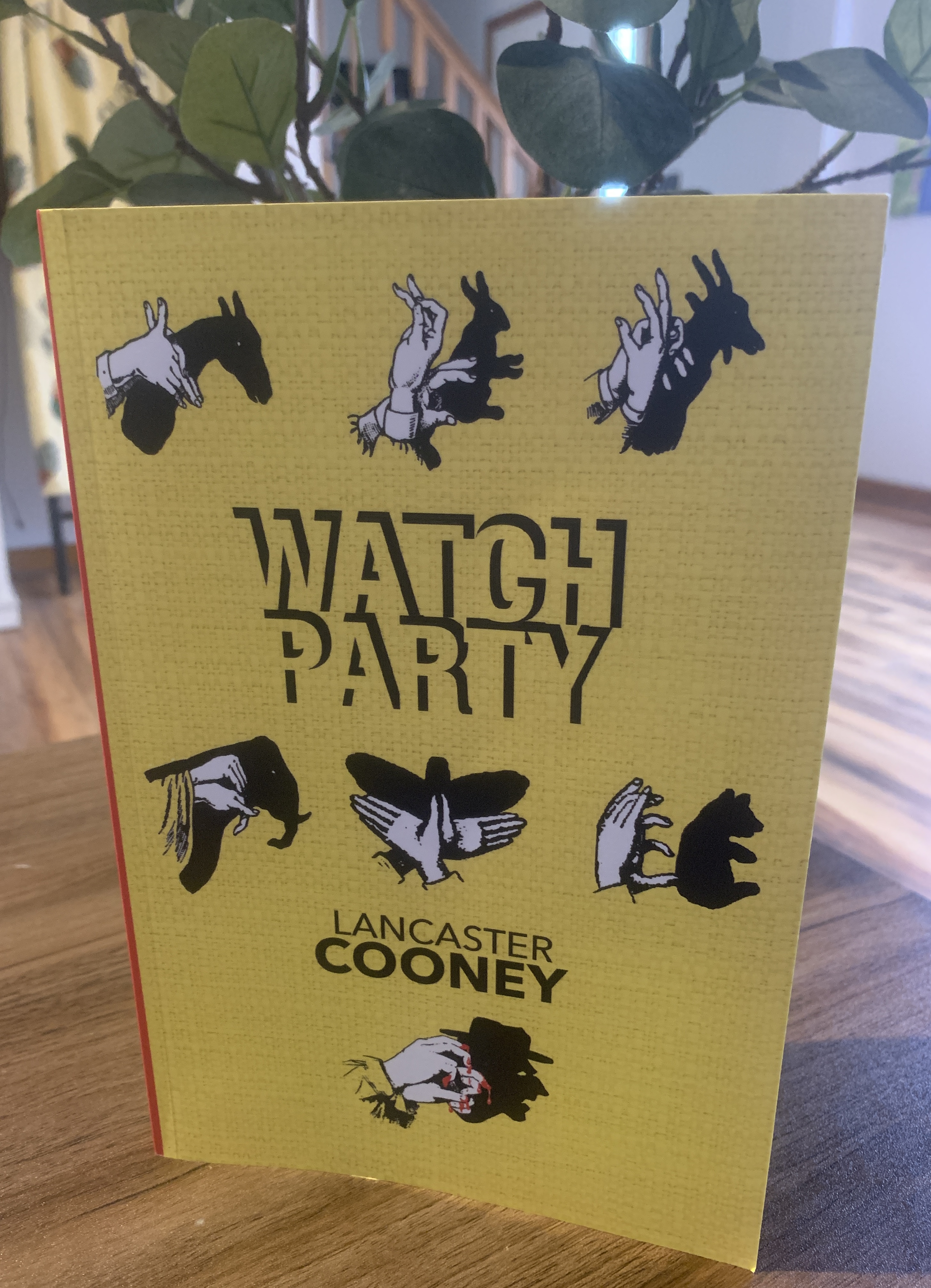
His guard was down, and madness was upon him. Guards come down in “fields of exhaustion,” and then we’re all just at the mercy of the shadows that go bump in the night — particularly our own, formed from tragic memories, past transgressions, and present deficits. In Lancaster Cooney’s second outing, 2026’s Watch Party, madness and shadows descend on suburban teens merely trying to hold on to their innocent for one more night. Which, the funny thing about the teen dynamic is it oscillates between a burning proclivity to be an adult: a pot circle, sneaked alcohol, and parents out of sight, with still being kids who seek out adults when trouble arrives. So, what happens when even the adults can’t handle what it is to come? That fleeting innocence will be shattered and adulthood will announce its premature reckoning. I thought Cooney’s second outing topped his first; the maturation of a writer, not only with a definite vision of the story he wants to tell, but who is absolutely having fun telling it.
The teens consist of our main protagonist, Robert Bausch, or Bauschy, as his longest and best friend Kemper calls him; Caroline, a girl Bausch meets for the first time that night and instantly takes a liking to; Julie, Caroline’s friend, who Kemper lusts for; and Trumner, Dufour (the beer-purchaser called “Doof” by the guys), and Bently. They’ve gathered that night in a titular watch party, along with adults down the street, regarding Bausch and Kemper’s former friend, Adam Tarkin, who appears to have lost his mind and is in need of an exorcism. Cooney’s clever, creepy, and haunting manifestation of Tarkin’s mental unraveling is shadow puppets. A perfectly fitting metaphor for innocence shattered since shadow puppets are associated with benign clownery, not abhorrent, ruinous violence. Literally in Tarkin’s hands, these shadow puppets are, though, ripping off limbs, eviscerating intestines, and severing heads from spines.
Like any bold writer, Cooney isn’t afraid to up the stakes: on a walk around the neighborhood, the proverbial shit-hitting-the-fan moment is when Tarkin’s shadow puppets attack the group (Kemper and Julie stayed behind), killing Dufour and Bently. The rest race back home and barricade themselves in Kemper’s home. It should be noted that the power is out, making an apt playground for these macabre, predatory shadows. The adults who were having a firepit cookout are destroyed handedly next, as is a police officer, who sought out to help the kids.
What’s interesting about the shadows, harking back to these being manifestations of past trauma or transgressions is that they are in the eye of the beholder. Bausch sees a mailman, who was killed after being hit by a car and a classic, tauntingly dark nursery rhyme was created from the ordeal. Caroline sees her dad, who died by cancer, walking toward her with his IV pole. Bausch’s great grandmother sees her dad, who killed her mother and then himself, the originator of the “fields of exhaustion” phrase.
Cooney proves his bold bona fides again by offing Kemper. Oof. After Bausch and Caroline get to the former’s home, with his parents and the great grandma (Julie and Trumner went with Julie’s mother to seek help), we learn more of the lore behind the neighborhood under siege. It was essentially bought out from under Bausch’s great grandfather, Jeffrey, and that forever cursed the area. Indeed, the house is where the Tarkins live now. The throughline with Jeffrey? That was one of the characters Tarkin created for Bausch and Kemper known as “Calm Jeffrey.” Adam Tarkin is merely the vessel for this generational exhaustion and hatred; this unsatiable hunger to feed the shadows. Which is why Bausch ultimately feels bad for him, and promises to try to clear his name. Tarkin’s night of terror ends the way the original in 1943 did with Great Grandpa Jeffrey: a gun under the chin.
In the Epilogue, Bausch decides to fulfill his promise to Tarkin with an aspiring documentary filmmaker. This is 10 years after the events of the book, where Bausch is also married to Caroline, and they have a child. (While Trumner ultimately survived the night, he died of a massive heart attack at the time of the Epilogue, leaving behind a wife and child; this is what propelled Bausch and Caroline to come back to the old neighborhood for the first time since Tarkin’s rampage.)
As Cooney said he wanted to do — create a story with teens who have love and comradery for each other — he succeed in doing. Of course, the gore and lore are intense and enthralling, but some of my favorite parts of the story was just being a, well, shadow presence in Kemper’s garage, listening to the teens banter and be teens uninhibited by adult supervision. It rang true to me. I especially liked the scene between Bausch and Caroline when they go on a walk together early in the story. The blossoming of their young love, and the realness of that uncertain but irresistible excitement that comes with it. Regarding the set-up of the story, with the neighborhood and the “watch party” aspect, I also thought Cooney’s book reminiscent of Alfred Hitchcock’s 1954 film, Rear Window, but in the suburbs and way more effed up. It was a fun angle, literally, you don’t see as much in books or movies anymore.
Caroline, relaying the story of her dad to Bausch, says she wishes he was still around because he was a “cool guy” and the older she gets, the more she realizes how “we need more cool guys in the world.” Cooney is one of those cool guys, and the world is better for it for stories like Watch Party.


