
Spoilers!
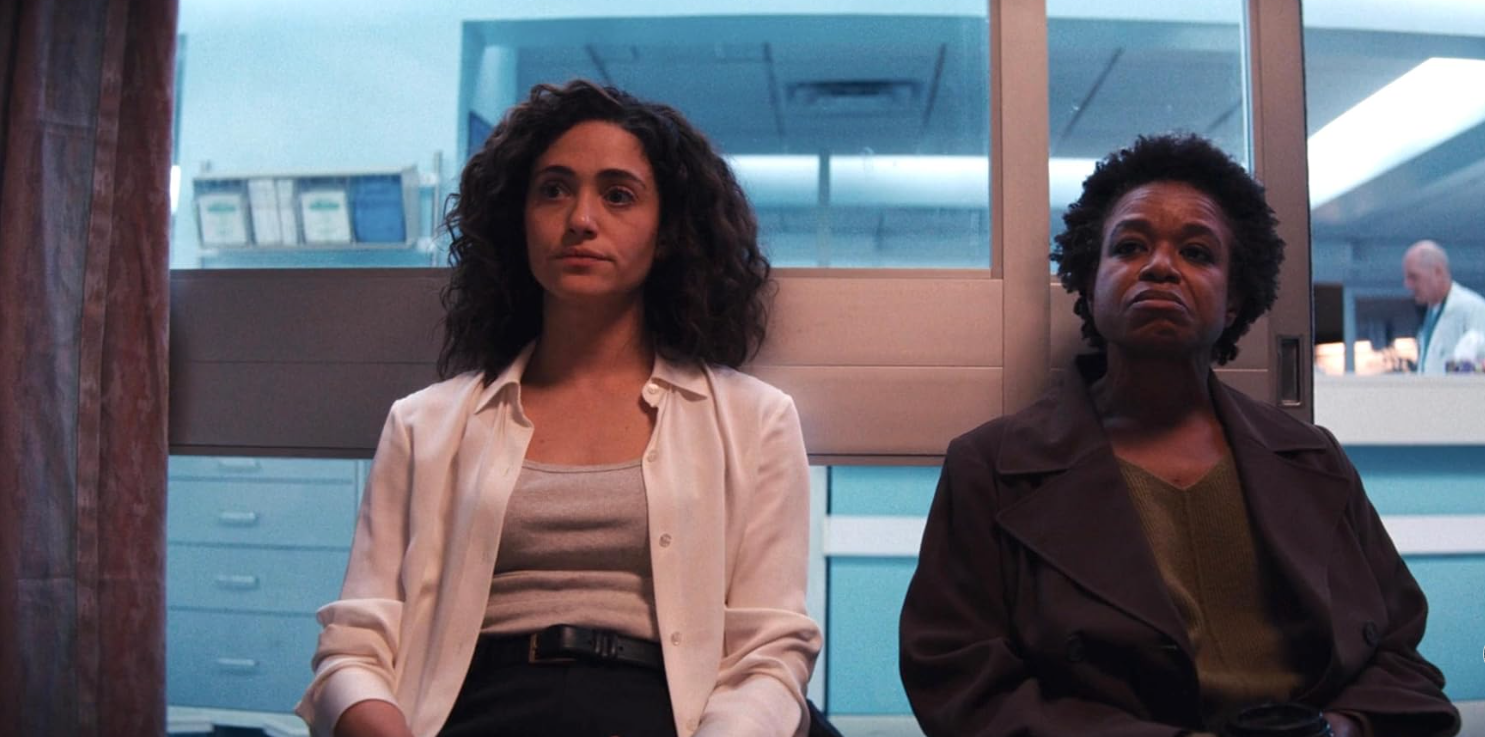
If I can be permitted to lift a quote from James Baldwin and change the context: to be a woman in the world and be relatively conscious is to be in a rage almost all the time (Baldwin’s quote was about the Black experience in the United States). Or to put it another way, to be a woman existing in a system designed by men for men, which necessarily means the justice system working as intended for men, shielding them from consequences, is to be furious almost all the time. This is a particularly salient notion these last few years as the system continues to not reckon with the Jeffrey Epstein situation, and most especially, when a unashamed sexual predator holds the most powerful office in the U.S. I italicized “furious” for a reason, having recently finished watching the 8-episode series, Furious, on Hulu by Elizabeth Meriwether. I haven’t watched a show that quickly in a very long time. Furious is the best TV show I’ve seen since 2021’s Mare of Easttown with Kate Winslet. Impeccable direction, acting, storytelling, soundtrack, tension, flow, and importantly, subversive of the crime genre in important ways. Furious is not tragedy porn; it does not indulge the darkness at the heart of the story like a show in less capable hands might, but rather, allows the characters affected by the darkness to express themselves. Their pain, their erasure, and indeed, their fury, are the focus. And truly, I cannot state enough good things about how phenomenal Emmy Rossum, Lola Petticrew, and Quincy Tyler Bernstine were. Their powerhouse performances, including Quincy’s character providing genuine laugh-out-loud moments amid the darkness, anchor the show.
Alice (Rossum) is a former NYPD homicide detective, who only a year prior was hospitalized by her longtime boyfriend and fellow NYPD detective, Marshall (played by Jake Lacy). Nobody believes her except her former NYPD partner Danny (played by Scoot McNairy), who himself has been ostracized in the department for believing her. Marshall wants Alice to stifle the rumors since she made no official complaint to aide him in his advancement up the NYPD leadership ladder. Gross. So sickening is this effort that Marshall uses his dying mother, who became a quasi-mother figure to Alice when she took her in at 14 years old, to try to convince Alice. Marshall’s mother brutally chastises Alice for hurting her son in a shocking scene that went from motherly tenderness to cold in a split-second.

Meanwhile, Catherine (Petticrew), a sex-trafficking-victim-turned-serial killer, is on the loose, terrorizing rich, powerful, highly-connected men by worming her way into their social circles, using her body and their sexual proclivities to her advantage, to drug them, torture them, and kill them. She’s targeting those who were involved in her own trafficking as a teenager and those of her friend, Isabel, who was killed by them (and she’s also in vain trying to prevent Isabel’s sister, Elena, from also being ensnared by trafficking). Catherine uses fentanyl to incapacitate and overdose the men to death. One of the most haunting scenes is when she has a lawyer drugged up in his home (before they had sex, this lawyer asked her to sign an NDA, which was partly disgusting and partly amusing out of sheer ridiculousness), his young daughter shows up and Catherine ingratiates herself to the daughter, who reveals to Catherine that she has long hair because her dad told her that’s what guys like (ew). This is where the line between sympathizing and rejecting Catherine became clearer to me since there is no understanding her victimizing a young girl; she pressured her into drinking alcohol, for example, and then after killing her dad, shows her the dead body. Building security and police find the daughter in front of her dad’s dead body with scissors, having cut off her hair.
Along the way of her enacting her justice, Catherine enlists the help of a domestic violence shelter social worker to procure her drugs and wigs for disguise. She does this by seducing her. In fact, the only truly sexual moment of the show divorced from any sort of abuse, albeit still utilized in a controlling manner, is when Catherine drops her towel to the social worker to show her breasts. That short moment of nudity was quite literally for the female gaze. Later, that social worker is found dead from an OD. I don’t think it’s ever made explicit that Catherine killed her or if the social worker ODed herself after the part she played in Catherine’s crimes. Petticrew was incredible throughout the show, straddling that aforementioned moral line between engendering sympathy and evoking horror.
We also learn that Catherine’s day job, as it were, is as an at-home nurse for Alden (played by Steve Way, who has muscular dystrophy). Unlike the social worker, it’s made explicit to Alden by Danny that Catherine killed Alden’s mother to procure easy access to the drugs. Nonetheless, Alden loves her and intends to marry her because she’s the first person to not see a 300-pound wheelchair when she looks at him (that’s because she’s using him, but alas). Even when Catherine brings Hal (played pitch perfectly by Campbell Scott), a lawyer for the powerful Easton family at the center of the trafficking, to his home and is clearly torturing him, including with a hot curling iron, which feels so fitting, Alden doesn’t care. He further doesn’t care when he witnesses Catherine plunge a needle into Hal’s eye, killing him. That was a poetic death for Hal symbolizing how he bore witness to the crimes of the Easton family, and sometimes actively covered them up, without doing anything to stop it. As Catherine asks him, what is the punishment for people who know what’s happening and do nothing? In his case, death. When people like the Easton family are engaged in such deplorable, illicit activity, a great many people necessarily know what is happening, but pretend otherwise. How many times in real life have we heard that a sexual predator in a certain industry or space was an “open secret”? That’s a damning indictment of all those people who kept that secret.
Speaking of the enablers and those who kept quiet, one of them is within the FBI itself: Ed George, the Assistant Special Agent in Charge, Nora’s (Bernstine) boss over the Sex Crimes Unit where she works. In 2011, George used Jay Easton, the patriarch of the family, as an intelligence source to “save lives,” and in repayment, helped Easton cover up Isabel’s death in 2012, and his continuing trafficking crimes. Also helping Jay is his daughter, Emma (played scarily effectively by Hope Davis). Part of me didn’t like that one of the main villains of the story turned out to be a woman — notwithstanding the main character serial killer being a woman — because it’s a story centering women furious about men getting away with their crimes. And yet, another part of me realizes that patriarchy, like other systems of oppression, are enabled by those who would normally be the victims of said system. Jeffrey Epstein had Ghislaine Maxwell, after all. Emma is representative of that dynamic, but that dynamic also exists in much subtler ways, like Agent Choi in the FBI (played by Rob Yang), who goosesteps along with Ed George (and Marshall) at the expense of Alice and Nora.
As Catherine’s reign of vigilante justice continues, the FBI’s Sex Crimes Unit with Nora as the lead create a joint operation with the NYPD, which brings in Danny and Marshall. Even though she’s new to the FBI and was technically working at the call center, Alice is allowed to join in on this investigation because Danny requested her early on. So, I already mentioned one of the awful motives Marshall has with appearing to try to apologize to Alice, but how about just the fact of her having to be around him and work with him on a case? To be at a domestic violence shelter interviewing victims of domestic violence? It’s awful. But complicating Alice’s life is that because of her abuse (and later abuse we learn about), her kink, if you will, is to meet guys online who will abuse her. She doesn’t seem interested in actual sex with them, only getting herself off after the violence inflicted upon her. Another lingering triggering trauma response to her abuse is the inability to take a shower; Marshall would yank her from the shower and abuse her, so she associates a shower with danger. Danny even calls her out for smelling. But it’s clear Danny has affection for Alice and is one of the few solid guys in the show. I wish it didn’t turn out that he had affection for her, which is to say, that he was a nice guy in and of itself, not as a product of having feelings for Alice. Still, at least Alice had one good male in her life.
Nora knows that Ed George is tied to Jay Easton (feels intentional that his initials are J.E., or Jeffrey Epstein), but she pulls her card too soon. Ed pushes back by threatening to out Nora for being an alcoholic (and honestly, can you blame her, given what she has to look at all the time?). That forces Nora to initially take Alice off the case, which also was made easier by Marshall claiming Alice pointed a gun at him. In reality, after Marshall’s mother blew up at Alice and she left the house, Marshall followed her and seemed on the verge of assaulting her again when she rapidly whipped out her service weapon (but didn’t point it at him!). That was a whoa moment! You go, Alice! Anyhow, thanks to some subterfuge and vague orders given to Danny, Alice stays on the case. One of those subterfuge opportunities was for Alice to pull a Catherine and lure Marshall to her house for what seemed like to him a truce and even a reconciliation. Instead, she made him fall off the wagon and drink again. He was so contemptible and deserved that.
Alice tracks Catherine down through another shelter, which has one of those baby surrender drop boxes (Isabel gave up her baby there and that baby … Elena, so daughter, not sister as was previously thought), and one of the episodes ends with them sitting in the same waiting room of the shelter. Heck of a framing shot to end on. Nora encourages Alice to try to cajole Catherine into helping them catch Easton. As Nora advised Alice previously, when you go after the truly big fish, you gotta be prepared with a headshot, to paraphrase (ironically, she ignored her own advice when initially going after Ed George!). Instead, another woman in the shelter outs Alice as an FBI agent, leading Catherine to inject Alice with fentanyl. Not enough to kill her though. They have an poignant back-and-forth in a shower stall, of all places, before Catherine runs off after realizing no FBI agents are surrounding the building (Nora had them surrounding the building until Ed called them off). As Alice stumbles out of the building after her, Marshall, who has been on a bender all night and into the morning and was tracking Alice’s location, shows up and begins to assault her. Catherine circles back holding Alice’s service weapon. She asks Alice if she wants her to kill Marshall. Alice doesn’t answer, but Catherine shoots him anyway. He survives, but is confined to a wheelchair (at the end of the show, he receives a medal from the NYPD; gag.)
The next time Alice is close to capturing Catherine, she lets Catherine go so that the FBI will have probable cause to enter Jay Easton’s house and find incriminating evidence — she let Alice go knowing that Catherine is ultimately going to Easton’s house to kill him and to finally find out and/or remember what happened to Isabel. When Catherine arrives at Easton’s house, Emma is taking direction from Ed George (ugh) and destroying the hard drives. Before this, we saw Emma wheeling her dying father into a room to be with a girl, even then with his dying breaths (ugh again). Catherine confronts Emma, who is armed, and she shoots Catherine nearly at point-blank range. But she survives and escapes. That’s when Alice comes on the scene.
In a tense moment with Alice, Emma, and Catherine in the room where the raping occurred, Catherine interrogates Emma about what happened to Isabel and Alice tries to help Catherine remember. Isabel had just given birth (to Elena), and along with postpartum complications, was badly abused and bleeding at the Easton house. It was actually Catherine who killed her at Isabel’s wish. Isabel wanted her suffering to end, so Catherine did it, but had blocked out the memory of doing so. Meanwhile, outside, Danny and Nora are trying to get into the house to help Alice, but are blocked by Connecticut police officers who were sent there by Ed George to buy time. The scene outside is a nice counterbalancing bit of levity to the tension going on inside the home. Once Emma escapes and leads all the police and FBI inside, that leaves Alice alone with Jay Easton (weird that Ed George wasn’t with him, to be honest). He dies as she watches from what appears to be respiratory failure, but not before he recognizes her as his “movie star” in one of his favorite videos from his disgustingly copious amount of child porn. That’s right. Alice was a sex trafficking victim herself at age 14. She also had a baby she dropped off at one of those secure boxes outside a shelter. And Jay Easton had her video. (We don’t know who the perpetrator was that raped her in the video.)
Later, when Alice visits Catherine in prison, Catherine knows Alice’s secret, or at least, highly suspects it: that she killed Jay Easton and enjoyed the power it conferred upon her. That was what Catherine said in a previous monologue to Alice: she spent her entire life being dictated by men when and what to eat and drink, and do, and where to go, and of course, had no control over her body. But now, the power she does have is to end the lives of scumbag men. She enjoys that power. We then see the full scene play out when Alice went into Jay Easton’s room, and upon him recognizing her, she stepped on his oxygen tube and then used her hand to close his nose. Alice killed Jay Easton. The parallel between her and Catherine converged in that one furious moment.
And then finally, to close the first season, Alice takes a flash drive of all the videos Jay Easton had, which includes the one of her, to the secure room in the basement of the FBI where the Sex Crimes Unit operates, and views her video. (Danny procured the flash drive from Alden, much to Ed George’s chagrin, and then passed it on to Alice. Those two also made their feelings known in a nice scene beachside before the final minutes.) Again, in a different show, we might have seen flashes of what happened to Alice. But with this show, appropriately, we see a tight closeup of Alice’s eyes and then the horror on her whole face. That few seconds of acting should be enough to guarantee Rossum’s Emmy, if you ask me. Sad and haunting. Then, sickeningly, Alice is able to see how many people not only downloaded her video (more than 50,000 times), but their screennames associated with the download. Her glee at seeing their names is juxtaposed with an affirmative smirk given to Catherine about enjoying the power conferred to her upon taking Jay Easton’s life. Some viewers have insinuated this to mean that Alice will take up Catherine’s vigilante justice mantle, as it were, in the already-announced second season. I’m not sure about that, or at least, I wouldn’t like that direction. I don’t want Alice to become a serial killer. We can sympathize with what happened to Catherine and Isabel and all the women harmed directly by Jay Easton and his enablers, like the lawyer and Ed George at the FBI, without endorsing torture and murder.
This recap is bereft of just how incredible Bernstine was in the show as Nora; she was the hardened, cynical, but still righteous force in the show in juxtaposition to the naivete of Alice as a newly-minted FBI agent and someone still reeling from her own trauma. She had some of the best lines throughout the show, including a full-on fantastic monologue about women’s anger connecting back to the Greek myth of Medusa. One of those lines, again in a parallel to Catherine, was directed to Alice about the FBI using people. “We use people; we are inhuman to defend humanity.” Oof. But also, Nora provided hilarious levity throughout, like mocking Ed George’s walk or in the elevator in the final episode, asking him why they’ve never “fucked before,” then adding, “Maybe I’ll fuck you soon enough.” The implication being obvious.
What a phenomenal show that dealt honestly and unflinchingly, but in a sensitive and compassionate way somehow still, with the subject matter of sex trafficking (and physical abuse otherwise) and the powerful men who get away with it and enable it.
And like I mentioned, Furious had an unforgettable soundtrack that accentuated the tension and revelations throughout, including music by Fiona Apple, a great cover of “In the Pines”, and a lot of the great nonlyrical soundtrack by Ariel Marx.
I hope they answer in the second season why Emma wasn’t arrested at the Easton house. At minimum, they could have gotten her for obstructing justice by destroying evidence (the hard drives). In the last episode, she’s quite literally salting the earth of her garden — her way of counterbalancing (or coping with?) her father’s depravity was planting beautiful flowers apparently, and in that final moment, she begins pouring rock salt on her garden. As Emma told Catherine, she’s a victim, too. Which the garden reflects that or is an expression of that, but obviously, the line between victim and enabler/perpetrator is thin with her.
If you need a new show to watch, it’s difficult to highly recommend a show as dark as this, but it’s dark in such a novel way compared to other crime shows that I implore anyone reading to give it a chance. It’s a layered, compelling, thought-provoking, profound show, with powerhouse performances and writing. Going by her previous work, Furious feels like a huge swing from Meriwether, but it’s a swing that connected.


