
Spoilers!
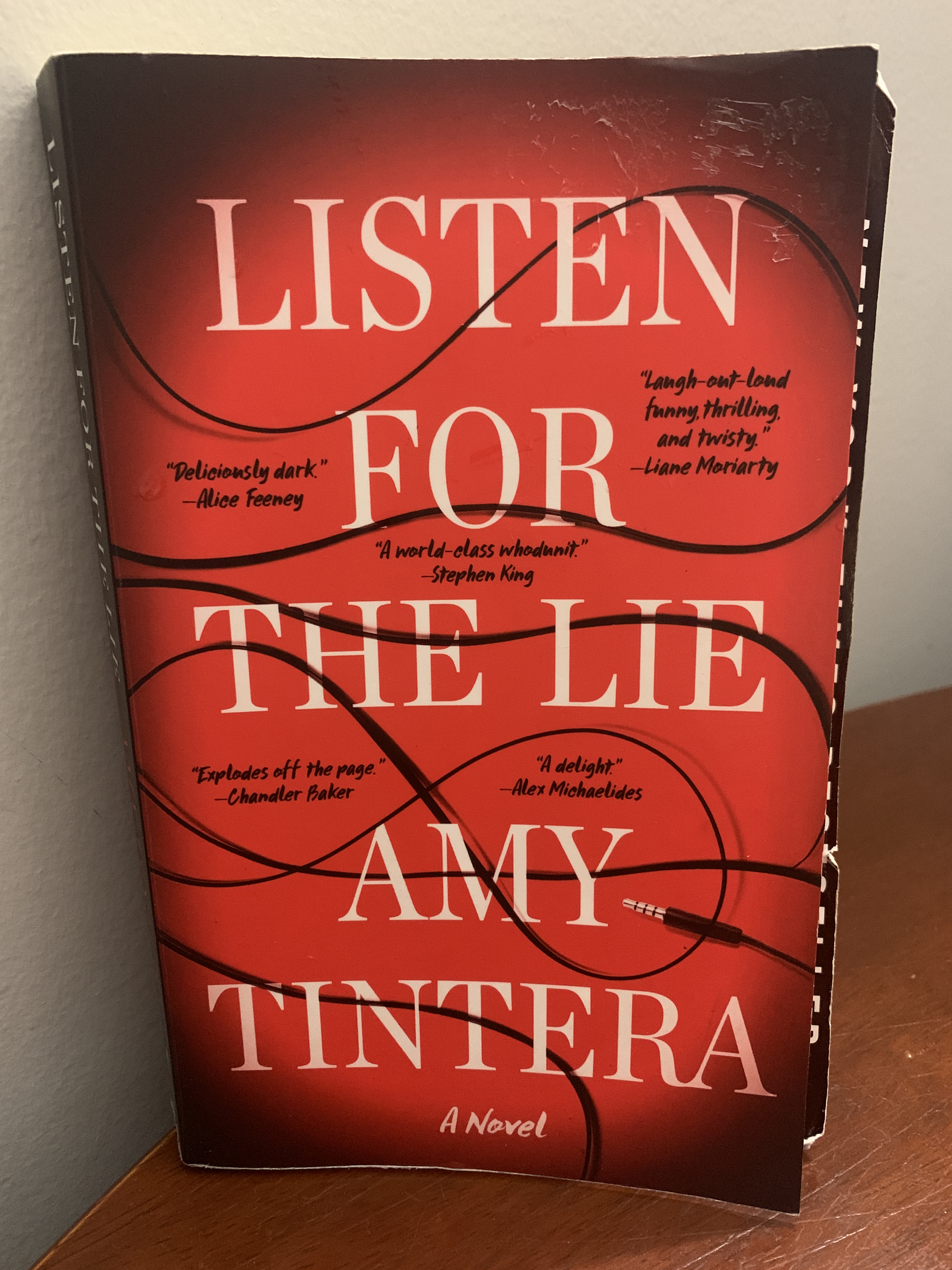
Memory gives shape to our lives, but sometimes the shape is a Picasso-like painting, difficult to discern, especially around the contours of trauma, and particularly when that memory is voiced by women. Amy Tintera’s first adult thriller, 2024’s Listen for the Lie, uses the conceit of an investigative true crime podcast to delve into the fault lines around memory, trauma, small town gossip, and the importance assigned to male narratives. I started it late Saturday morning and finished the last 30 pages by booklight (my power went out) this evening. Yes, it read quickly, alternating between the main character’s perspective and the podcast in written format, but it was also compelling. A clever whodunit where the title, which is also the title of the podcast, let’s us know someone is lying, we just don’t know who yet.
The book begins five years after Lucy’s traumatic event, wherein her small Texas town thinks she killed her best friend, Savannah, or Savvy, as she’s called, but she was never charged with a crime, and worse still, has no memory of the night in question. Nobody believes this “amnesia defense.” Lucy’s living in Los Angeles now, with an admitted aloof, self-involved boyfriend, who seems to be pulling away from her on account of Ben Owens’ Listen for the Lie podcast’s second season, about Lucy, dropping. Naturally, Ben goes to the small Texas town to interview Savvy’s family, as well as other townsfolk about Lucy. And unbeknownst to Lucy, he also interviews her wily, hard-drinking 80-year-old grandmother; the grandmother conspires with Ben to cajole Lucy back to town, with her own ulterior motive of exonerating Lucy in the court of public opinion via the podcast. Ultimately, only her grandmother truly believes she didn’t do it. Lucy goes back.
Making matters worse for Lucy over the past five years is that she has intrusive thoughts, like we all sometimes do, of murdering people. What if I just veered my car and ran that pedestrian over? It sure would be nice to smother my annoying husband snoring beside me right now. Those sorts of intrusive thoughts. So, Lucy, rather darkly, leans into suspicions and the outright accusatory pall that hangs over her: if you think I’m a murder, maybe I am? I can’t remember the night it happened, anyway.
As Lucy comes back to town, we learn her parents are a bit odd, to say the least. Not only are they both philandering weirdos who are still together, but for Lucy’s most important purposes, they seem to not be immune to the town’s suspicions. They, too, think she killed Savvy. We also learn Lucy has an ex-husband, Matt, who was (and is) a drunk, gaslighting, abusive bastard. And also a philandering jerk. A common theme in Owens’ podcast is that everyone is sleeping with everyone, or has slept with everyone, including Owens himself with Lucy! That was so predictable that I admittedly rolled my eyes, but whatever. At least Owens never pretended to be ethical — that’s his whole thing, although he has an assistant, Paige, who hardly factors into the narrative, but does seem to be trying to do everything by the book to uncover the truth about Savvy’s murder. Other characters in the town include Emmett and Nina, Lucy’s two high school best friends; Savvy’s older brother and younger sister; and Colin, a 20something who apparently everyone in the town, including Lucy’s mother, have slept with. Emmett is your classic nice guy caricature, where he’s clearly crushed on Lucy since they were kids, but it was never reciprocated. In fact, he’s dating Nina now. Colin was Savvy’s boyfriend, but it was understood between both of them that they slept around and weren’t exclusive. Which is the other riff on the true crime podcast Tintera utilizes: the perfect victim. In Owens’ podcast, at least in the words of the townsfolk he interviews, Savvy was a perfect do-gooder because that’s what true crime fans, the public, want to hear. Nobody wants to hear about the flawed, complex, nuanced victim. They want the perfect victim to further engender the ardent desire to rectify the injustice of their unsolved murder. And that “perfect victim” mentality rebounds upon Lucy’s thinking, too; it’s why she doesn’t want to tell anyone, especially on the podcast of all places, about Matt abusing her. She doesn’t see herself as a perfect victim and worries if anyone will believe her. Heck, sometimes she doesn’t believe herself, which is completely normal to second guess yourself in those situations. That said, she participates in the podcast otherwise because she knows that a man authoritatively laying out a case, like Owens on his podcast, could be beneficial to her. People listen to such men (they compare Owens to journalist Ronan Farrow). Oh, and another way in which Savvy wasn’t “perfect”: she apparently killed some guy named Trent when she was 17 or 18 and dumped his body in a swamp. Only Lucy and her younger sister know that. What the heck?! And she wasn’t done there, as she implored Lucy to seriously consider killing Matt. So, as it turns out, the author, if you will, of Lucy’s intrusive thoughts is actually Savvy. Which then becomes Savvy propelling Lucy forward to solve her murder.
Maybe about two-thirds of the way into the book, I began suspecting that Emmett was the killer. Process of elimination. Matt was too obvious. Nina was a strong contender for seeming to hate Savvy, but I figured the killer would be a man, which is why I had as an outside possibility initially Owens himself. The whole, ingratiating-yourself-into-the-case type of thing, albeit this wasn’t with the police. But Emmett was too clean, too perfect in his own way. As Lucy walks back through where the crime happened, that night she can’t remember, it comes back to her. First, Emmett thrust himself upon her, and when she rejected him, he became angered. He fashioned himself her knight in shining armor and she wasn’t having it. The two most dangerous moments for a woman are to either leave a man, like Lucy eventually did with Matt, or reject his advances, as Lucy did with Emmett. When Savvy intervened, he attacked her, too. They both ran for their lives whereupon he caught up with them, hammer at the ready. Savvy put herself between Lucy and Emmett, ultimately saving her life — Matt drunkenly stumbled upon the scene looking for Lucy, inadvertently preventing Emmett from finishing her off. With a traumatic brain injury, Lucy stumbled away from the scene with a tree branch presumably to defend herself in her hands and Savvy’s blood all over her. Emmett convinced Matt, who probably didn’t need much convincing, that he witnessed Lucy kill Savvy. Matt then relayed this to her parents, who believed him. They all conspired to keep quiet about it ostensibly to protect Lucy, but at least in Matt’s case, it was to protect his own abusive ways from seeing the light of day.
It happens, of course, that as her memories of that night return, Lucy is alone with Emmett, who again makes sexual overtures to her, insisting that they should be together. She again rejects him, and he again turns violent. Like then, she fights back, and this time, has him backpedaling with the hammer with Ben comes on the scene. Like before, another man relays the story they want the public to know, even if it’s not the truth: that Emmett confessed to killing Savvy and was going to kill Lucy. That’s why I don’t ultimately like Ben either, even outside of sleeping with Lucy. He used her, too, in his own way (although the book ends with Tintera framing it as Savvy giving Lucy the greenlight that this one is okay).
A few of my aforementioned nitpicks aside — and I also think it was unusual that Lucy wasn’t having more of a trauma response being around Matt when back in town or that she spent five years not interested in uncovering who killed her best friend — I thoroughly enjoyed Tintera’s book as a classic popcorn read. It’s like Cracker Jack, you gotta dig in to get the prize, or in this case, the whodunit of it all. I look forward to more of Tintera’s work in the adult thriller space.


