
Spoilers!
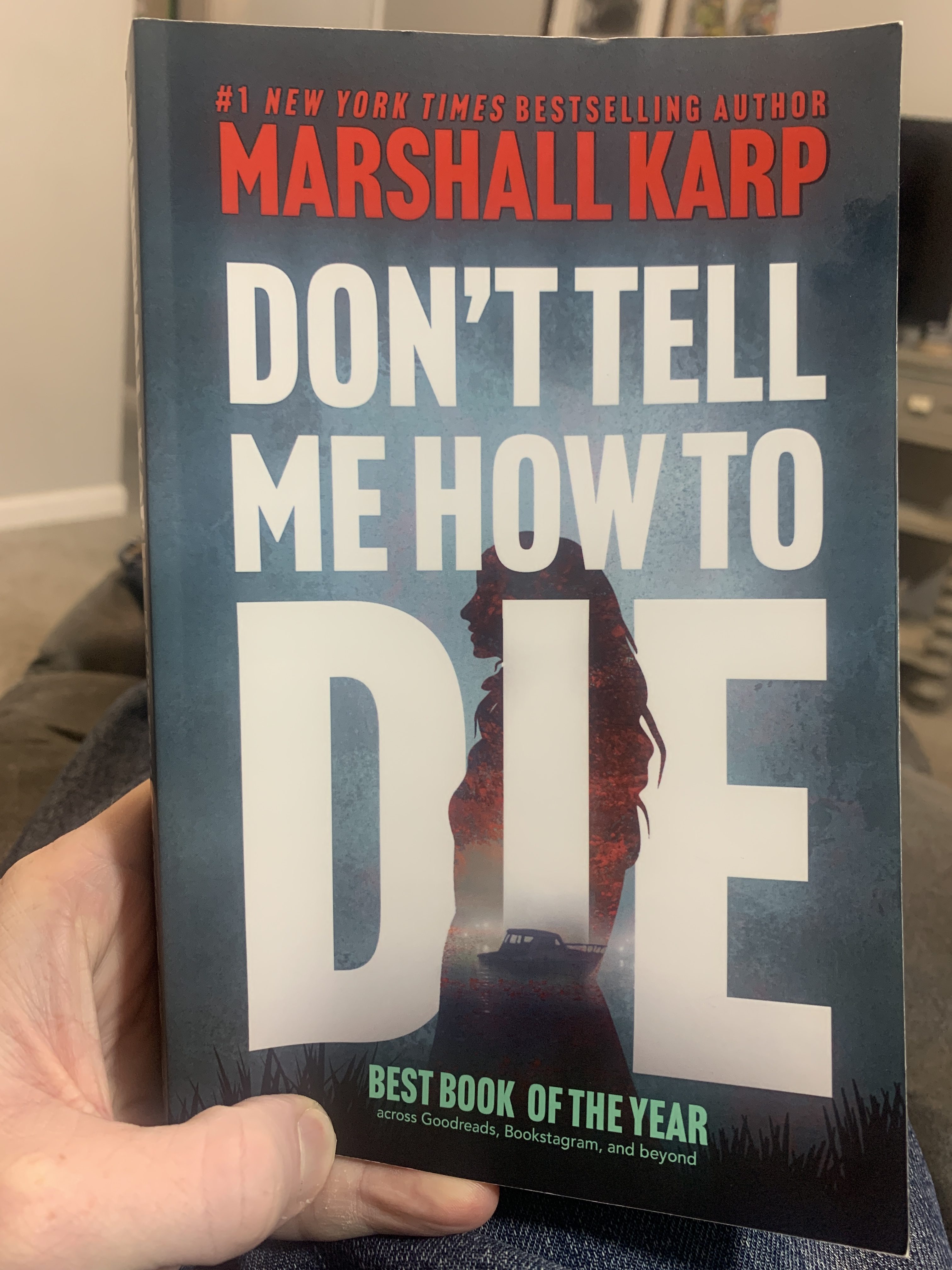
Well, you can’t exactly tell someone how to die. Everyone is afforded dignity by virtue of their humanity, and that extends to the dignity of one’s manner of death. Particularly, if one opts out of chemotherapy because they’d prefer their remaining time be spent with family, it’s difficult to argue against them; it’s their body, their life, and their death. But of course, these philosophical questions are one thing, and thriller stories are another. In Marshall Karp’s 2024 book, Don’t Tell Me How to Die, it’s not as clear as it initially seemed who is even dead. I had a few nitpicks with the way in which Karp’s novel unfurled, initially seeming to be more philosophical than twisty, which I liked, before fulling embracing the twists at the end, which is where the nitpicks came in. Nonetheless, I can’t deny that I devoured his book; the flow and pace were breathless.
Maggie’s mother, Kate, has a rare genetic immune disorder, hemophagocytic lymphohistiocytosis, or HLH, that results in a death sentence. Before she dies, though, she implores her two daughters, Maggie and Lizzie, to protect their father from opportunists. That is, the women who would swoop in after her death and take advantage of their father. It’s a bit of an odd request to make of her daughters, and also, a little paternalizing of the father. Regardless, the daughters are on high alert when a new woman, Connie, soon comes into their lives after Kate’s death. Maggie does some old school research since it’s 1997, via LexisNexis (with the help of the local librarian), and discovers that Connie is a criminal, with numerous prior husbands she stole from. That’s the con: husband them up, steal from them thereafter. Maggie confronts Connie with this information, threatening to expose her to her father, which promptly scares Connie off. The dad ends up marrying the librarian, which we later come to find out was Kate’s choice anyway.
Through the course of retelling Maggie’s youth, we learn quite a bit about her. Yes, she’s a top student (top of her class, in fact), with dreams of going to college and law school. But she also is a bit of a wild child, which I feel like those two elements don’t tend to go hand-in-hand. That is, when her Marine boyfriend, Van, breaks up with her because he got another woman pregnant in South Korea where he was stationed and married her, Maggie goes to the local drug dealer — because of course she knows him (I’m being snide because again, I’m not sure someone so committed to her academics and future would risk it) — and not only scores marijuana off of him, but they have sex a few times. So begins her life-long friendship with Johnny Rollo. During this downturn in Maggie’s life, if you will, she also befriends Misty, who is a bit of an outcast at school as well and is dealing with upheaval at home. Her father’s laundry business went bankrupt because of a local environmentalist. The environmentalist, Minna Schultz, said the laundromat was using toxic chemicals. When Maggie and Misty arrive back home, drunk after drunk driving, it’s to the scene of a crime: Misty’s father killed her mom and brother and would have killed her, if she was home, before turning the gun on himself. Misty vows to kill Minna for causing all this with her advocacy, even though Maggie pleads with her not to suggest that to anyone else. That got dark! Even, y’know, beyond the opening premise of Maggie’s mother dying.
Nearly 30 years later, Maggie is still living in Hearstone, New York, a relatively small town, with her husband, Alex, and their twins. Maggie is a district attorney, and Alex is a top surgeon at the local hospital. We also know that later on, Maggie will become the first female mayor of Hearstone. Shortly after assuming the mayorship, Minna turns up seemingly drowned to death near a popular pond in town. It’s chalked up to a suicide. Misty also comes back into Maggie’s life, now as an interior designer, who could work with Alex on a new trauma center at the hospital. The backstory we learn is that Minna was fighting this new trauma center on environmental grounds, which “resulted” in verbally attacking the previous renowned CEO of the hospital, his heart attack and death, and Alex assuming the CEO position. Maggie’s impetus for running for mayor was encouraged by Alex as a way to shore up the creation of the trauma center against the likes of Minna’s advocacy and candidacy since Minna was running, too. It worked. Maggie and Alex won. Then, Maggie discovers from her doctor — the same doctor who treated her mother — that she also has HLH and months to live. That’s why some of the chapters had a subheading of “three months before the funeral” and so on, an ongoing reverse countdown. Which struck me as wild that the two candidates for mayor would be dead within three months of each other.
Almost in an offhand way — so offhand I had to go back twice and make sure I read what I read correctly — Karp mentions that upon hearing the news of her death sentence, Maggie had sex with Van. Yes, that Van. She’s having an affair. And I’m like, what?! I get making it so Maggie isn’t always likeable, which Karp explicitly stated he set out to do, but my issue is it contradicts the original conceit of the book. That is, Kate dies and implores her daughters to protect their father; now, with Maggie dying, she wants to protect Alex from women looking to swoop in as well. But not only is it self-indulgent of Maggie to think Alex needs that protection, but it’s a bit hypocritical to want to protect him from women after she is dead when she’s currently having an affair! She’s depicting herself as this upstanding person in a great marriage to a great guy she loves dearly and yet! And this Van knows about her death sentence before Alex. Turns out, by the way, that Van is also the Police Chief. Her affair is continuing when they’re both in these public positions. Awful.
One of the other “unlikeable” things Maggie does that I’m more fine with to show her murkier character dimensions is when, as DA still, she helped Johnny Rollo avoid prison time and get into rehab instead, which ultimately broke him of his drug habit. Legally and ethically, one can take issue with what she did, but it’s a compelling dimension to her character.
But of course, there’s far more to Karp’s story with Maggie. She’s not dying of HLH, for one, but she is still dying — of Vitamin D poisoning after a lengthy duration of consumption. Well, who the heck is poisoning her? She thinks it must be Alex because of his proximity to her to dose her drink (and fake lab results), ability to get the drugs, and because he must have found out about her affair. She’s so worried that he’ll do what Misty’s father did and kill the whole family, that she plots with Johnny Rollo to kill him first. So, they do. They make it seem like Alex committed suicide by going off on his sailboat. Instead, they killed him (somehow) and concealed his body in the new construction of the trauma wing, ironically.
Speaking of, when they’re dredging the lake everyone loves, they discover Kate’s vehicle that Connie had ostensibly stolen and driven out of town with her body inside it. As it’s revealed, Maggie killed her back as a teenager when she confronted her about her LexisNexis findings (more of an accidental killing, albeit she attacked Connie) and Johnny also helped get her out of that situation. So, not only was Johnny her drug dealer, but apparently, he was okay with covering up a murder, and then later, once clean and married with children, he was this time willing to commit the murder and conceal it for Maggie’s benefit. Between the affair and the murder of Connie, I wasn’t liking Maggie much by the end of the book! And even with Alex, who she suspects killed Minna as well, which Van backs up with evidence he discovered, they could have just had Alex arrested once she had clear evidence he was poisoning her instead of turning into vigilantes. But that wouldn’t make for a thrilling book and ending, huh?
Lizzie was the best character because she provided the snark opposite Maggie, and just kept her head down doing her doctor thing, and when it came time to console the twins over their dad’s death, smoked a joint with them. She was the cool aunt.
So, yeah, Don’t Tell Me How to Die could have kept it up with the philosophizing and been an interesting story about how generational trauma and grief affected this one family, but it became something much more sinister and insidious, both from the actions of Maggie and those of Alex. Again, I flew through this book, so job well-done there, Karp.


